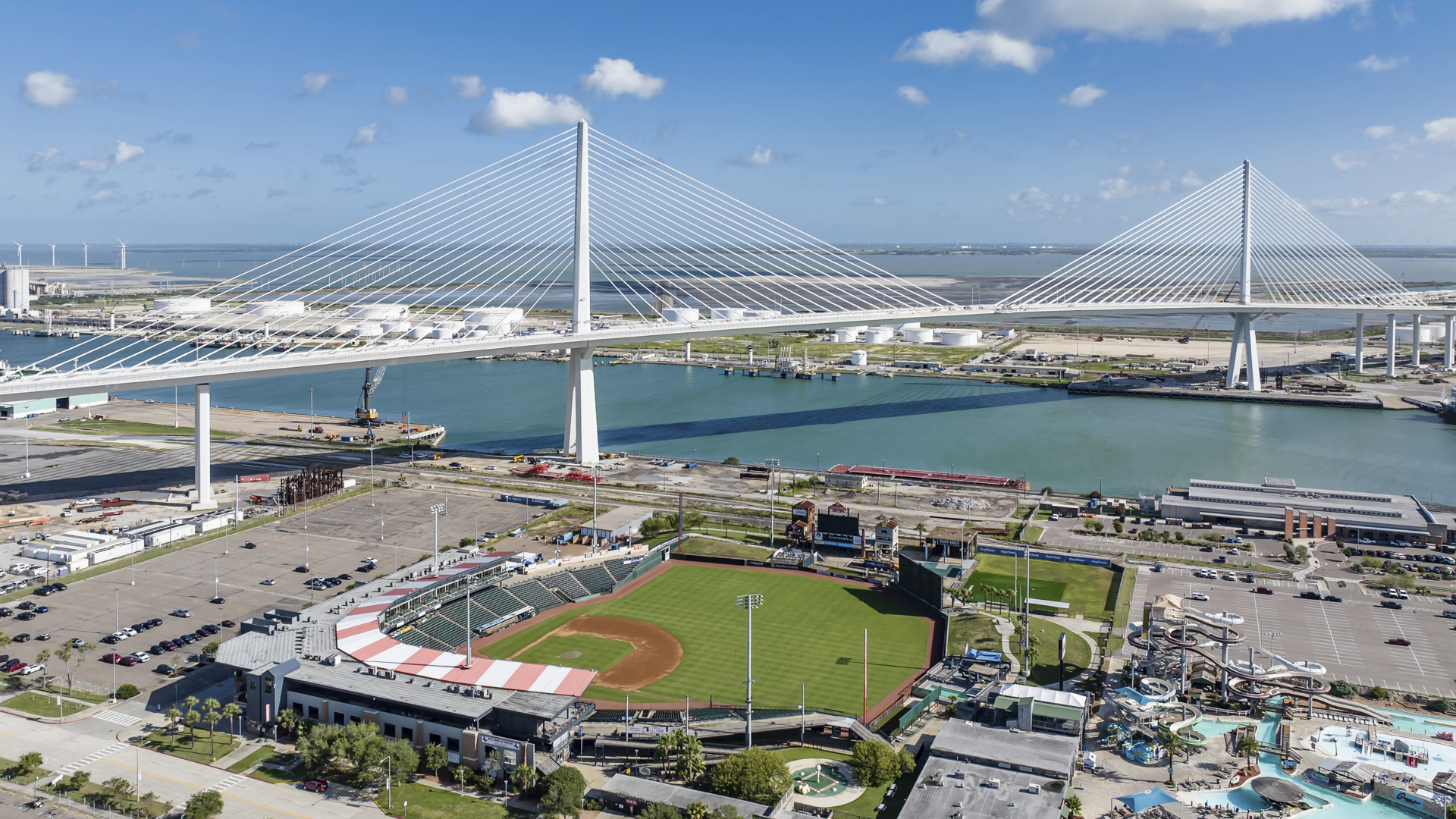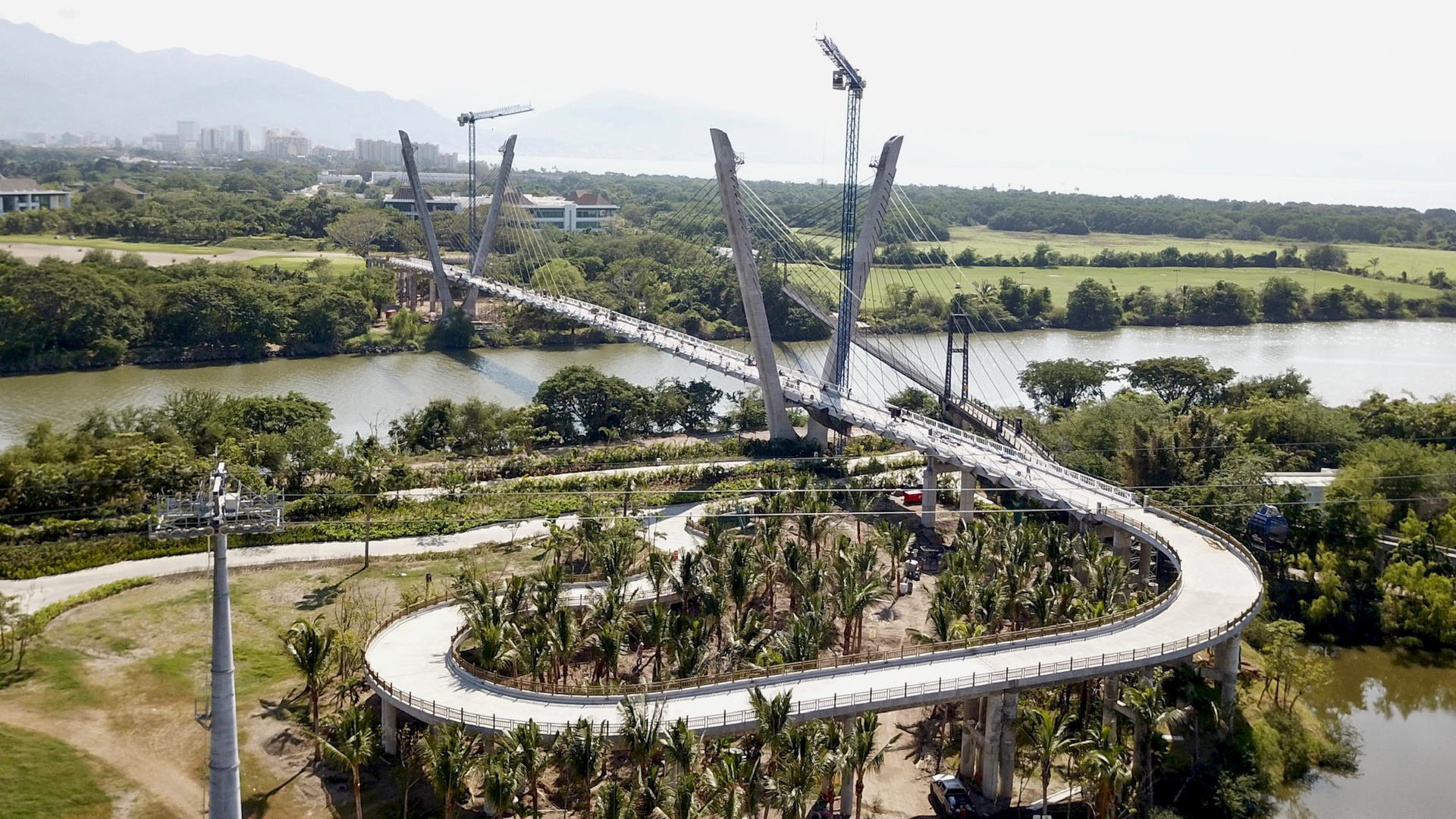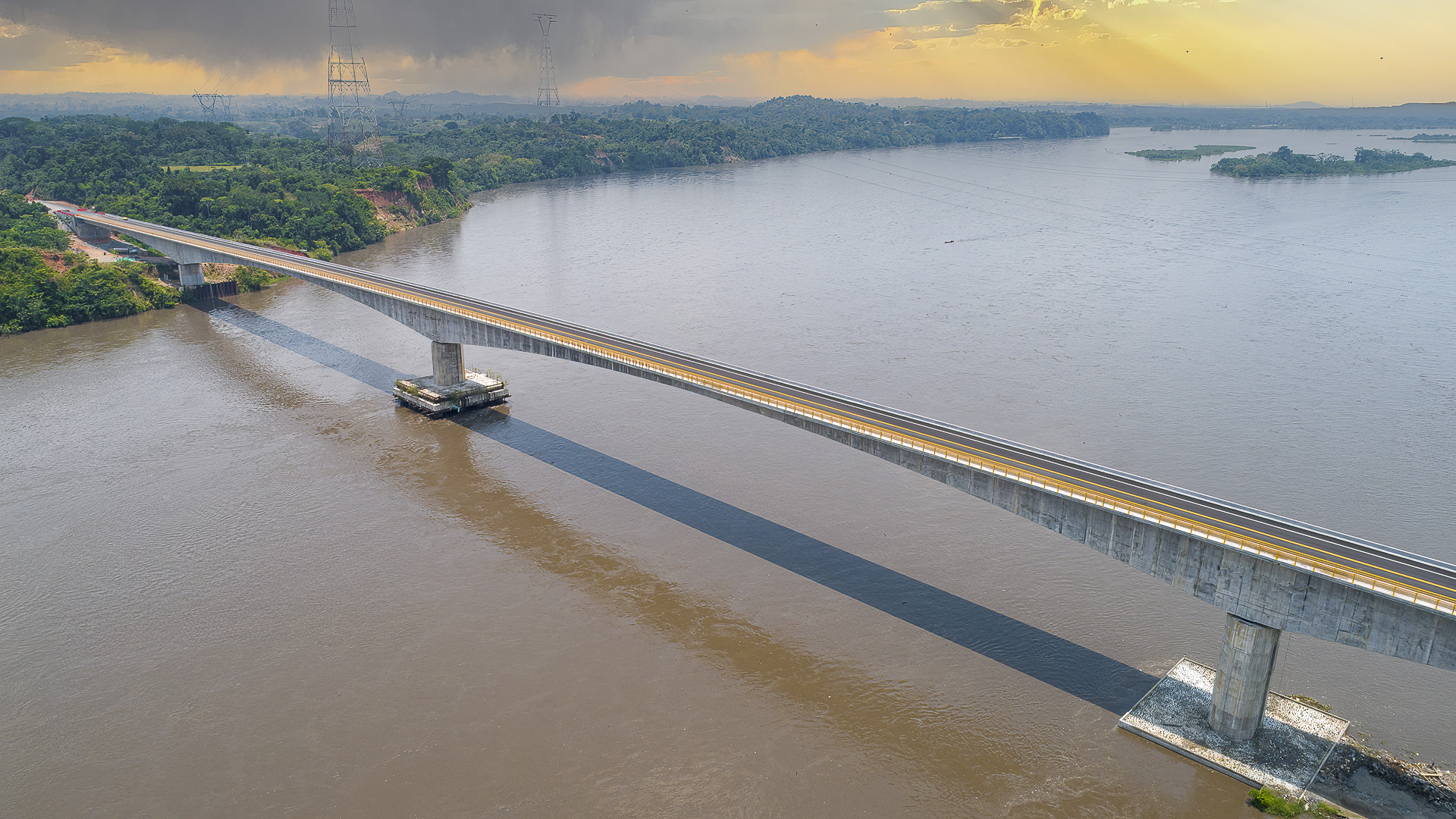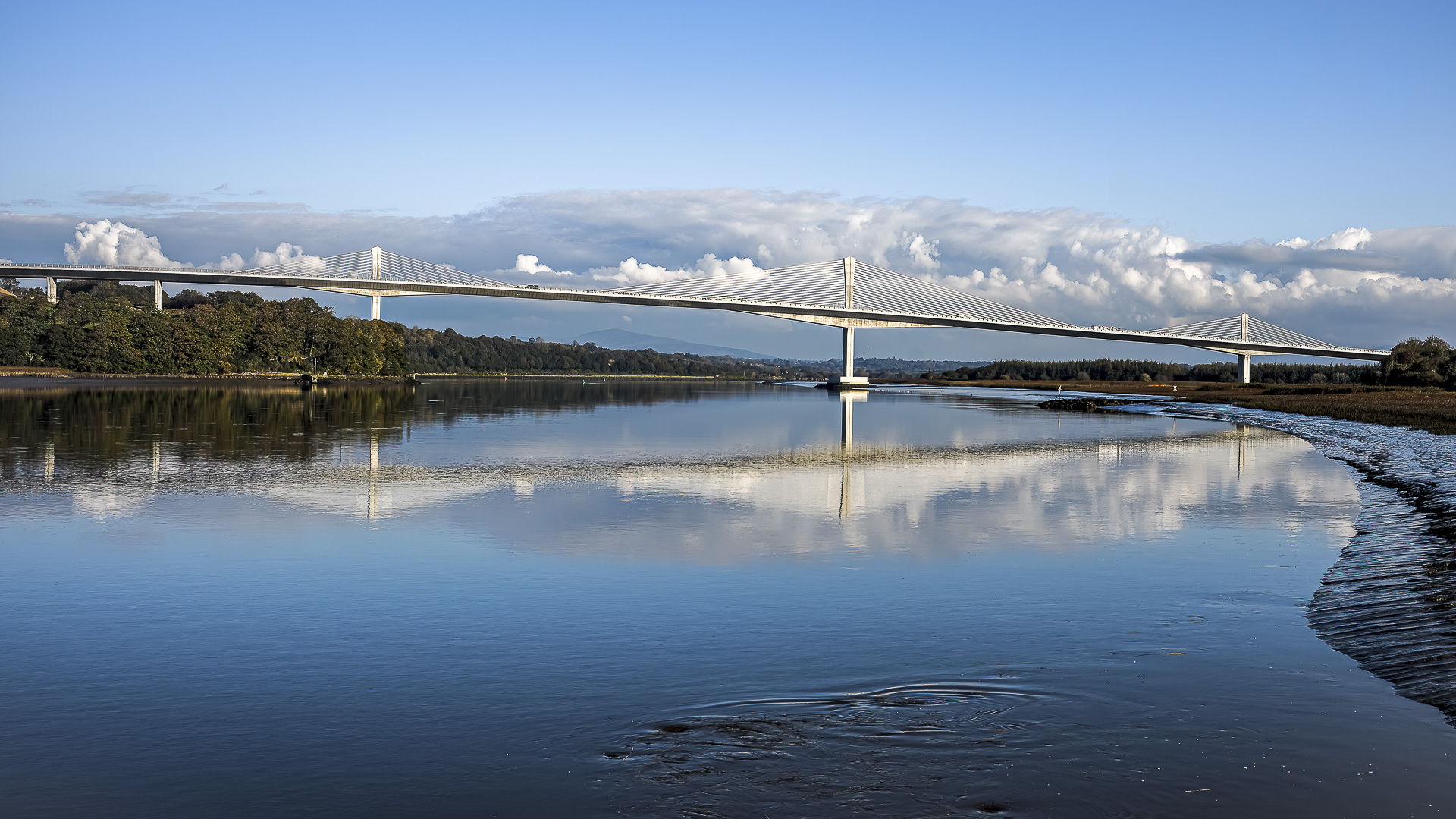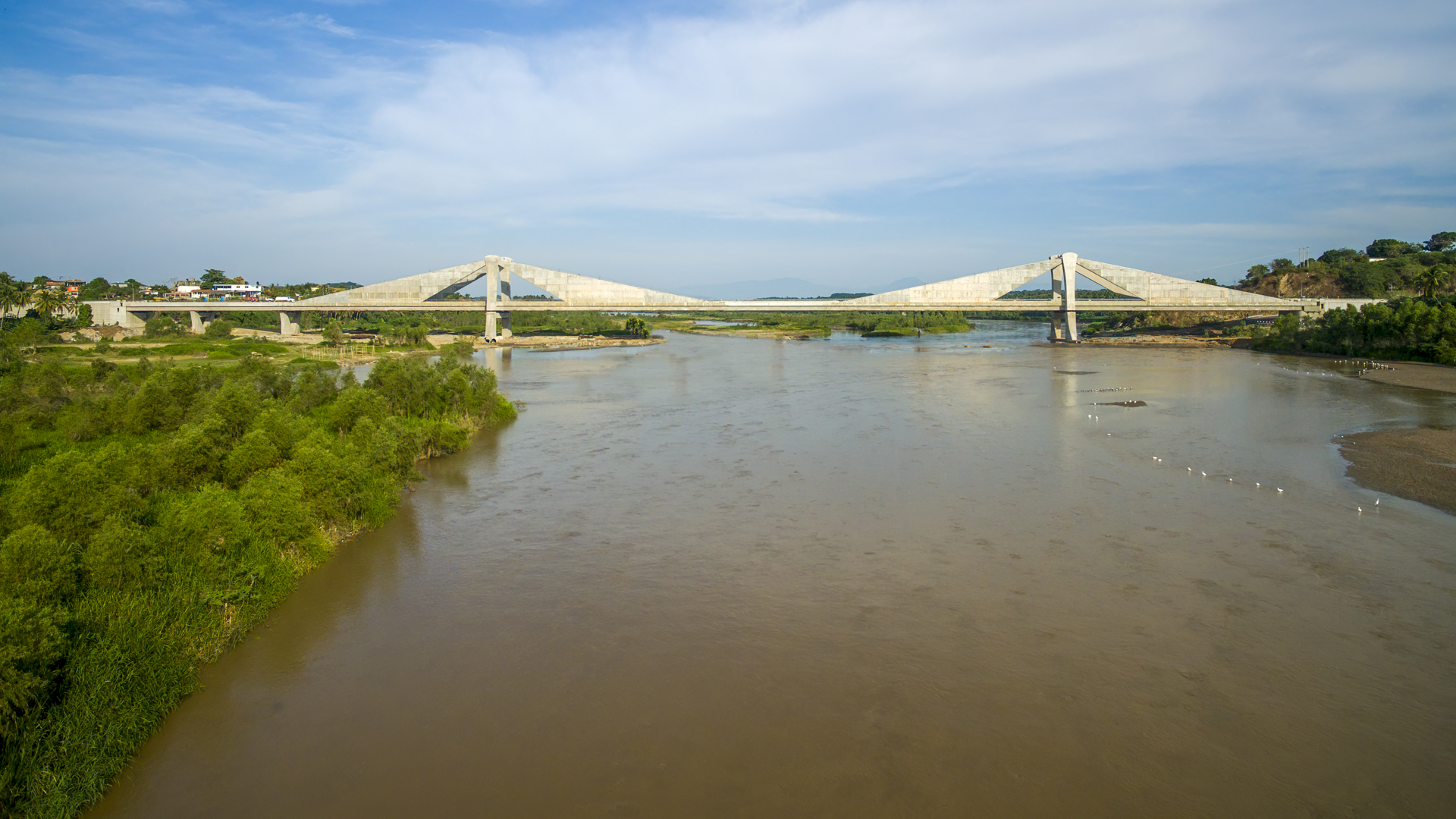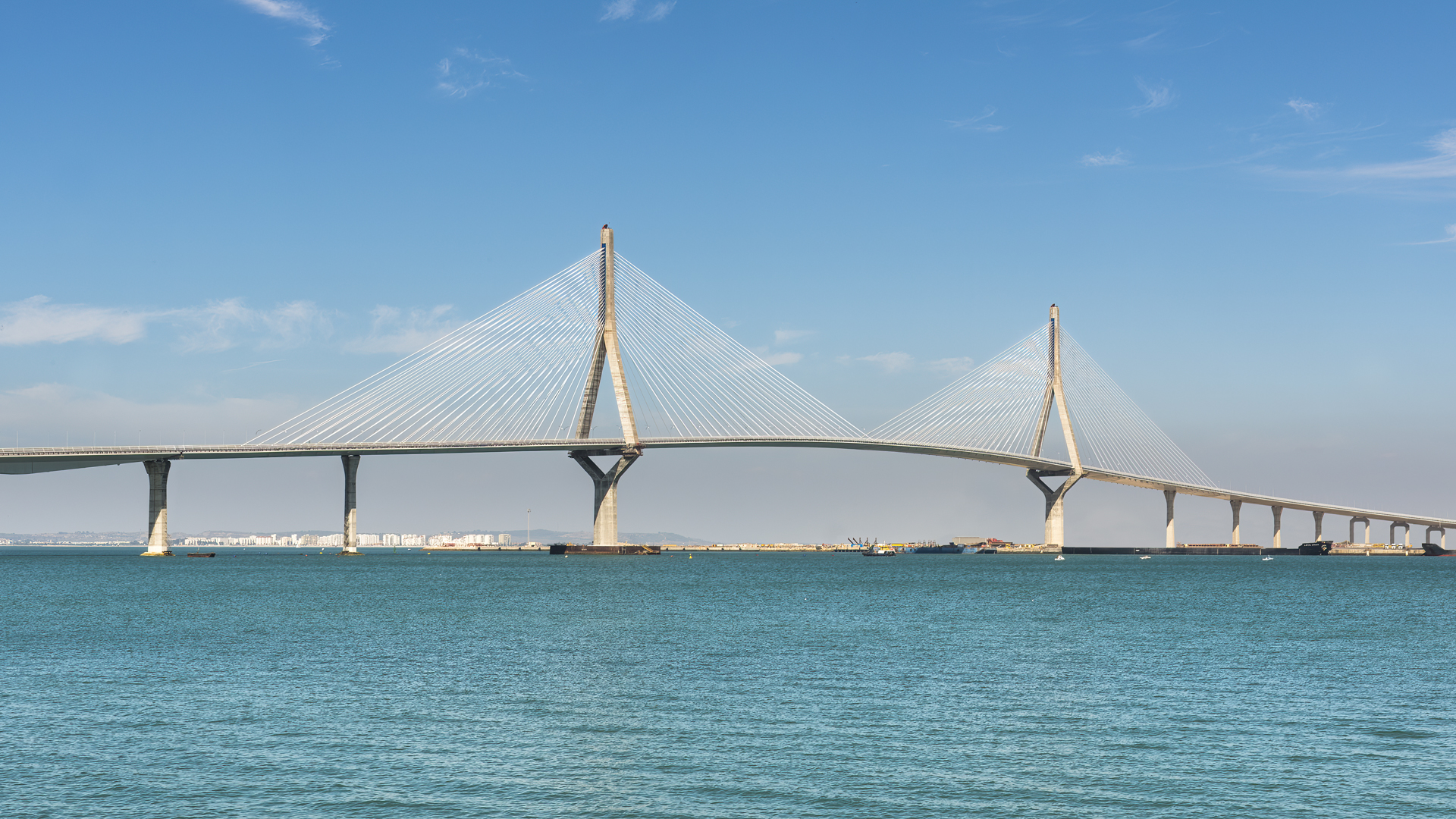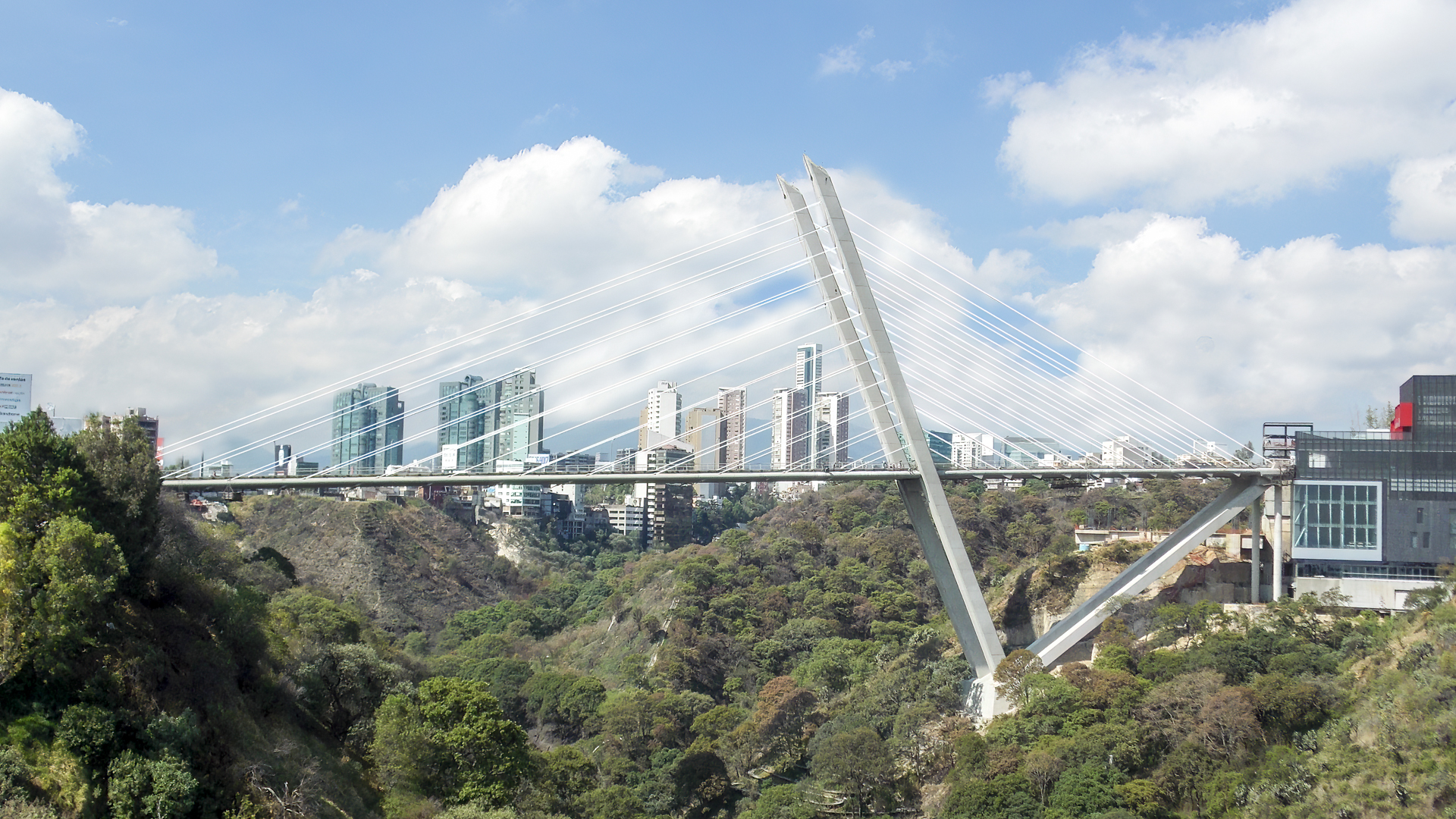


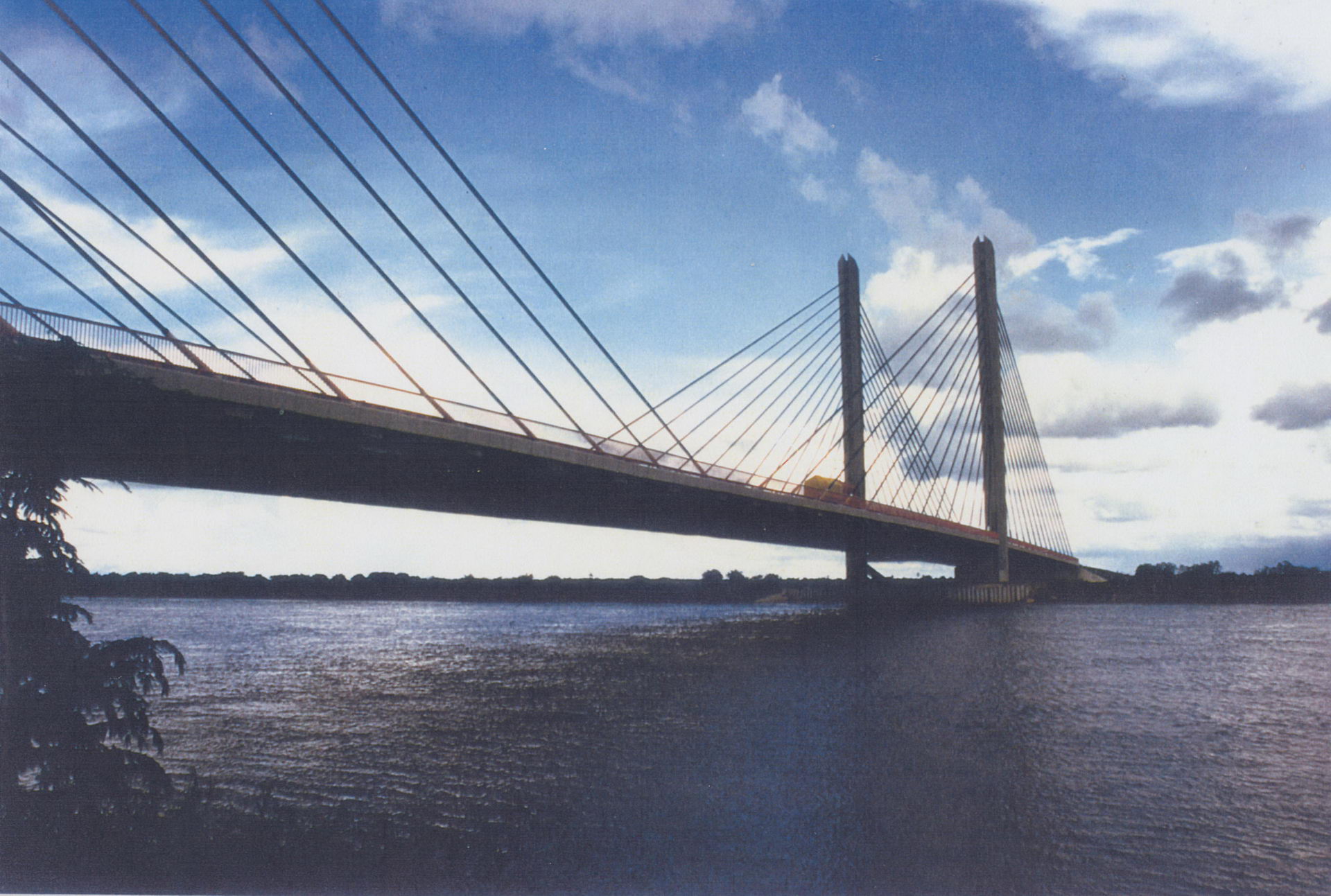
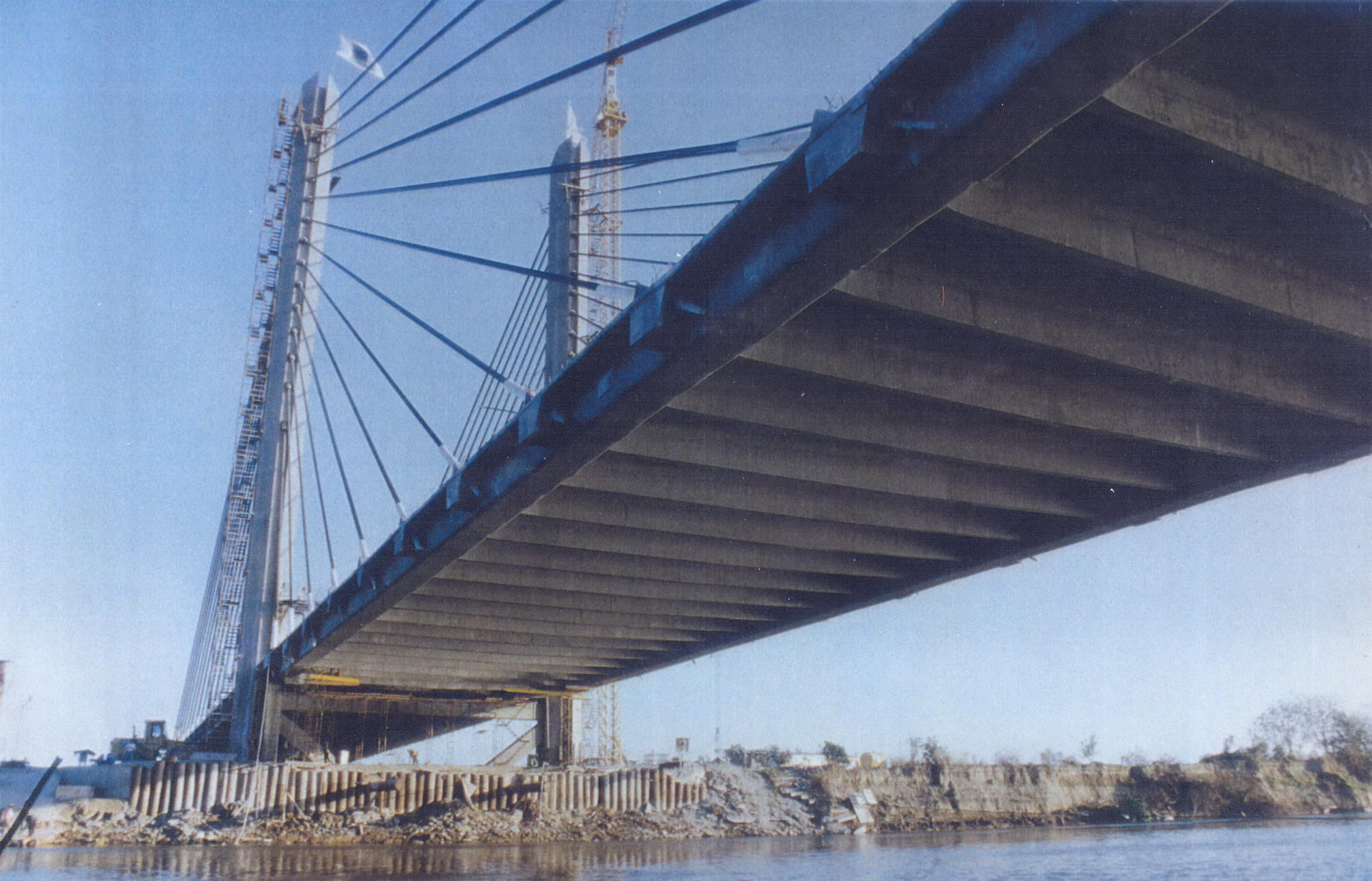
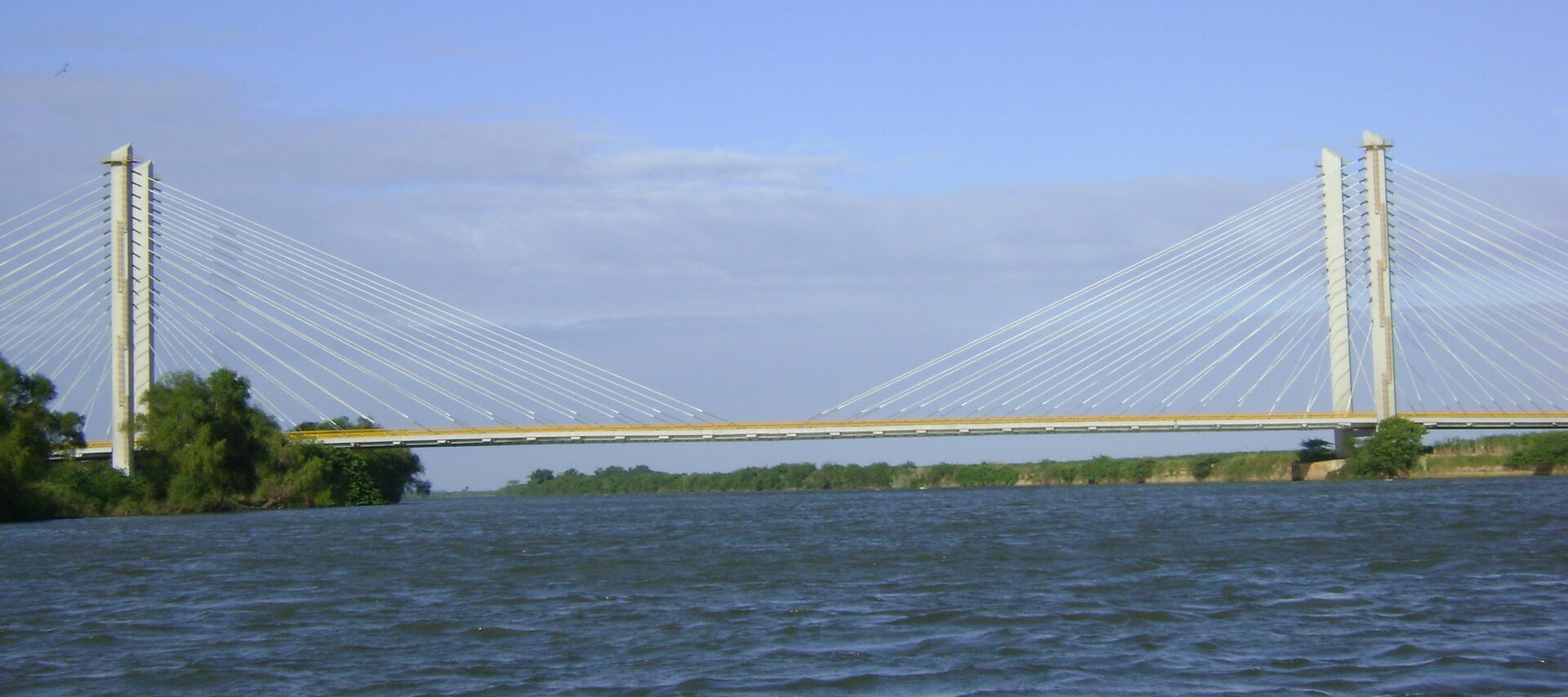
Bridge over the Papaloapan River. Veracruz. México. 1995.
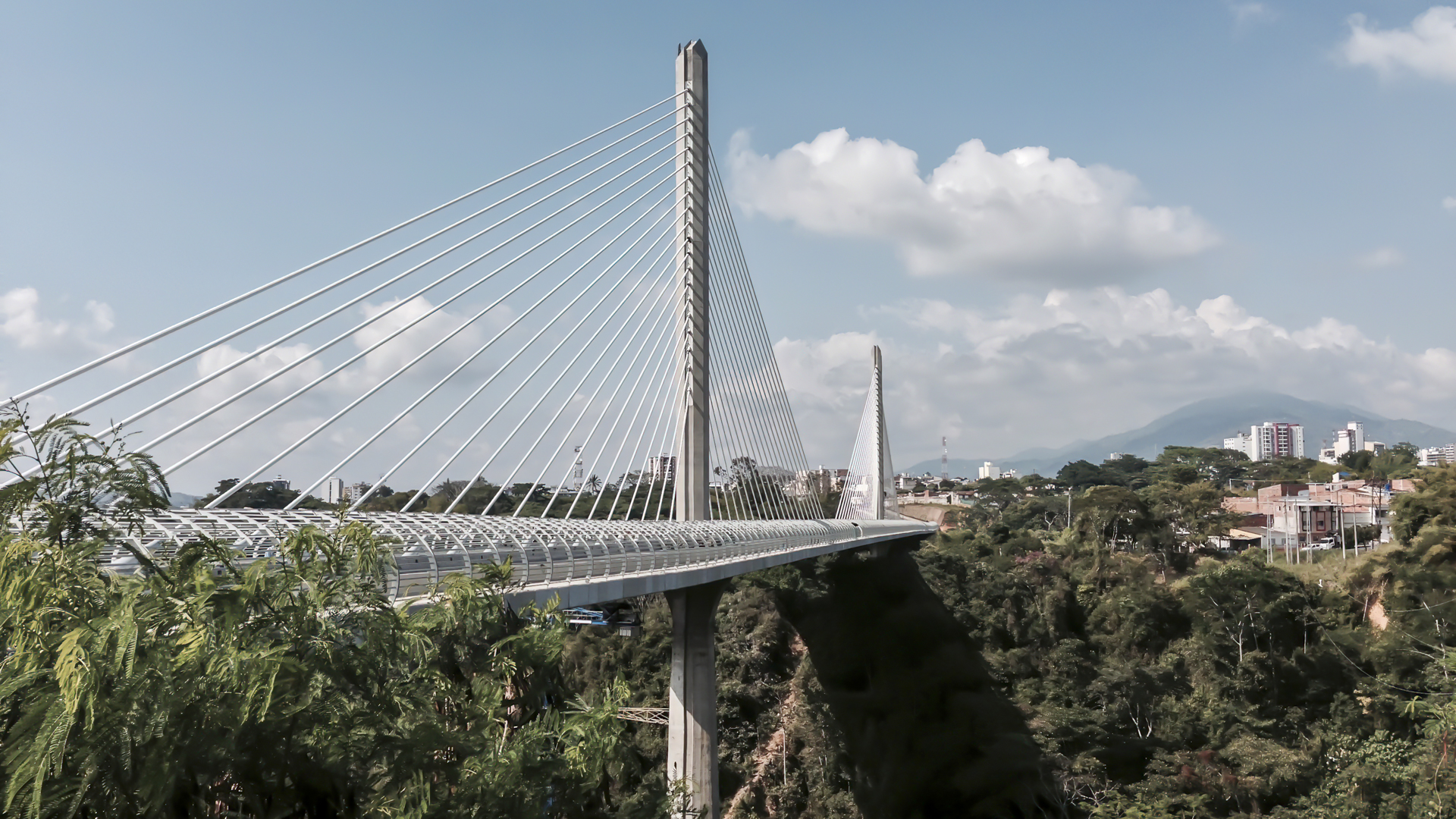
With the bridge over the Papaloapan River, an attempt was made to simplify all the elements that make up a cable-stayed bridge as much as possible. We can say that a minimalist solution was sought, without wishing to draw a parallel with minimalism in architecture. The bridge spans the riverbed with a 203-metre span, and is extended on the banks with 70-metre compensating spans; the deck is continued on the abutments, which are formed by 32-metre-long caissons. The deck is fixed to them to resist the horizontal forces produced by seismic actions. The deck is made up of two solid longitudinal beams, 1.25 metres high, joined by transverse diaphragms and by the upper slab. This deck solution is a classic solution for cable-stayed bridges with the girder planes located at the edges of the deck
The towers are formed by two independent vertical piers located at the edges of the deck. Below the deck, they are connected by a triangulation that resists the transverse forces due to seismic and wind loads, which is also significant for this bridge because the Papaloapan river basin is in a hurricane zone. The bridge was built by successive cable-stayed cantilevers, concreted by means of carriages, advancing symmetrically from the towers towards the centre of the main span and towards the abutments.