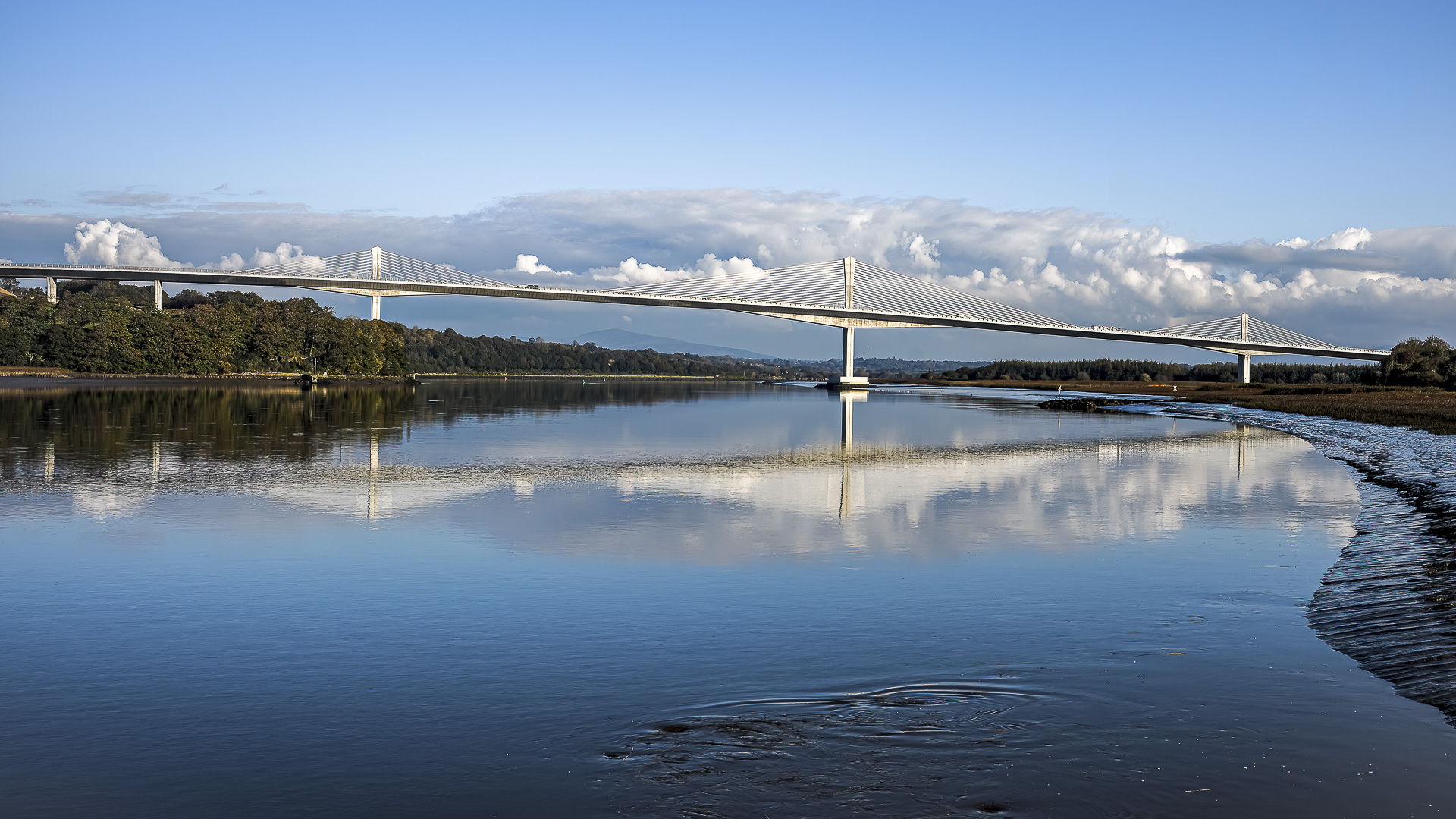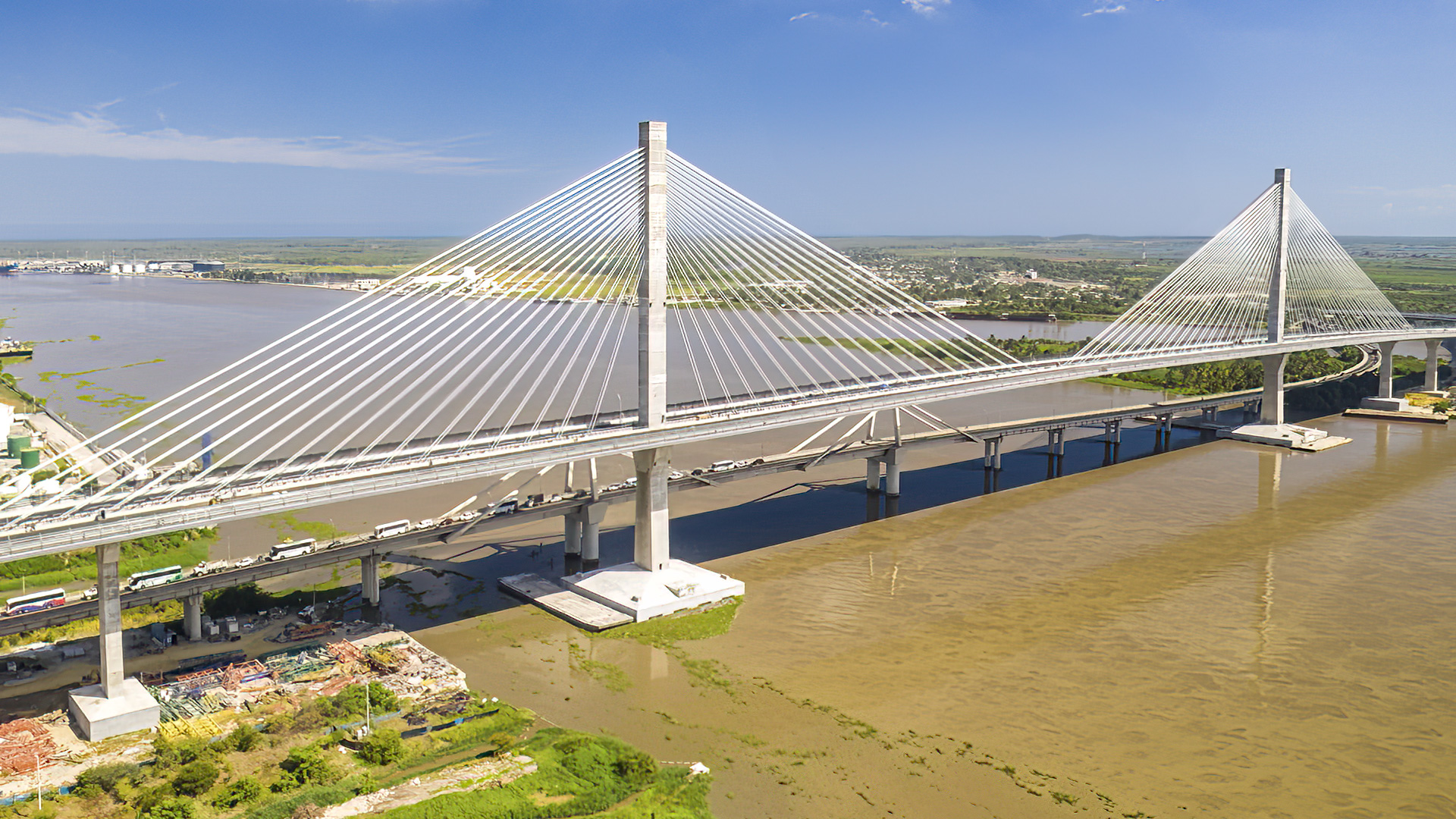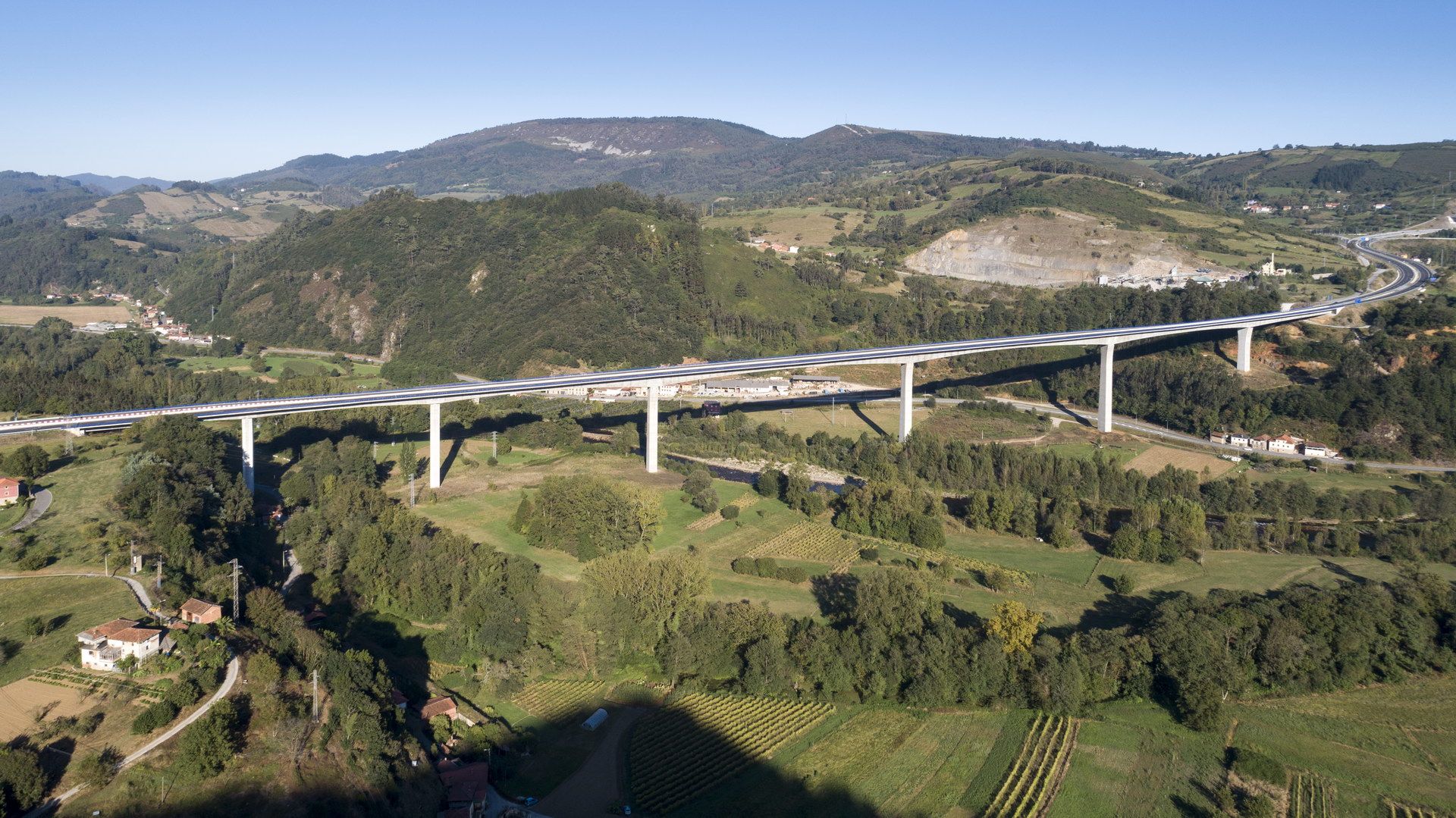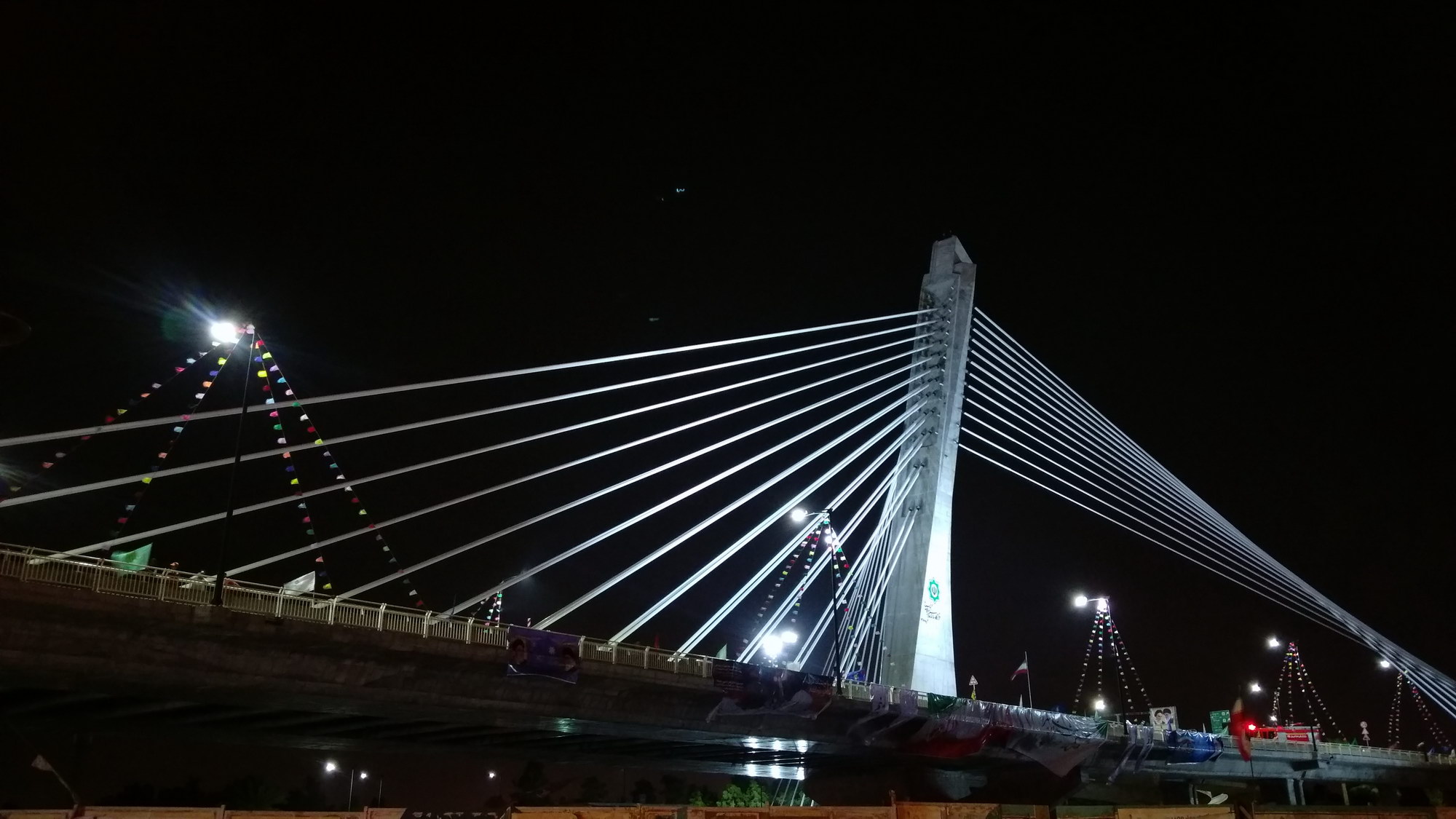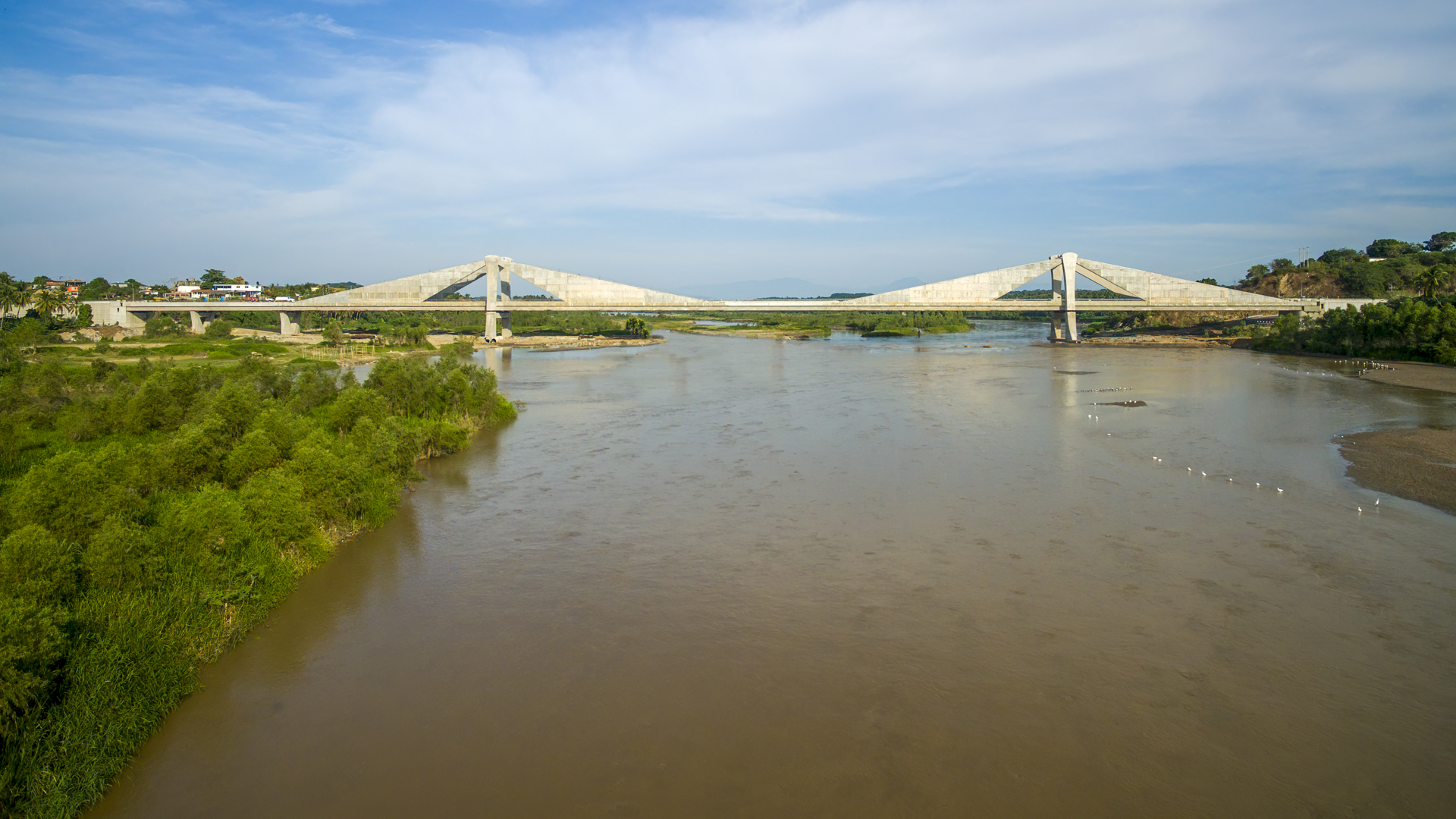


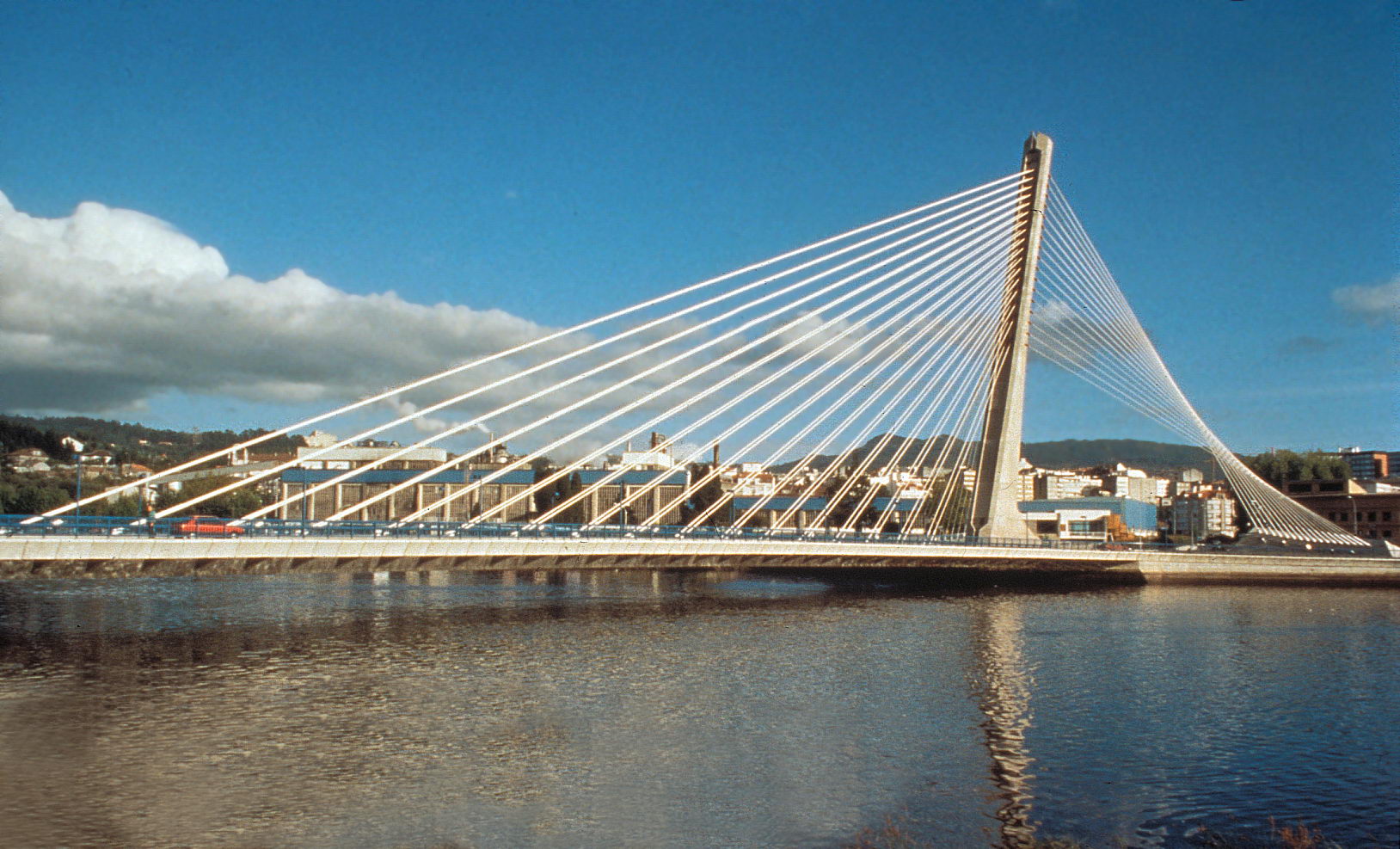
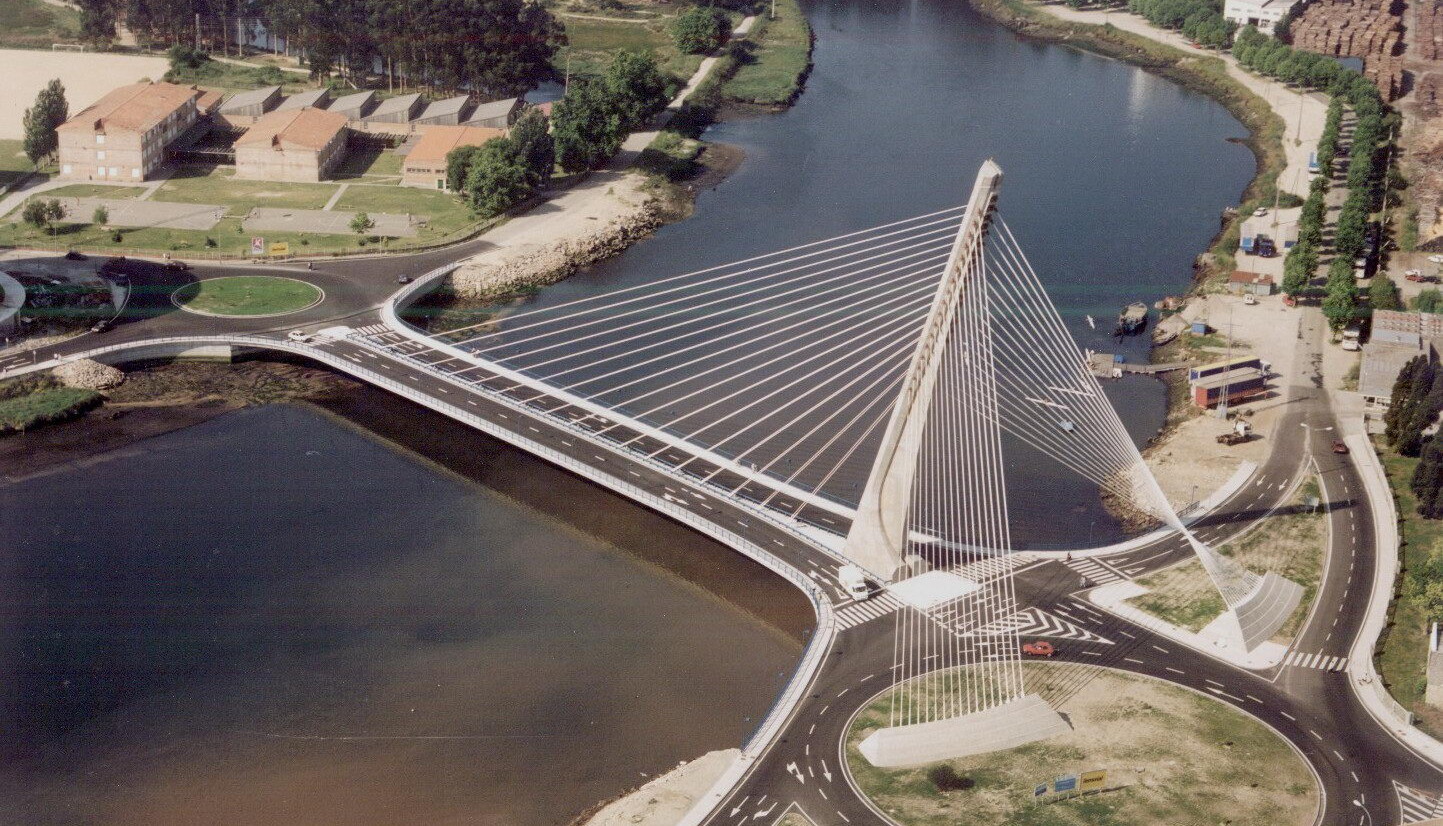
Bridge over the river Lérez. Pontevedra. Spain. 1995.
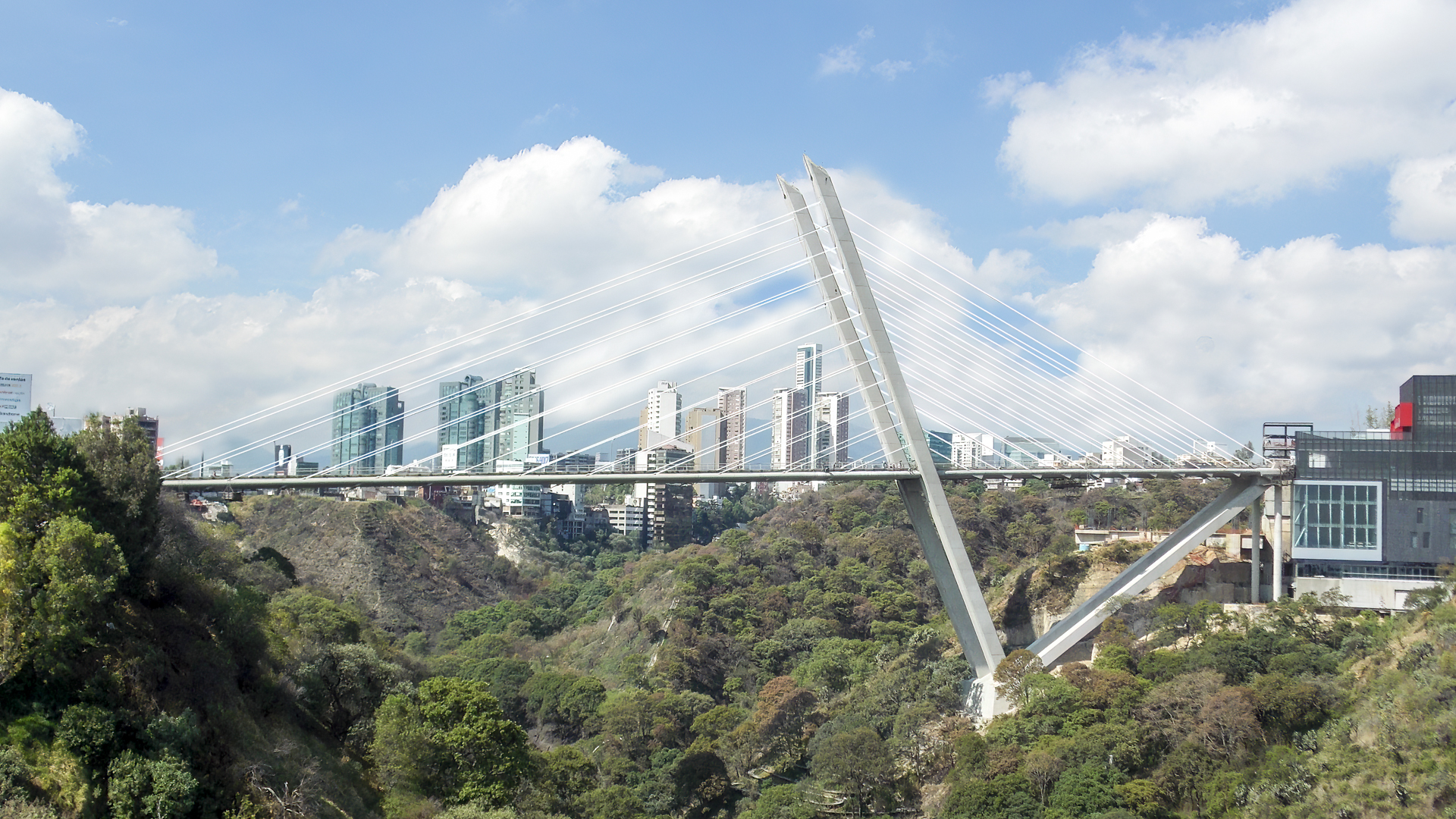
The river crossing is made in a place where the shape of the riverbed and the streets on the banks require a single-span bridge with a span of 125 metres, with a low height above the water level. For this reason, a structure similar to that of the bridge of Sancho el Mayor was adopted, but with a different expression. The position of the counterweights on the sides of the traffic lane gives a spatial configuration of the bracing, which was enhanced on this bridge by the hyperbolic paraboloid arrangement of the compensation beams. These hyperbolic paraboloids have been one of the keys to this project, as can be seen throughout the process, from the first drawing to the finished work. Also fundamental in the physiognomy of both bridges is the inclination of the towers, motivated by the general balance of the structure, which gives rise to a polygon of forces analogous to that of the bridge of Sancho el Mayor. The cross-section of the deck is formed by a single-cell box prolonged by lateral cantilevers. The box is triangulated internally to refer the loads of the webs to the axis of the bridge where the stay cables are anchored, and it is triangulated externally to resist the cantilevers.
The bridge deck was built by successive cable-stayed cantilevers, concreted in situ by means of a roller unit. – Special Mention from the Federation Internationale de la Precontrainte – 1978;