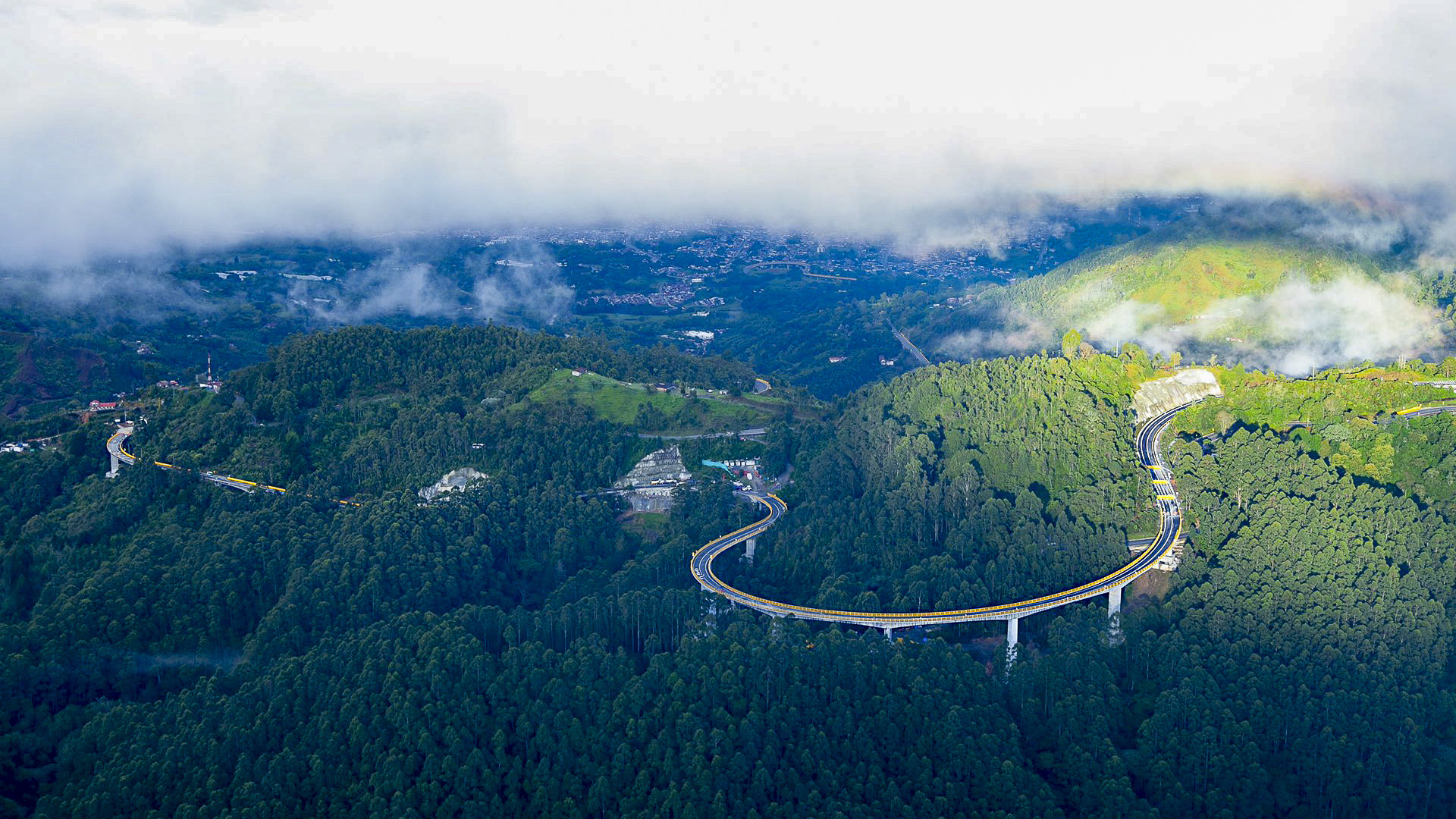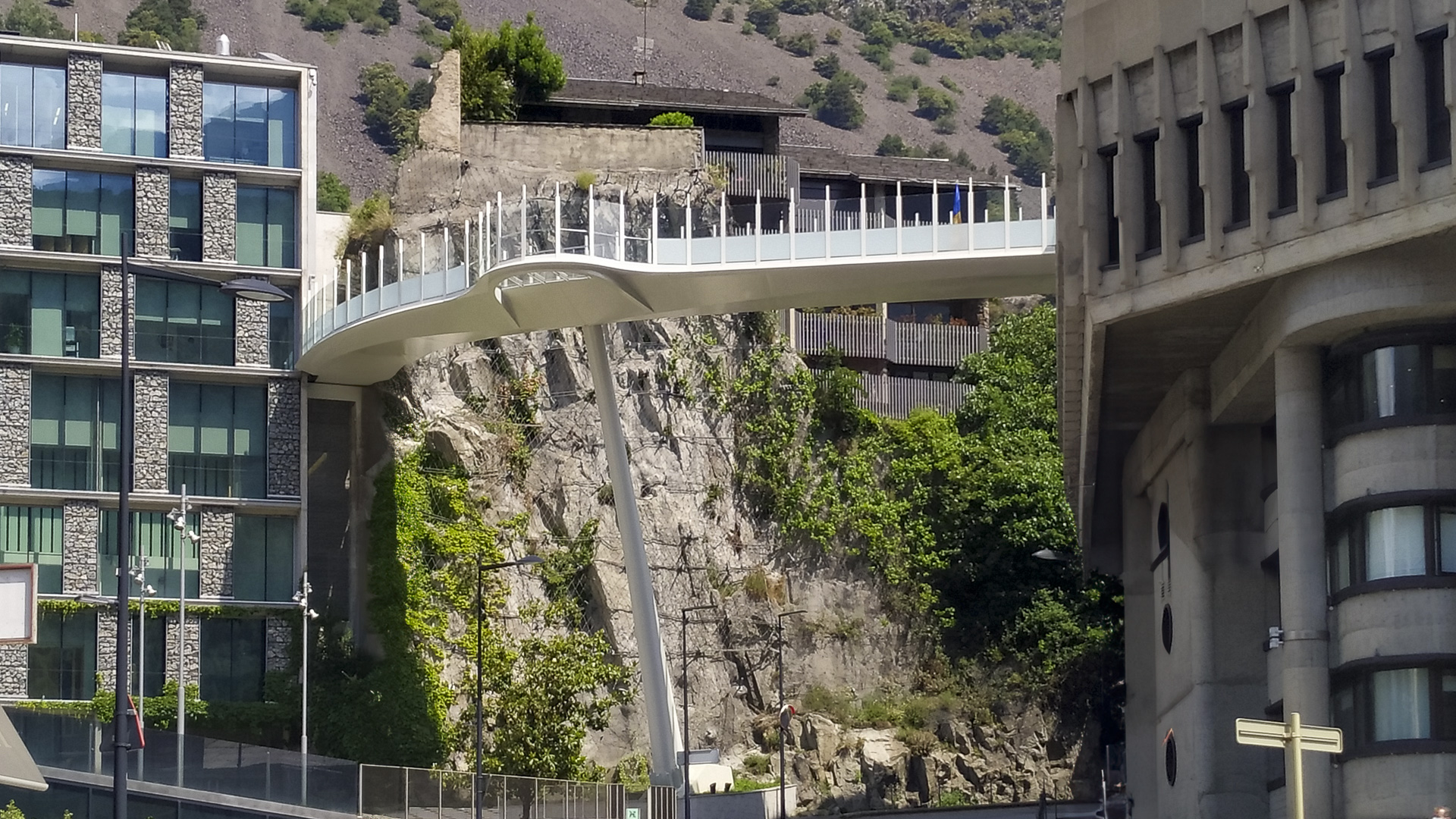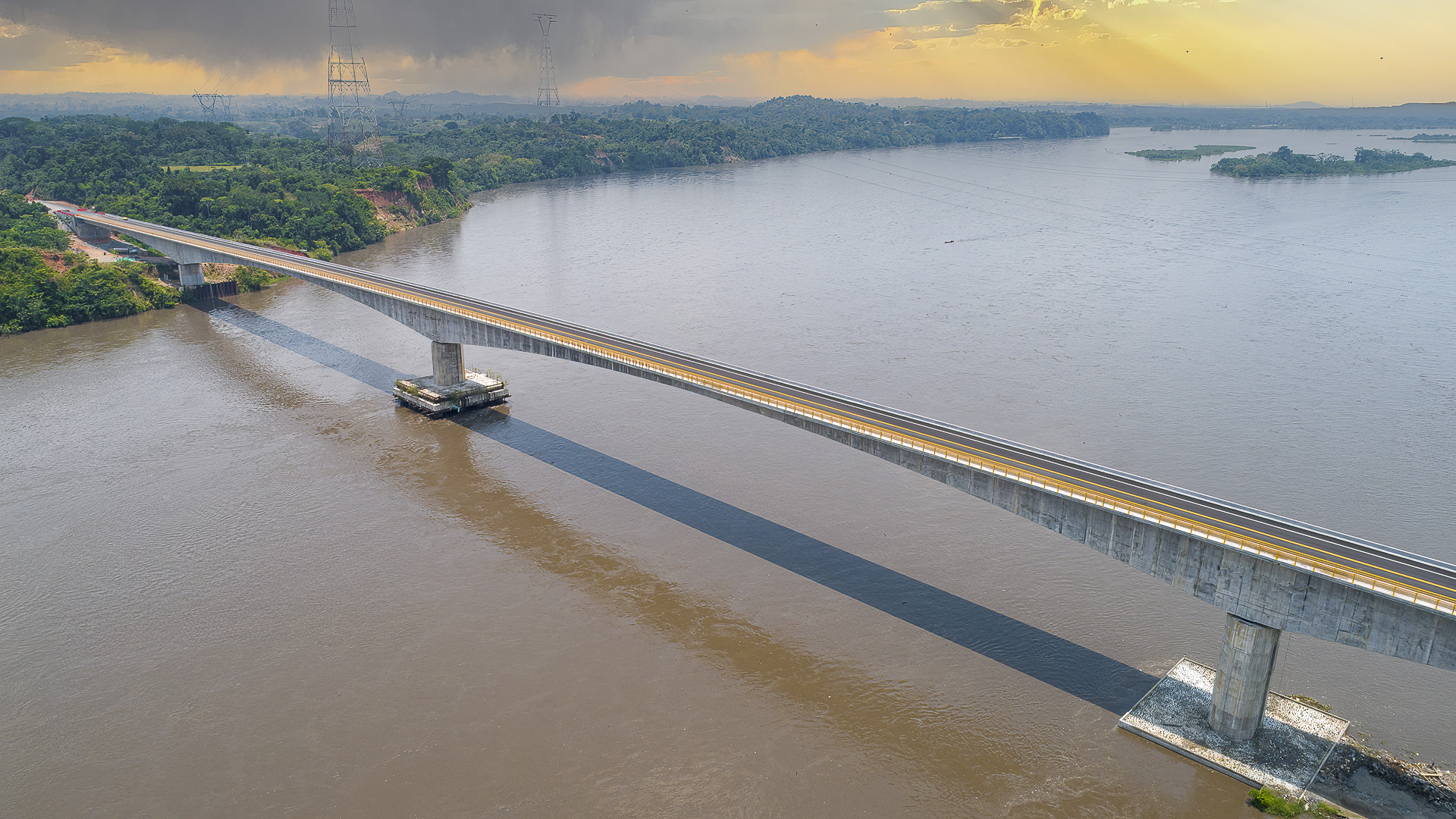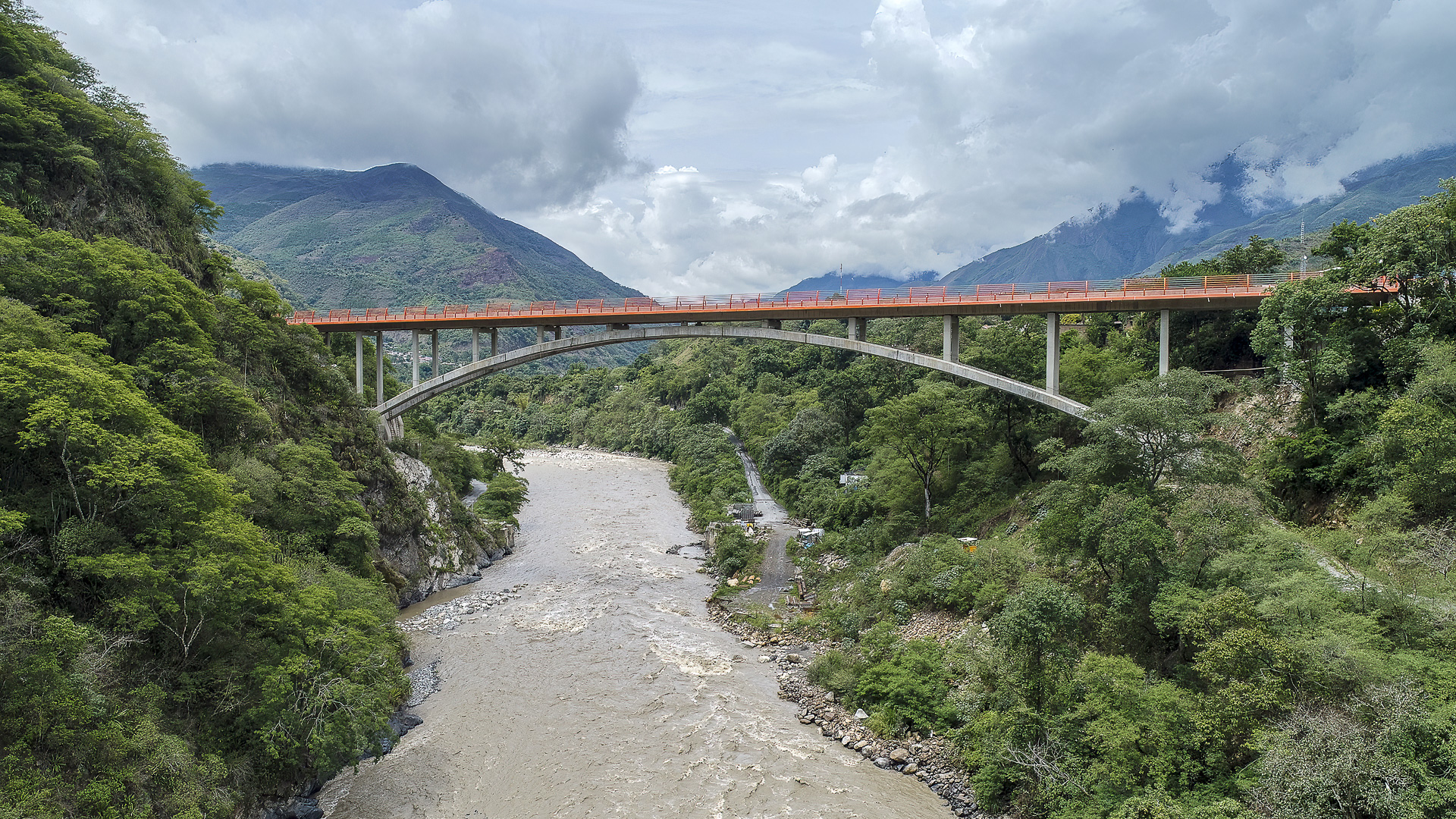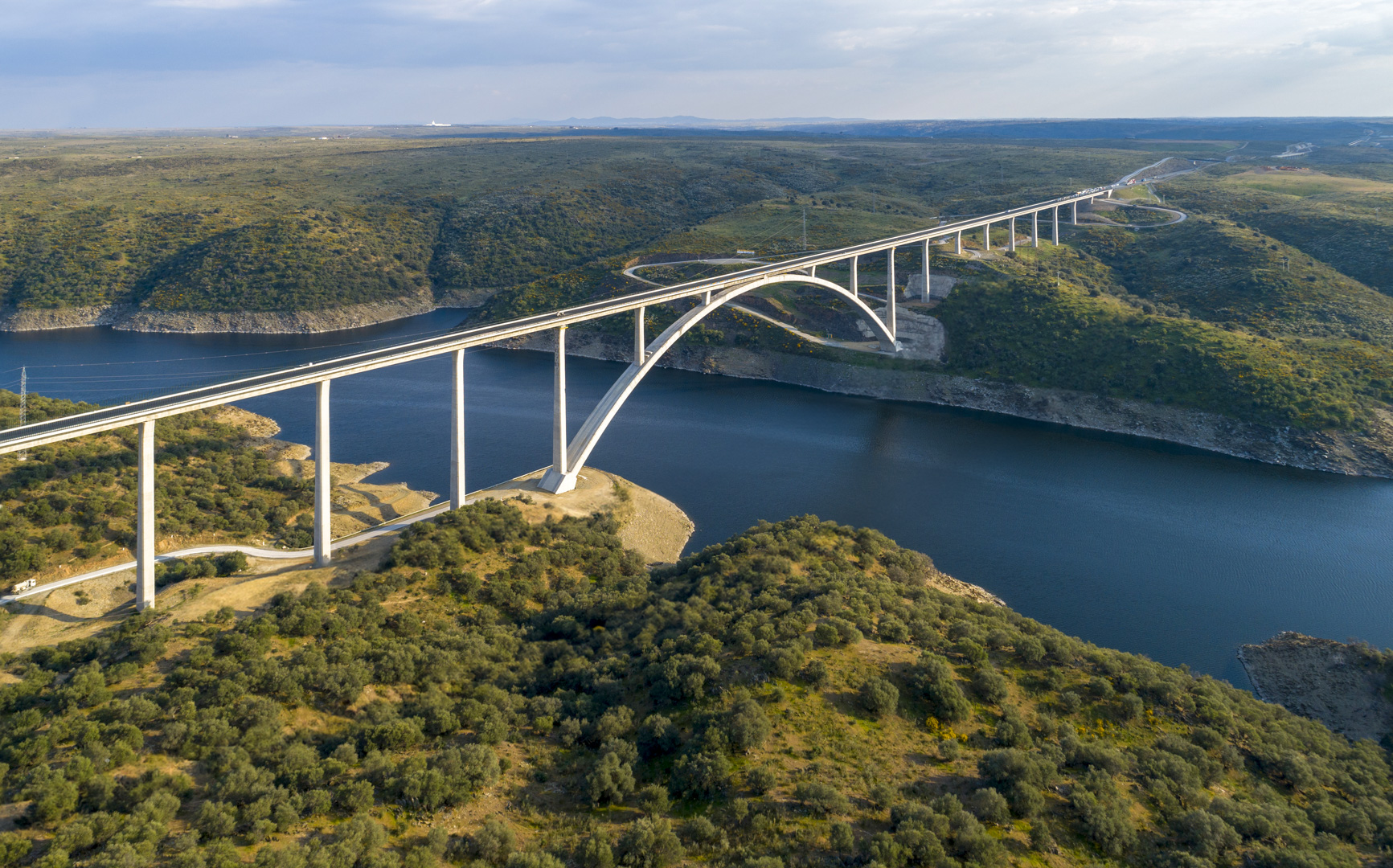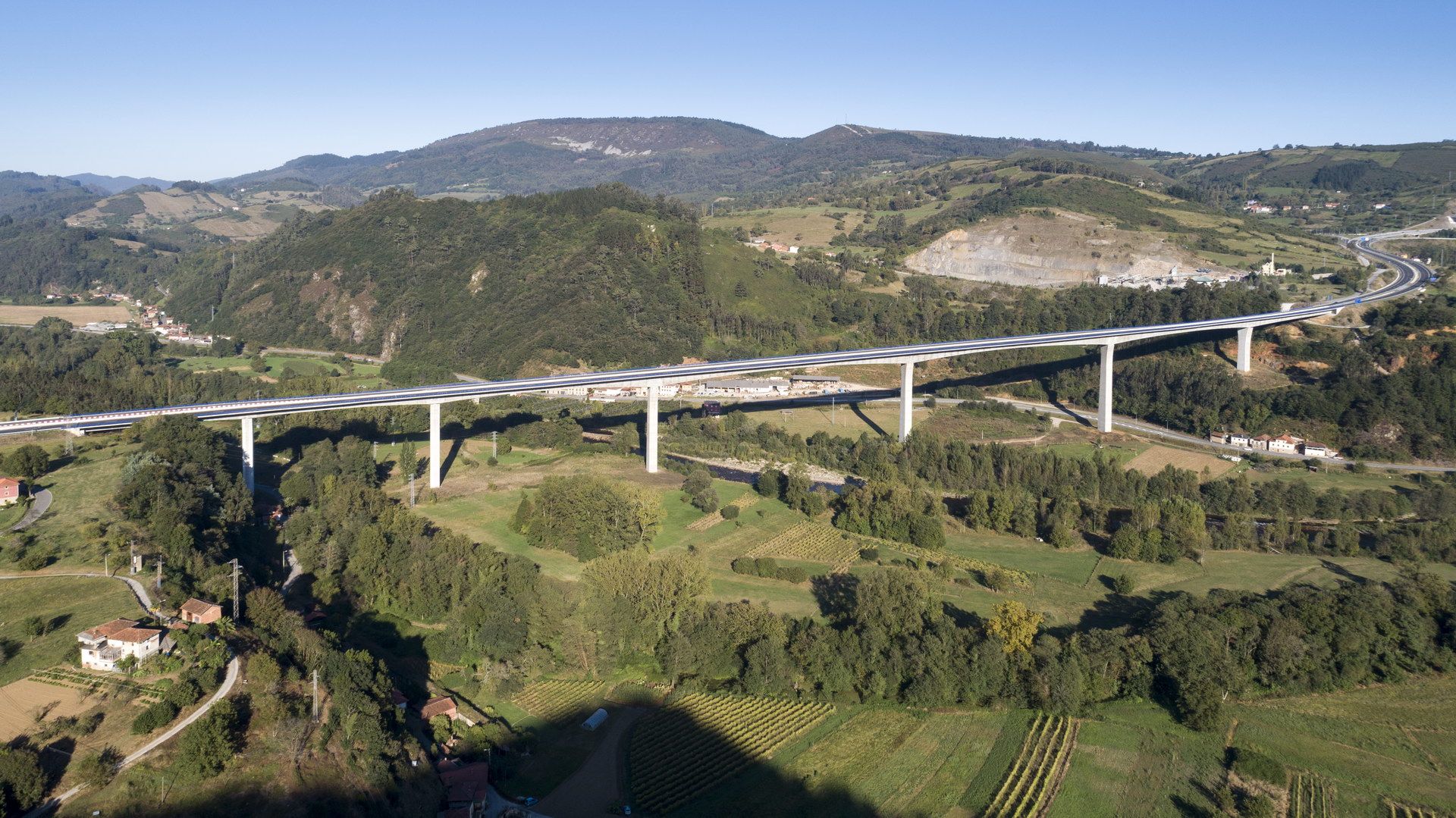


Piedrafita Viaduct Lugo. Spain. 1999.
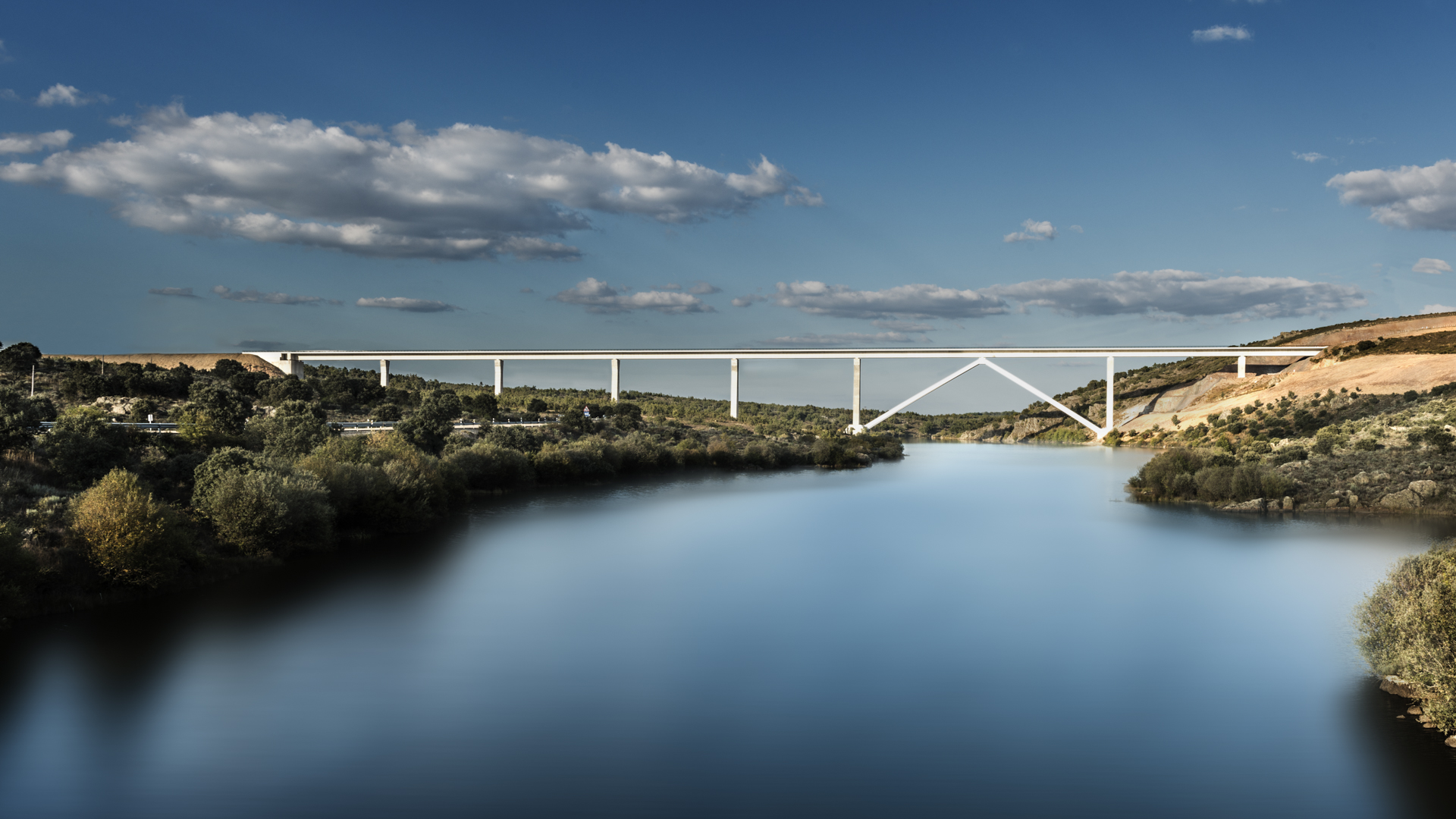
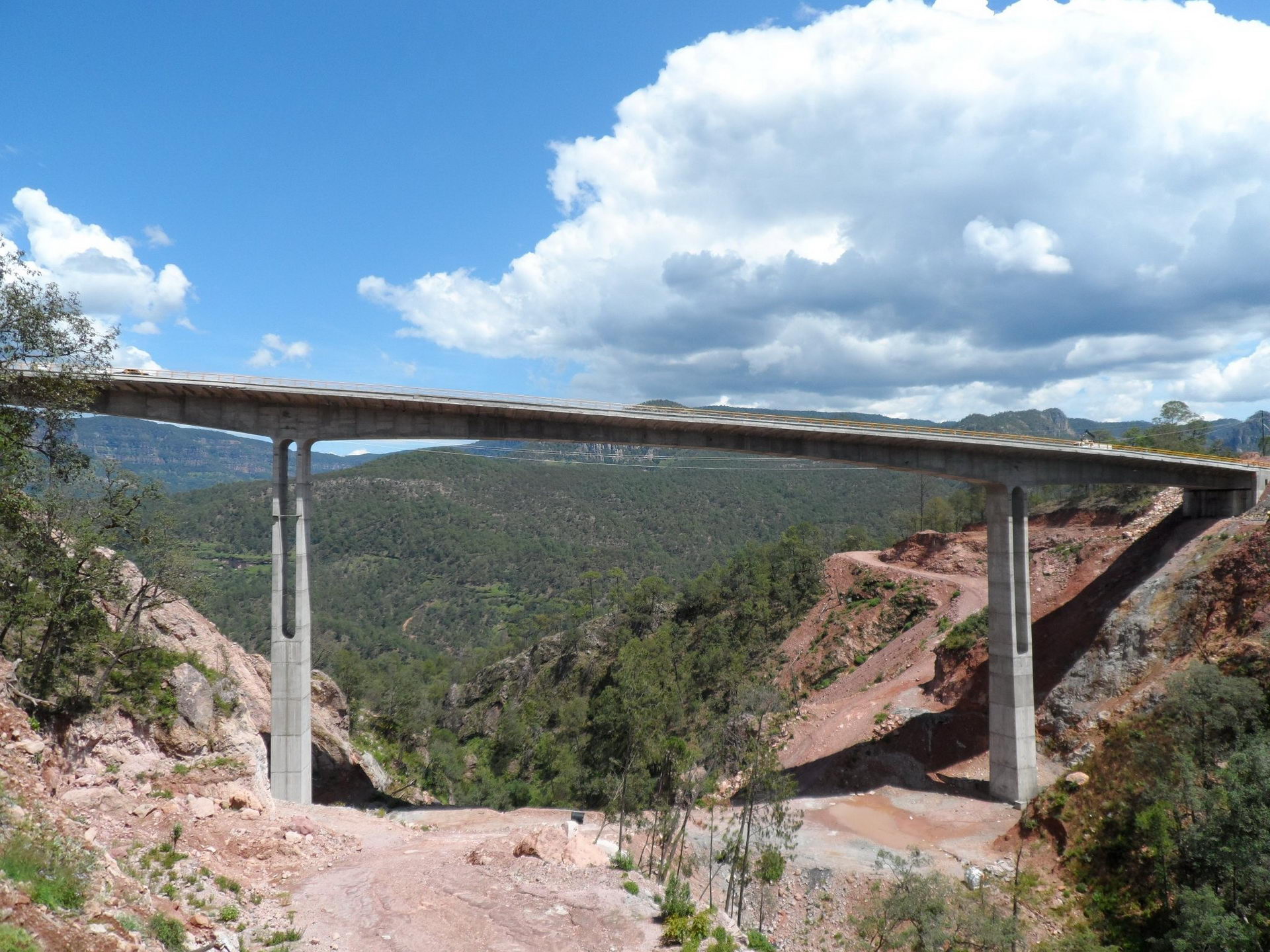
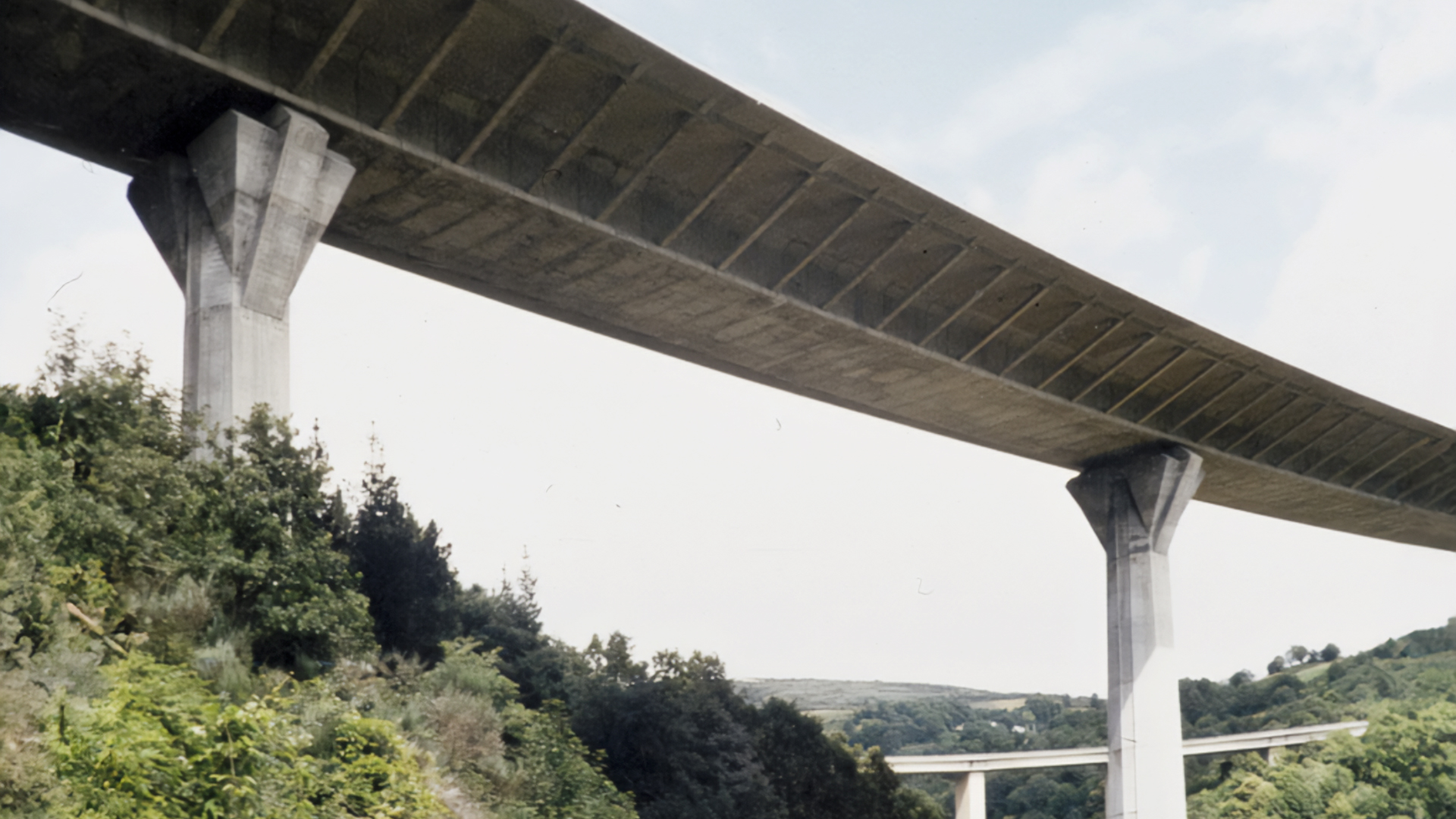
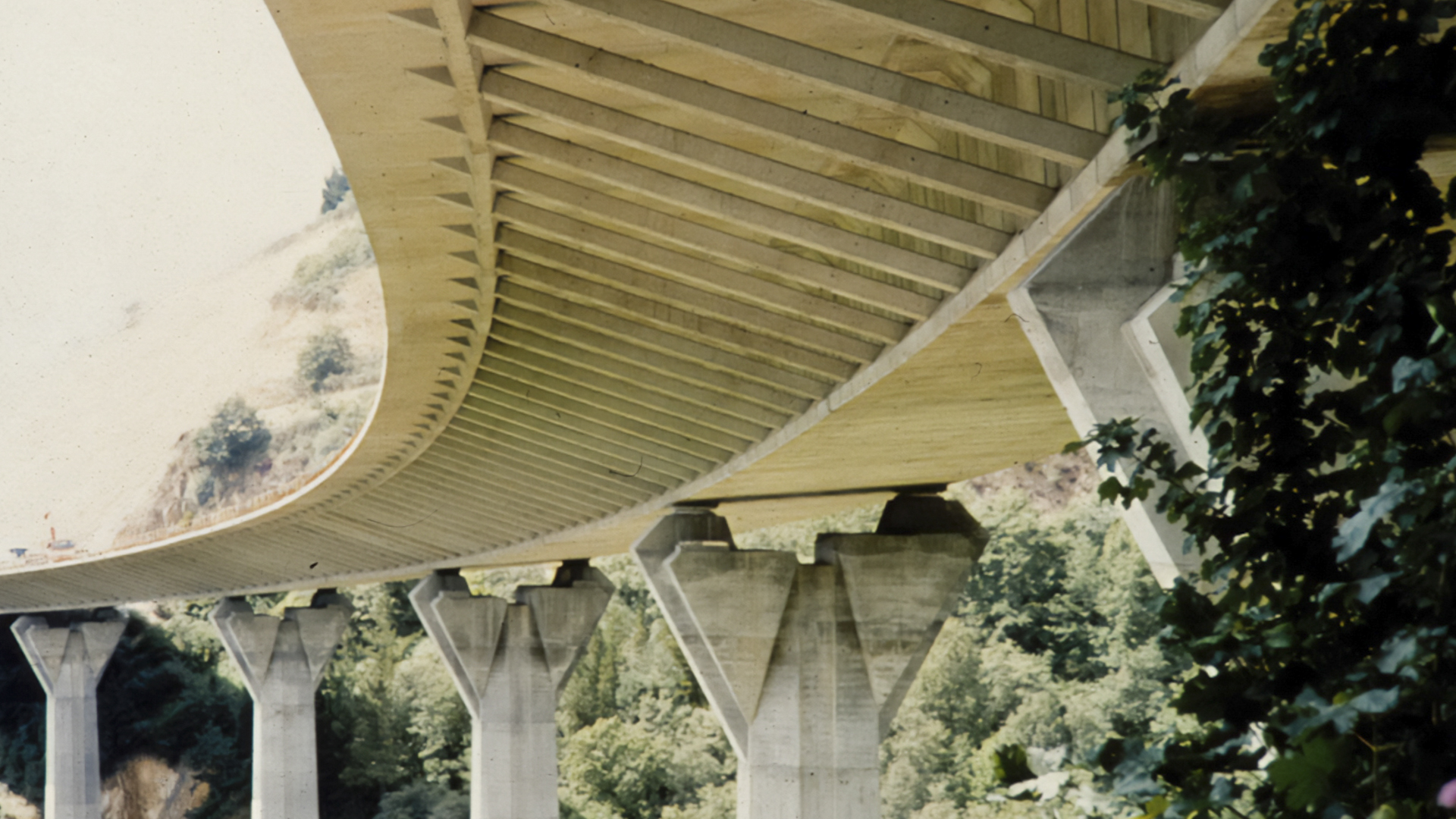
The access from Galicia to the Piedrafita pass on the A-6 motorway made it necessary to build two viaducts with similar characteristics on the Castro-Lamas/Noceda section: both pass over a V-shaped valley, are 403 and 385 metres long, and the maximum height of the piers is 80 and 85 metres. The total width of the platform is 26.50 metres. 1- Initial project The solution of the initial project for these viaducts, which we did for the Ministry of Public Works, consisted of constant-edged viaducts with main spans of around 100 metres; this required four piers on each viaduct, with heights varying from 25 to 85 metres. The deck was a single box section with large lateral cantilevers. These cantilevers were supported on brackets, forming a triangulation with the slab. This external triangulation was completed with a triangulation inside the box section by means of javelins that went from the lower corners of the box section to the midpoint of the upper slab;
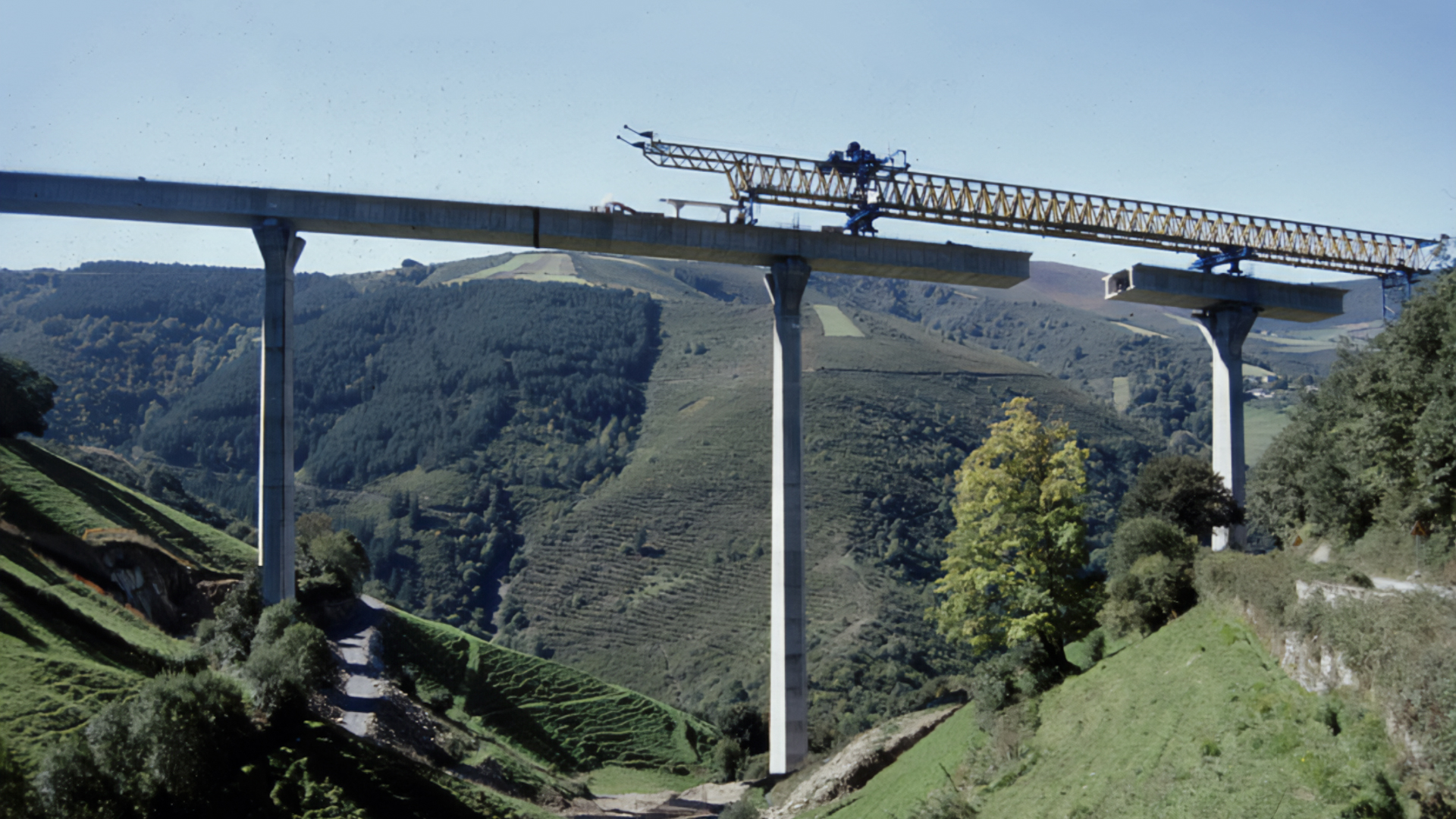
The viaduct was built by means of offset cantilevers from each pier built on site using carriages. The deck was built in two phases; in the first phase, the caisson was built by successive cantilevers offset by means of carriages and once the cantilevers were closed, the external prefabricated jibs were assembled and the lateral cantilevers were concreted. 2.- Construction project The construction company proposed the possibility of modifying the construction process by building the initial caisson using prefabricated segments, instead of doing it in situ using roller units. In this approach, and with the authorisation of the Ministry of Public Works, we projected for the construction company the modification of the project due to the change of construction system proposed by the company;
The change led to the following modifications: Firstly, the span has been changed because the 100-metre span was too long for the construction company’s means of assembly. For this reason, it was reduced to 75 metres, which is the result of adding an extra pier on each viaduct. Comparing the fit of both solutions in the valley, both are equally valid. The 100 metre span was adopted after an optimisation study based on the height of the piers. This span was somewhat smaller than the height of the piers for a viaduct with piers of constant height, but in the Piedrafita viaducts this optimum span is logically smaller as they are V-shaped valleys. The advantage of large spans is that we have to make foundations, and therefore the valley is less affected. Secondly, the cross section was modified to reduce the weight of the segments;
The dimensions of the box were reduced as much as possible by increasing the overhangs. From the trapezoidal caisson of the project, a rectangular caisson without interior triangulation was used. The deck edge is 3.70 metres, and the lateral overhangs are 9 metres. The construction was done by successive cantilevers, with the cantilevers initially resting on four jacks that allowed their final position to be adjusted. The segments were mounted with a launching beam that placed them alternately on the two symmetrical cantilevers from each pier. Once a span had been completed, the keystone was closed and the launching beam was passed over to rest on the next pier. The voussoirs were made in a park far from the building site, using two fixed shutters;
The closing of one of the faces of each voussoir was done with the previous voussoir. This is what is known as “short-line conjugated segment construction”. These viaducts were completed in 1999;