

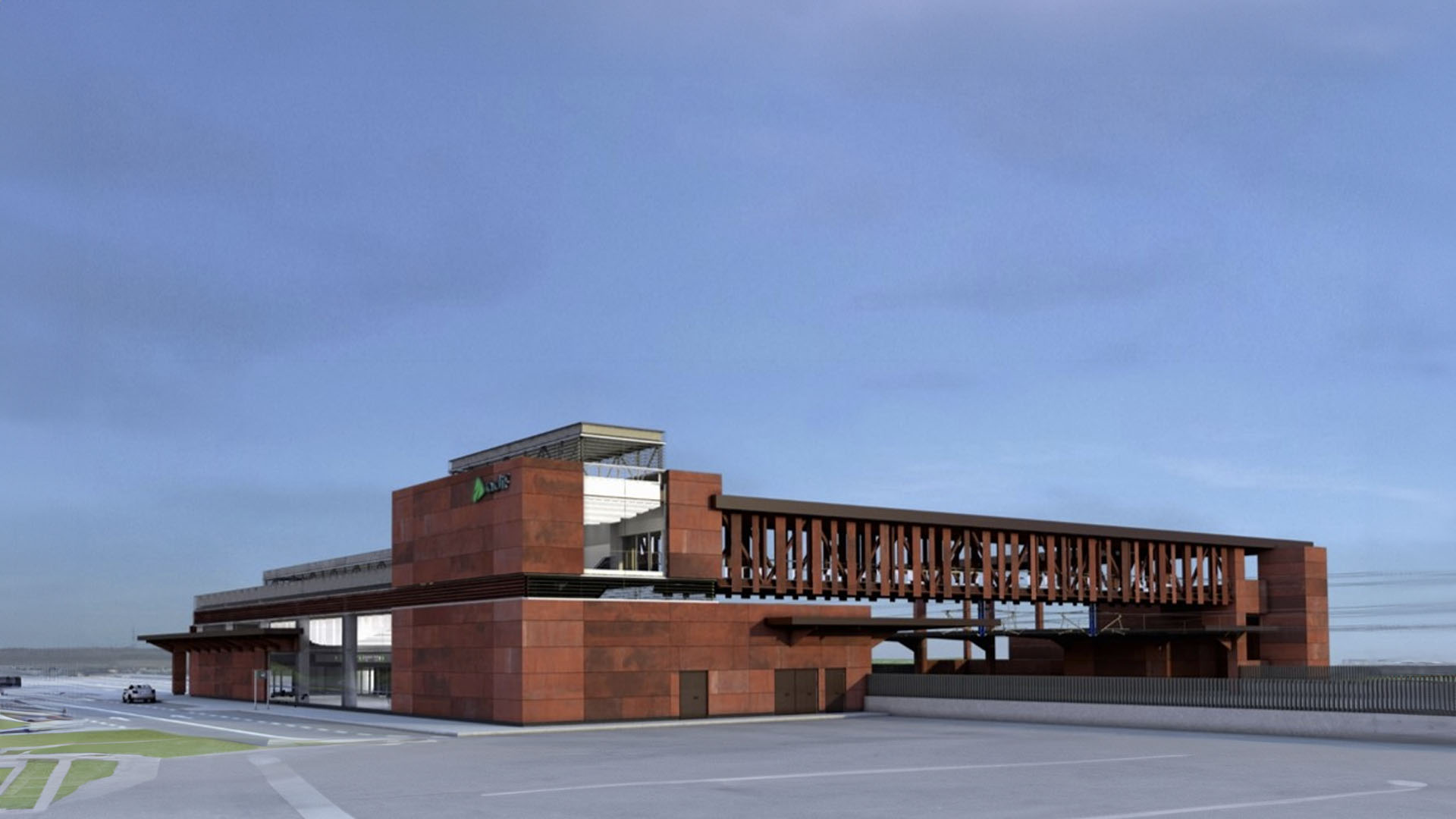
Medina del Campo Station. Valladolid. Spain. 2011.
CFC Scope
Project Structure
Project Manager
Javier Muñoz-Rojas Fernández
Clients
ADIF
Typology
Transport stations
From a constructive point of view, the different bodies that make up the new station are.
- Main Station Building.
- Secondary walkway landing building on platforms.
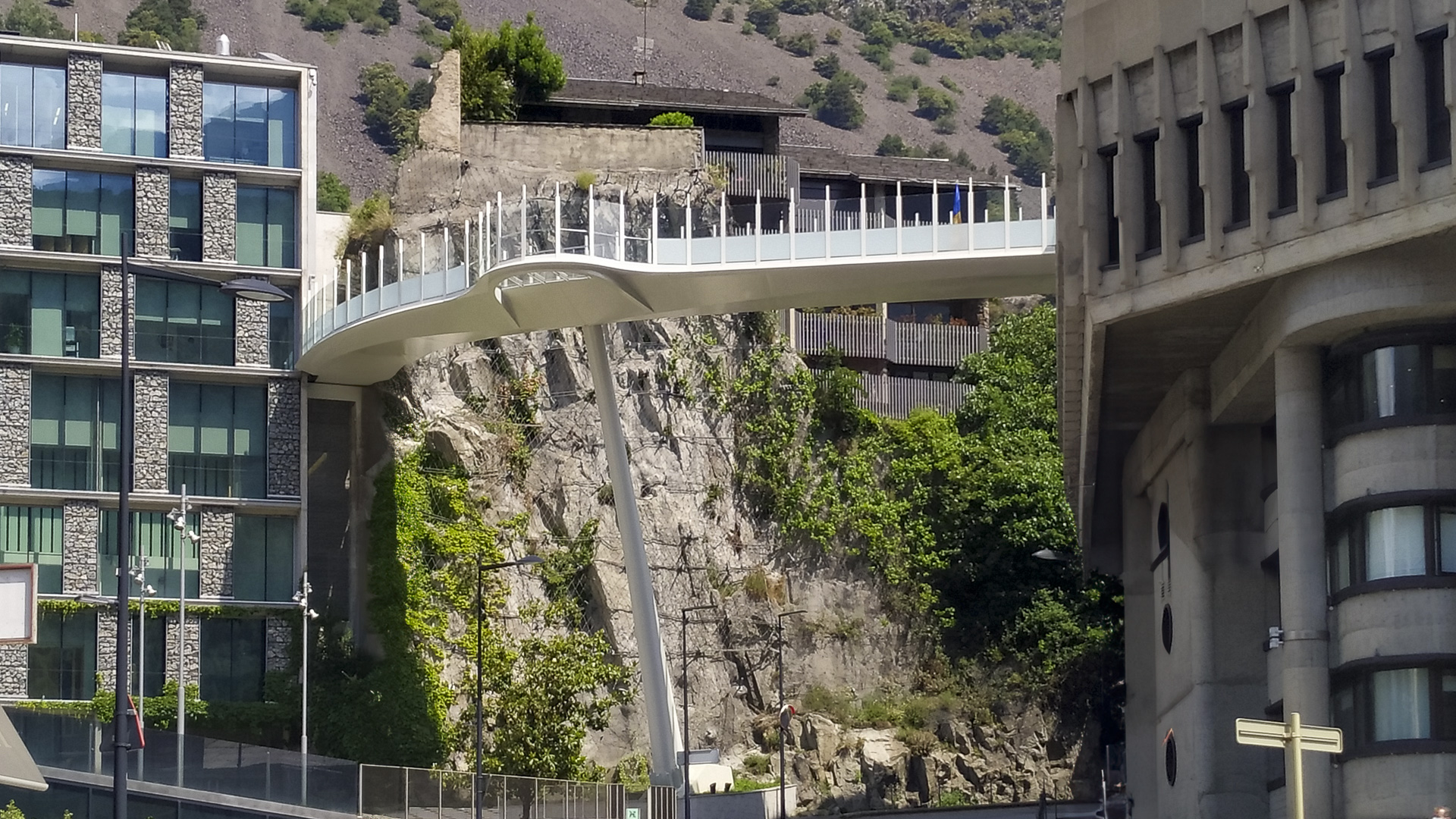
- Footbridge over the tracks.
- Car park canopies.
- Platform shelters.
- Deposits
The buildings are modestly sized constructions with two storey levels in the higher areas, but mostly single storey. They are resolved with similar solutions but are completely independent as they are separated by the tracks. Their connecting element is the third element, the walkway over the tracks, but this union is not materialised in their structures in order to avoid the inconveniences that can arise from the different conditions of rigidity and behaviour, with joints between the two separating them. Thus, from a structural point of view, they are practically independent elements. The canopies, on the other hand, are secondary elements that are arranged to cover the passenger areas on platforms or vehicle areas in the car park. The former coexist in some sections with the buildings, and in these areas their structure has been resolved in a common manner with that of the buildings. The solutions used are elementary, as they extend the previous solution in the building, with free cantilevers resting outside the building on straight legs. Their particularity comes exclusively from the relatively large span of their overhang.
Finally, for the car park canopies, a solution was sought that would avoid the repetition of standard solutions common in these facilities, a decision that was also influenced by the intention to concentrate the supports in a few points given the poor characteristics of the upper layers of the supporting ground. The general criterion for the development of the structures has been to propose solutions with maximum prefabrication or assembly in the workshop in order to guarantee the quality of the materials on the one hand, and on the other to facilitate the activities carried out on site for assembly and reduce construction times.