

White Towers Building Madrid. 1964.
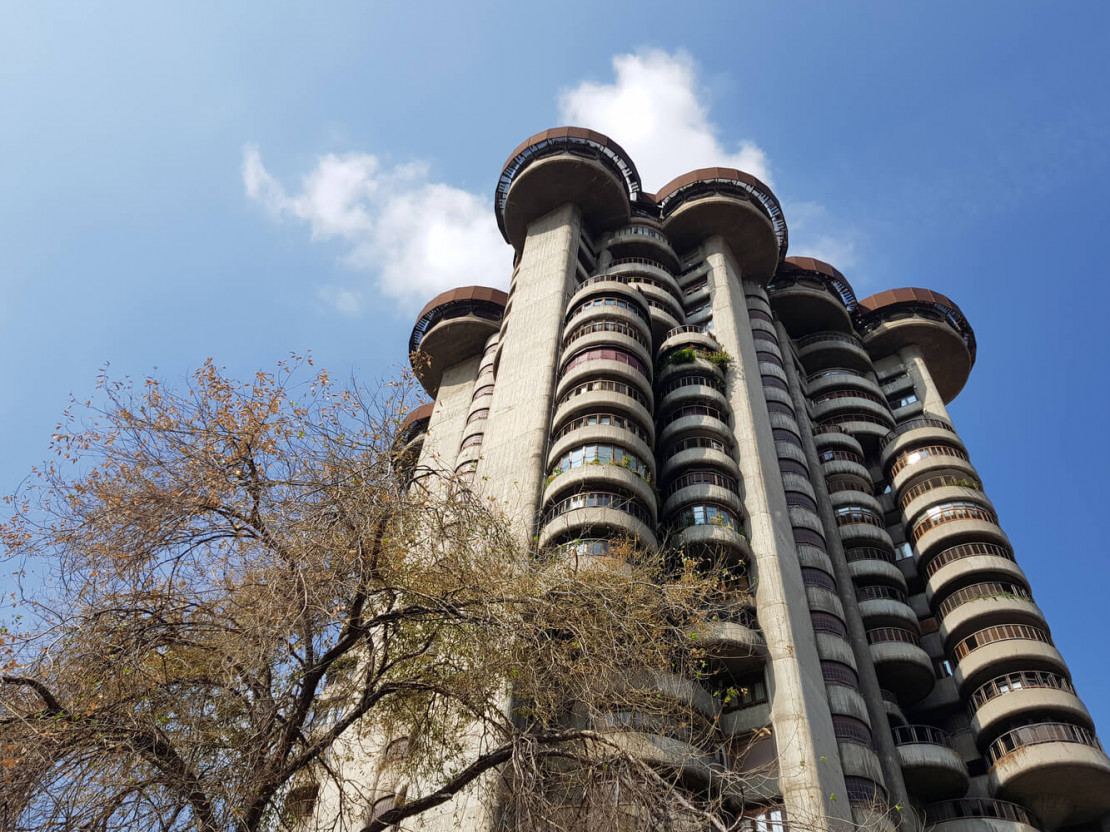
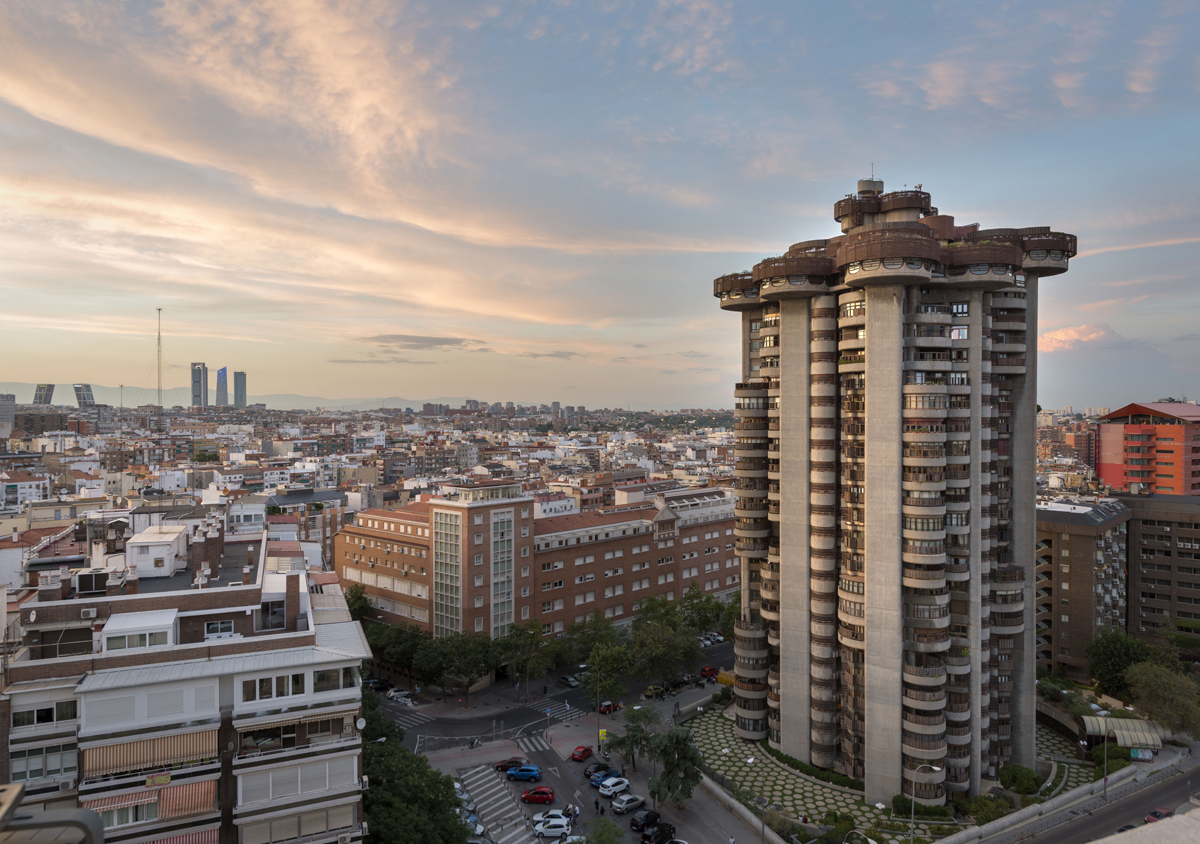
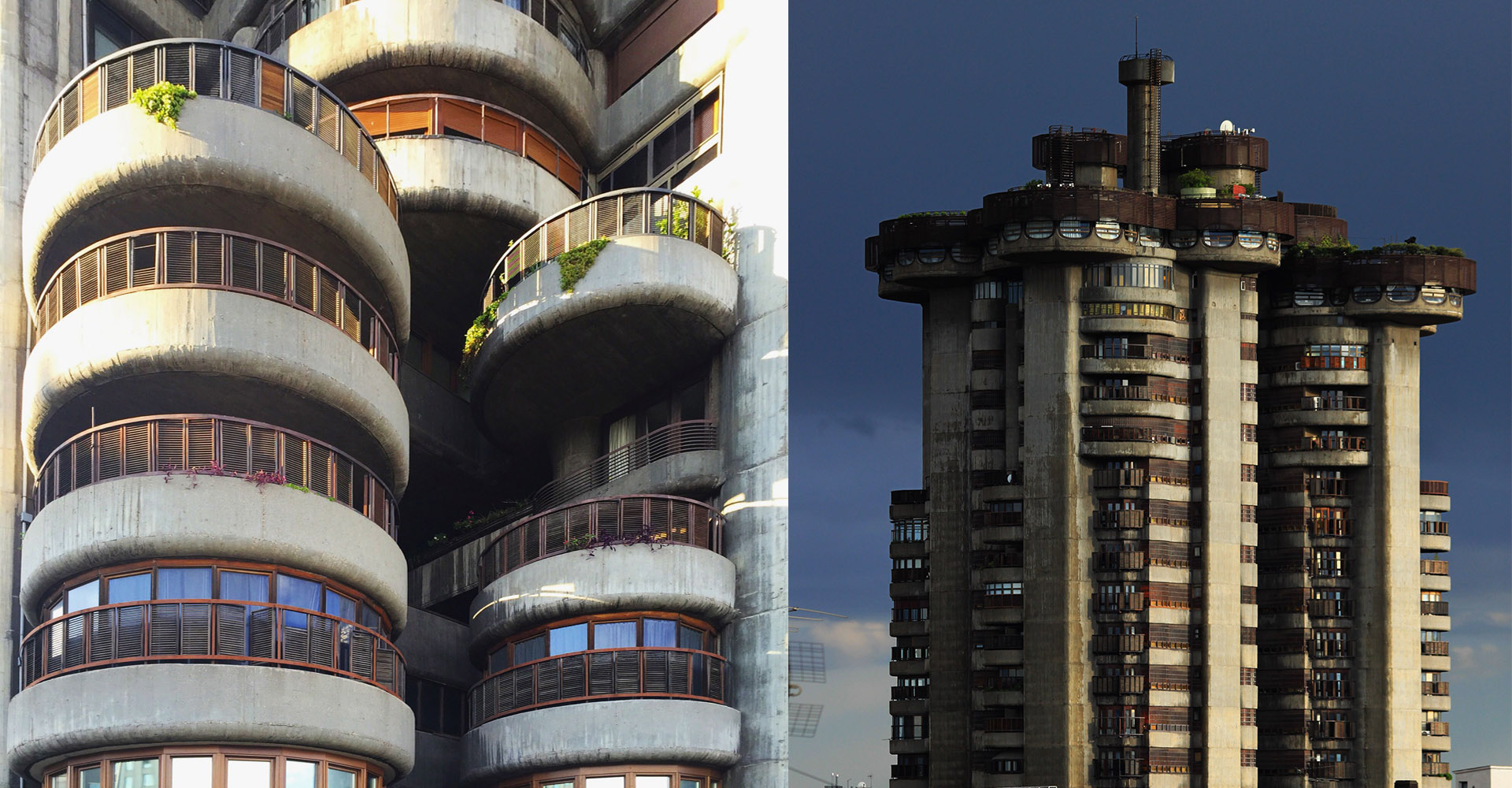
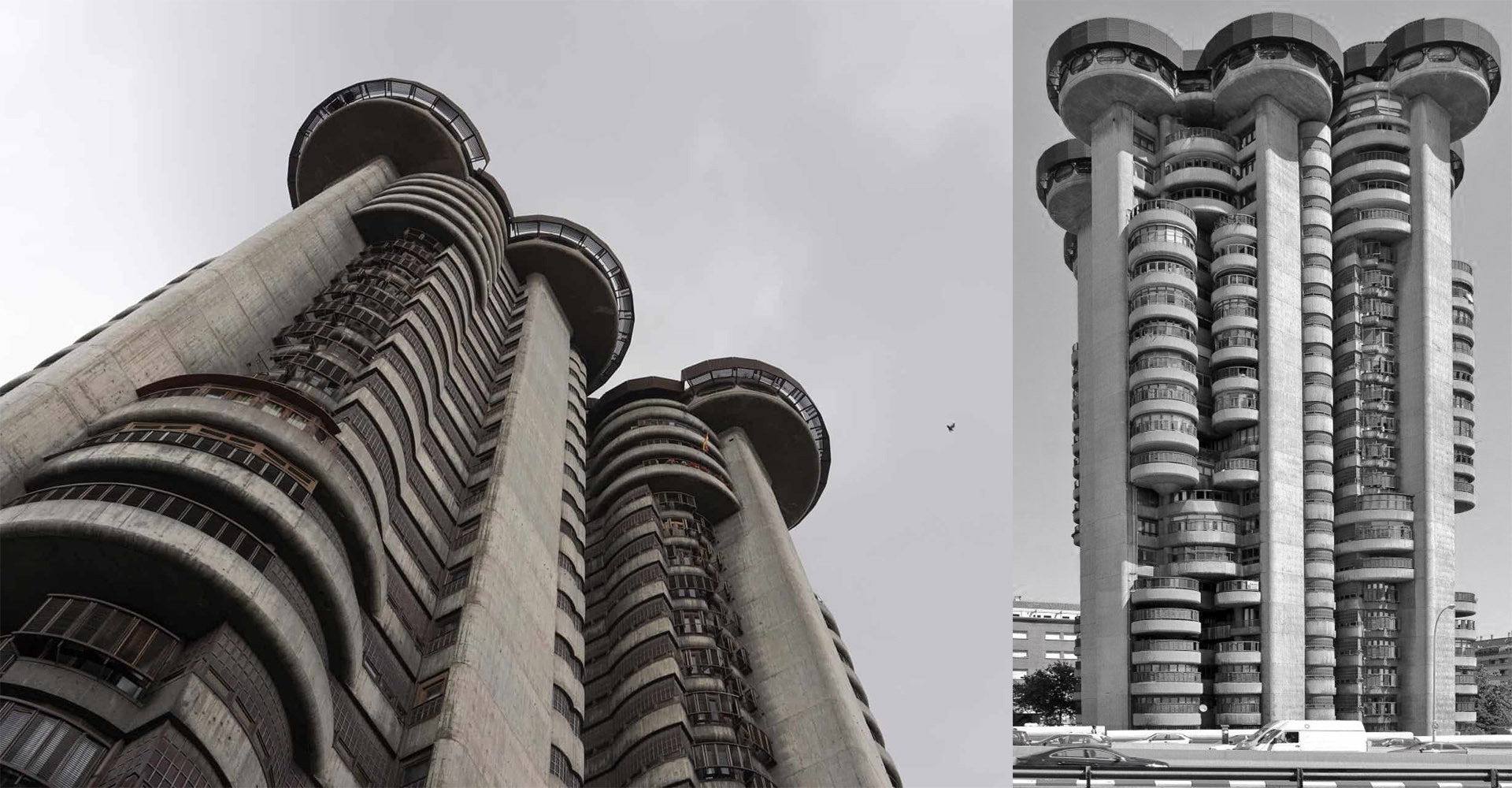
Torres Blancas is a reinforced concrete building without beams or pillars. Everything is curved and smooth screens. Two basic ideas were used as a starting point for this building. Firstly, to use the wind screen as the only vertical load-bearing element and secondly, to use these same vertical load-bearing elements, flat, curved, folded, etc., as the external enclosure of the building itself. Giving body to the building with its resistant structure. The first idea stems from the fact that there is no point in being able to collect the wind in a rigid vertical element if this element is not loaded. What stabilises a screen is the load it receives. The second approach configures not only the external volume, but also the internal distribution of the building. Bathrooms, lounges, service and circulation areas are configured by the screens. The horizontal load-bearing structure is made up of 20 cm solid slabs, an ideal configuration for jumping over load-bearing elements that are arranged due to non-resistant conditioning factors, such as the functional distribution of the internal space of the tower.
A reflection of this special nature of the resistant behaviour of the slabs is found in the distribution of the reinforcement on the ground plan, which represents the desire to create an order, superimposed on a complex function of flats, flats and duplexes. At that time, when the computer had not yet arrived in Spain, the quantification of the response was approached by the exhaustive analysis of the behaviour of the square slab and the cantilevered circular slab supported at its centre, for which there were abacuses, and how they interact with each other in the complex behaviour imposed by the reality of the supports. The cardboard models helped us in this interaction and finally a well instrumented mortar model assured us of the many adventurous hypotheses that we had to make in order to get closer to the answer. The upper part of the tower changes its use. There are large free spaces materialised by hollow discs resting on the external screens, which determines another different resistance problem constituted by the interaction of perfect circular discs, 10 m in diameter, with the ground, placed on irregular broken screens. For this purpose, a ribbed surface is arranged according to the support and the disc, giving rise to an interesting shape. The roof of these discs is a very flat dome which is supported on the lower disc by articulated point elements.
Even the foundation is a uniform slab of 1m. thick with 50 cm. thick recesses under the screens. The construction of the external walls, e=15cm, was done with climbing formwork and the slabs on traditional falsework.