



Pumarejo Bridge Colombia. 2019.
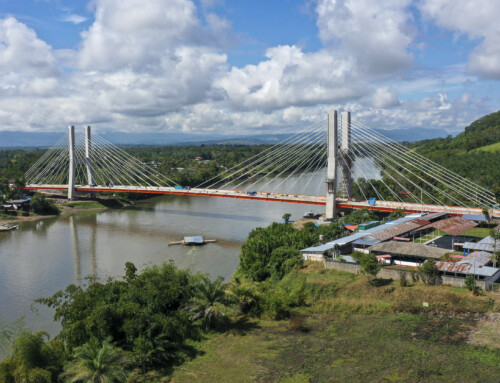
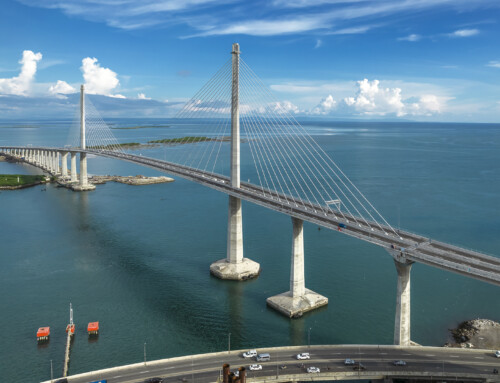
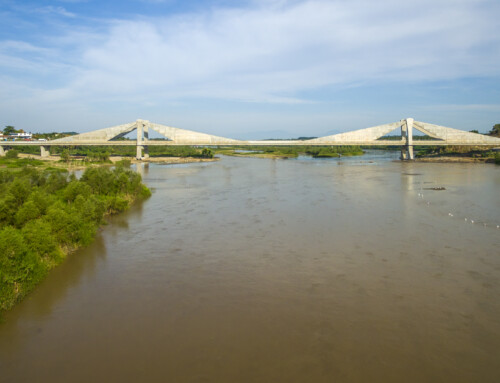
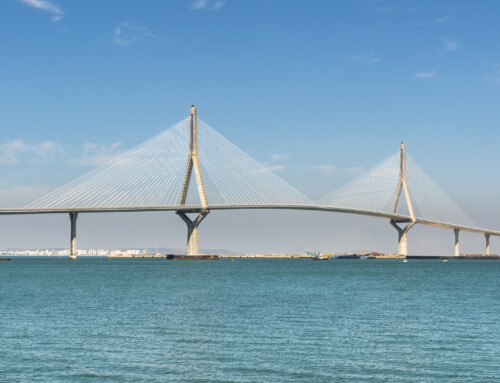
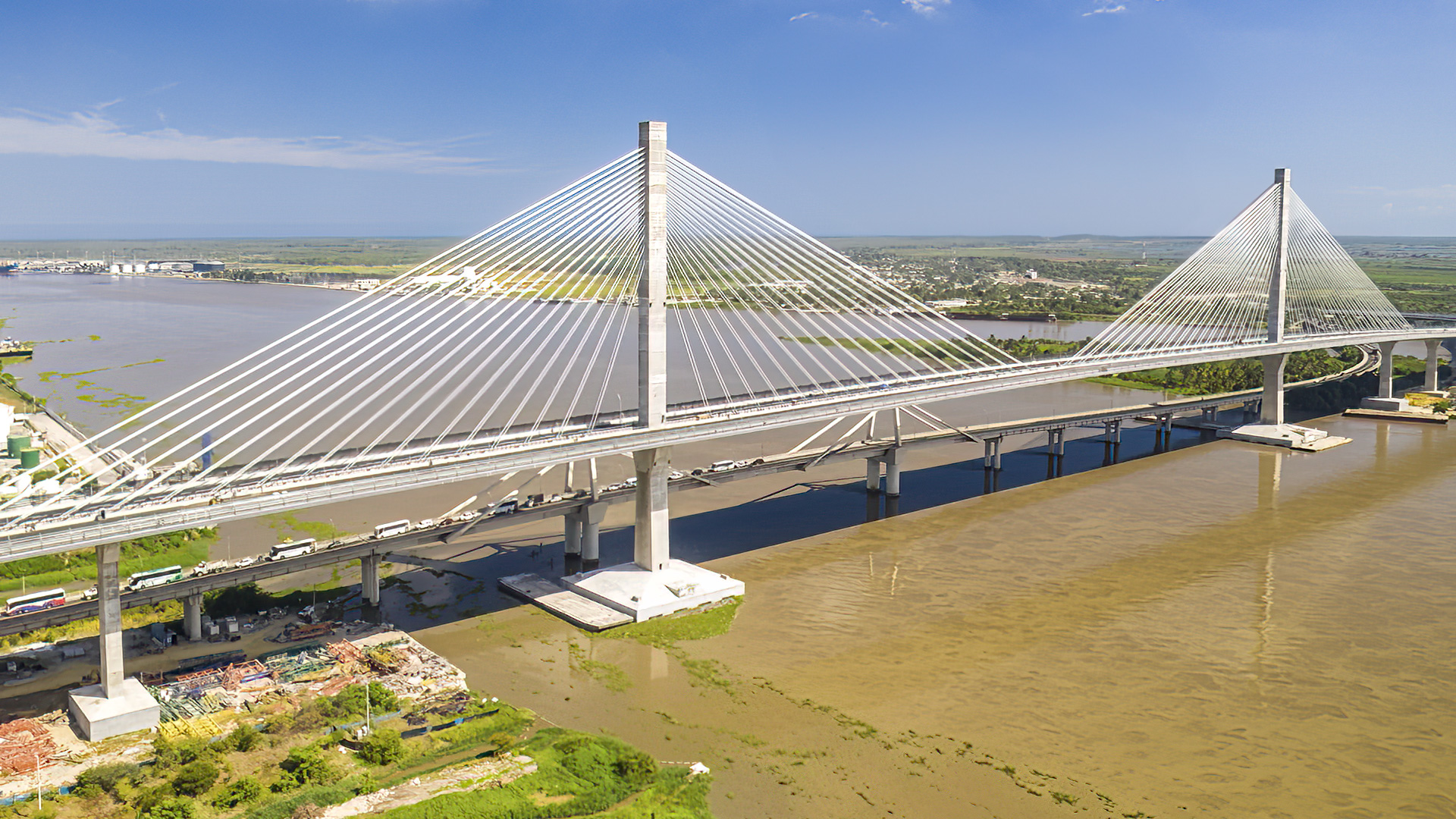
On Friday, December 20, President Iván Duque cut the ribbon to officially inaugurate the new Pumarejo Bridge, built over the Magdalena River and connecting the departments of Atlántico and Magdalena with the rest of the Colombian Caribbean.
The Ministry of Transportation decided to name the new infrastructure over the Magdalena River ‘Pumarejo Bridge’, in gratitude to Alberto Mario Pumarejo Vengoechea, mayor of Barranquilla (1966) and main promoter of the “Laureano Gómez” bridge (known as Pumarejo Bridge in 1974) and designed by Morandi. The construction project of said work (Definitive Studies and Designs (Phase III)) was developed in the period 2012-2015 by the Ecopuentes Consortium (JFSAS-IVICSA-Estructurador Colombia), being CFC responsible for the development of the bridge project itself. As Javier Muñoz-Rojas, Project Manager, says: “The project was undoubtedly a very interesting and unique experience.
The dimensions of the work – length, width, span of the central span… – were the largest ever undertaken in Colombia to date. This led us, after an exhaustive study of alternatives, to propose innovative and industrialized construction solutions and procedures that were not usual in the country, in order to be able to complete the work within the timeframe required by the Administration. This was not exempt of the logical complications but it ended up having the enthusiastic support of the technicians of Invias and the Interventoría.
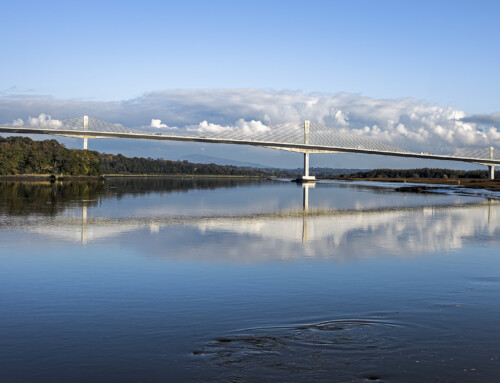
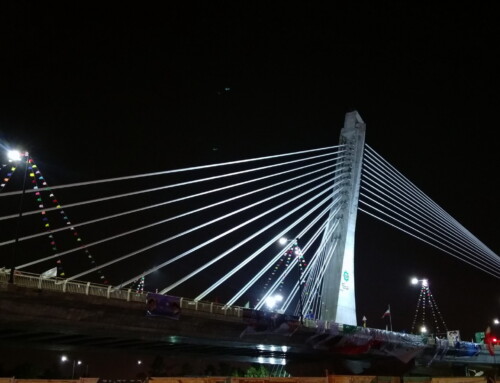
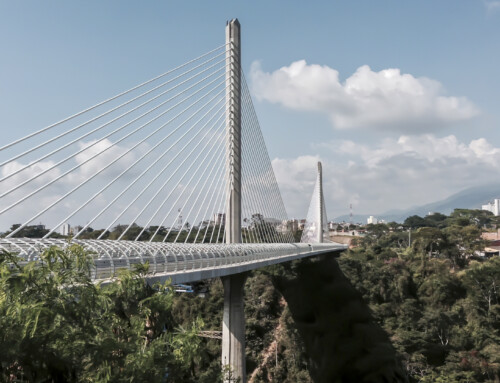
INVIAS awarded the construction, for an amount of about 223 million euros, to the consortium led by the Spanish construction company SACYR, which has executed it in the period 2015-2019. The work is considered one of the most representative of the country, being the longest bridge in Colombia with 2.28 kilometers. Of cable-stayed type in the central section, it has a span of 380 meters between the 80-meter-high pylons. The accesses have a box section deck with lateral flights supported on struts; the vehicular section has three lanes, a pedestrian area (2 m) and a bicycle lane (1.50 m) at both ends of the section; the deck width is 38.1 m in the cable-stayed section and 35.1 m in the access sections, and the clearance for the passage of ships is 45 meters.
Related news