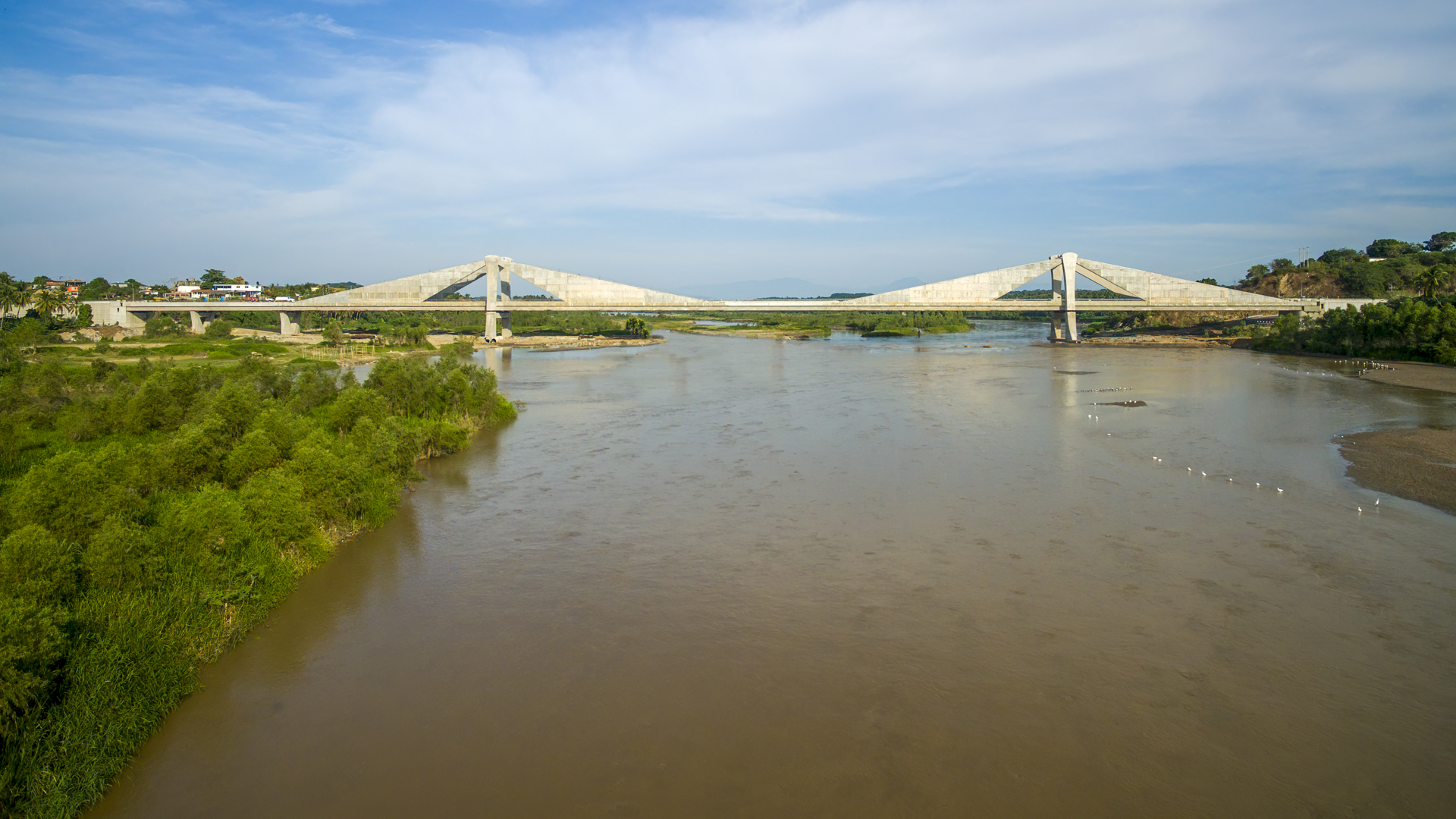


Albatros Bridge Michoacan de Ocampo. México. 2009.
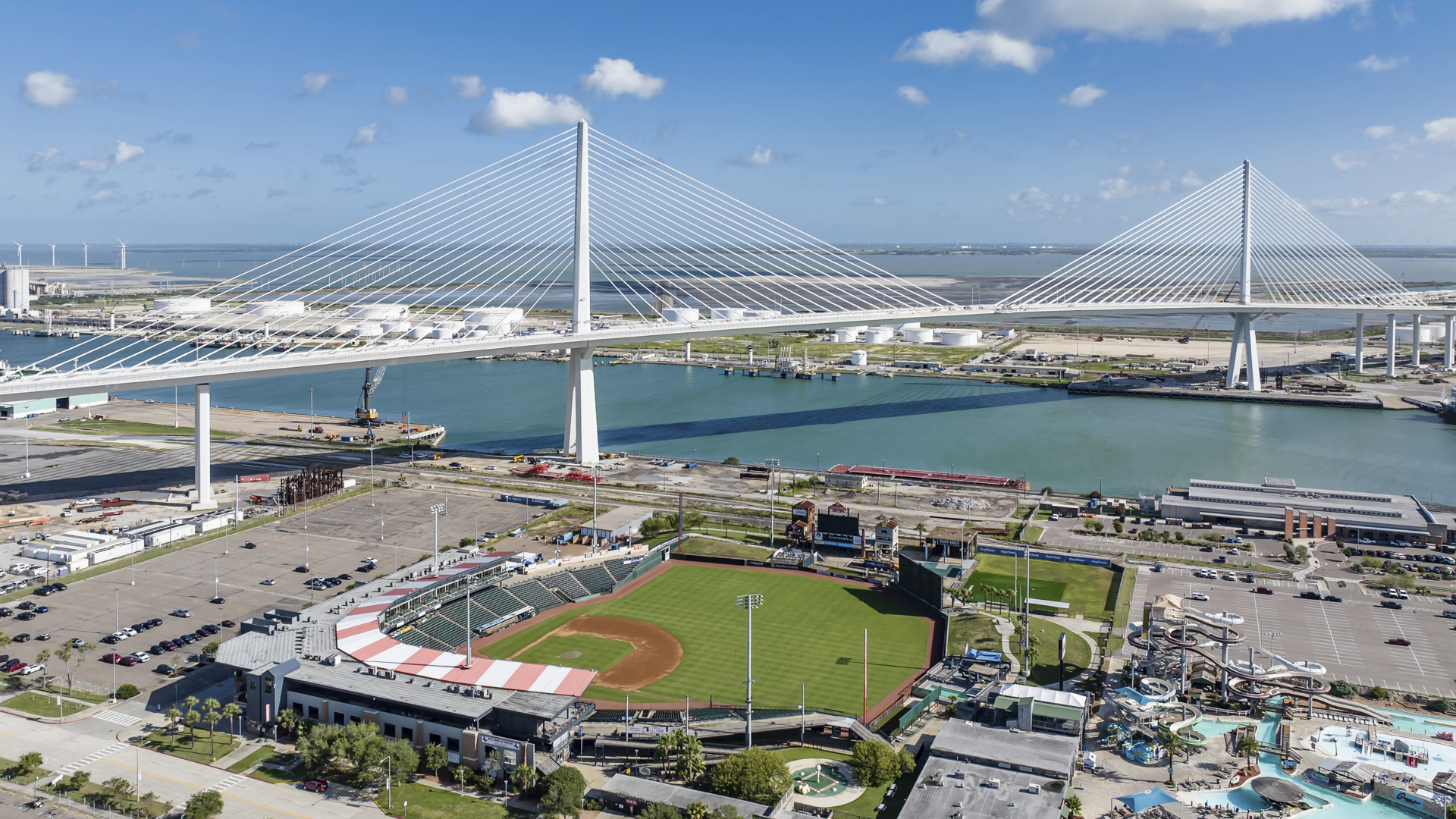
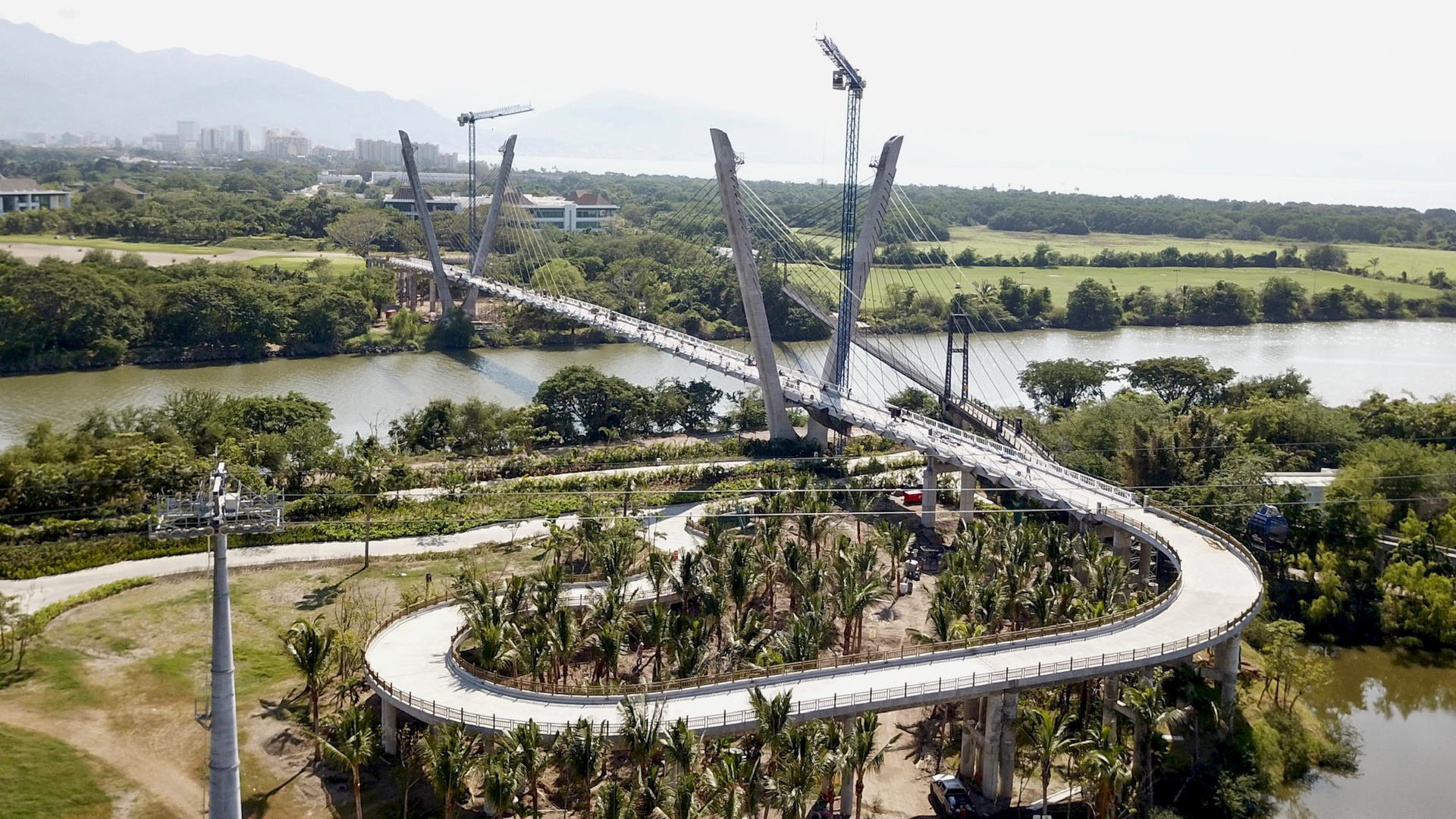
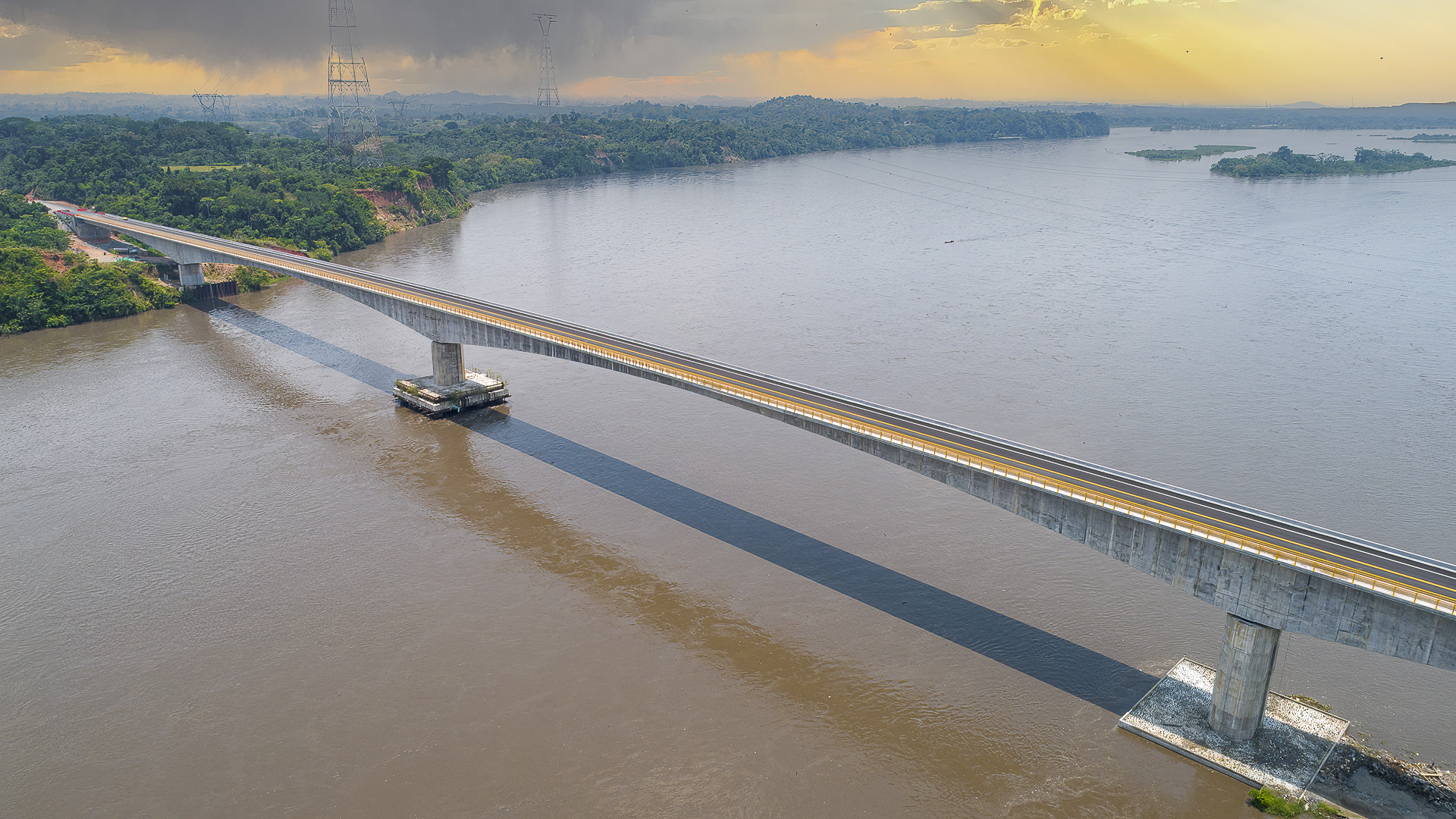
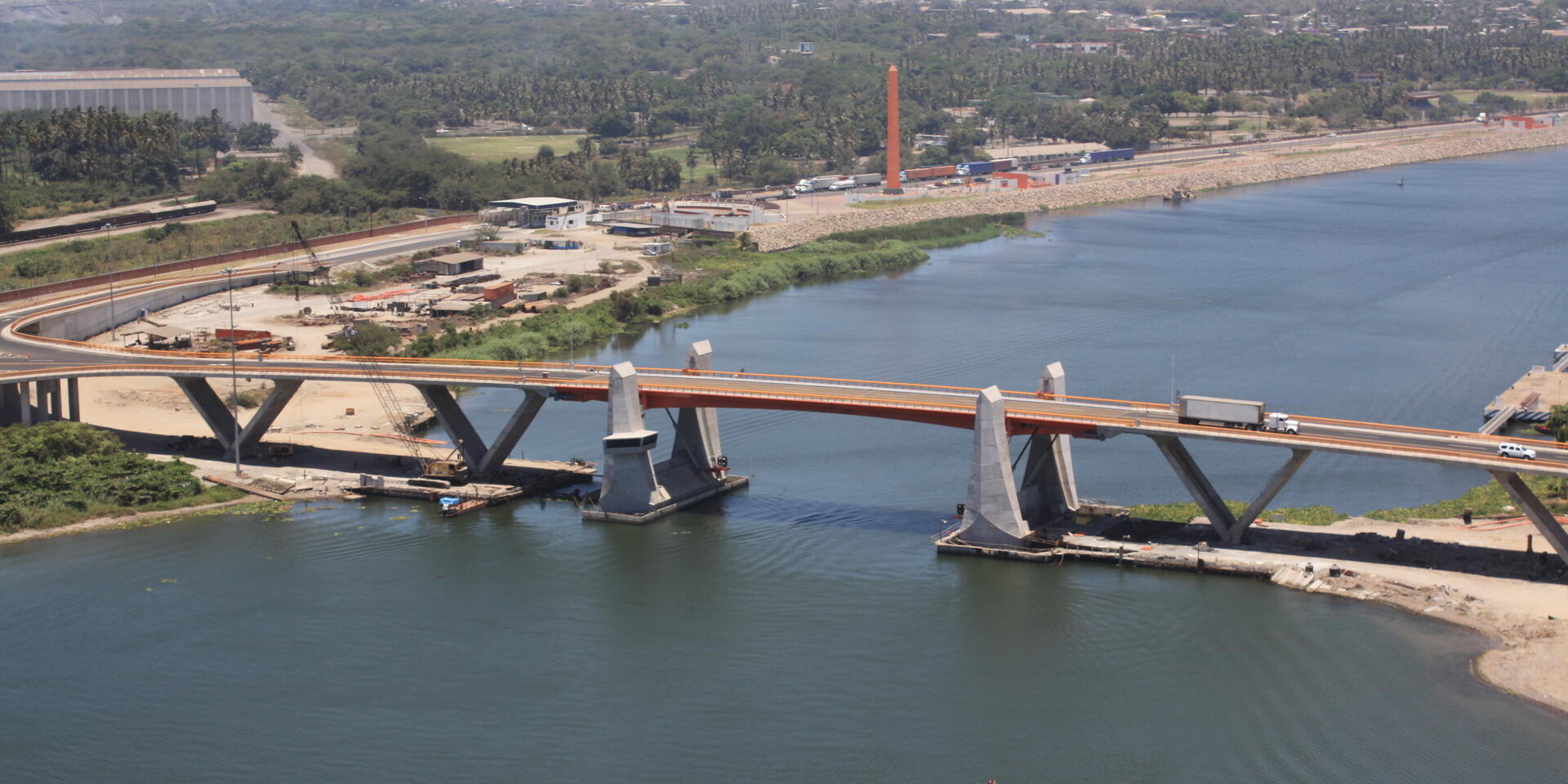
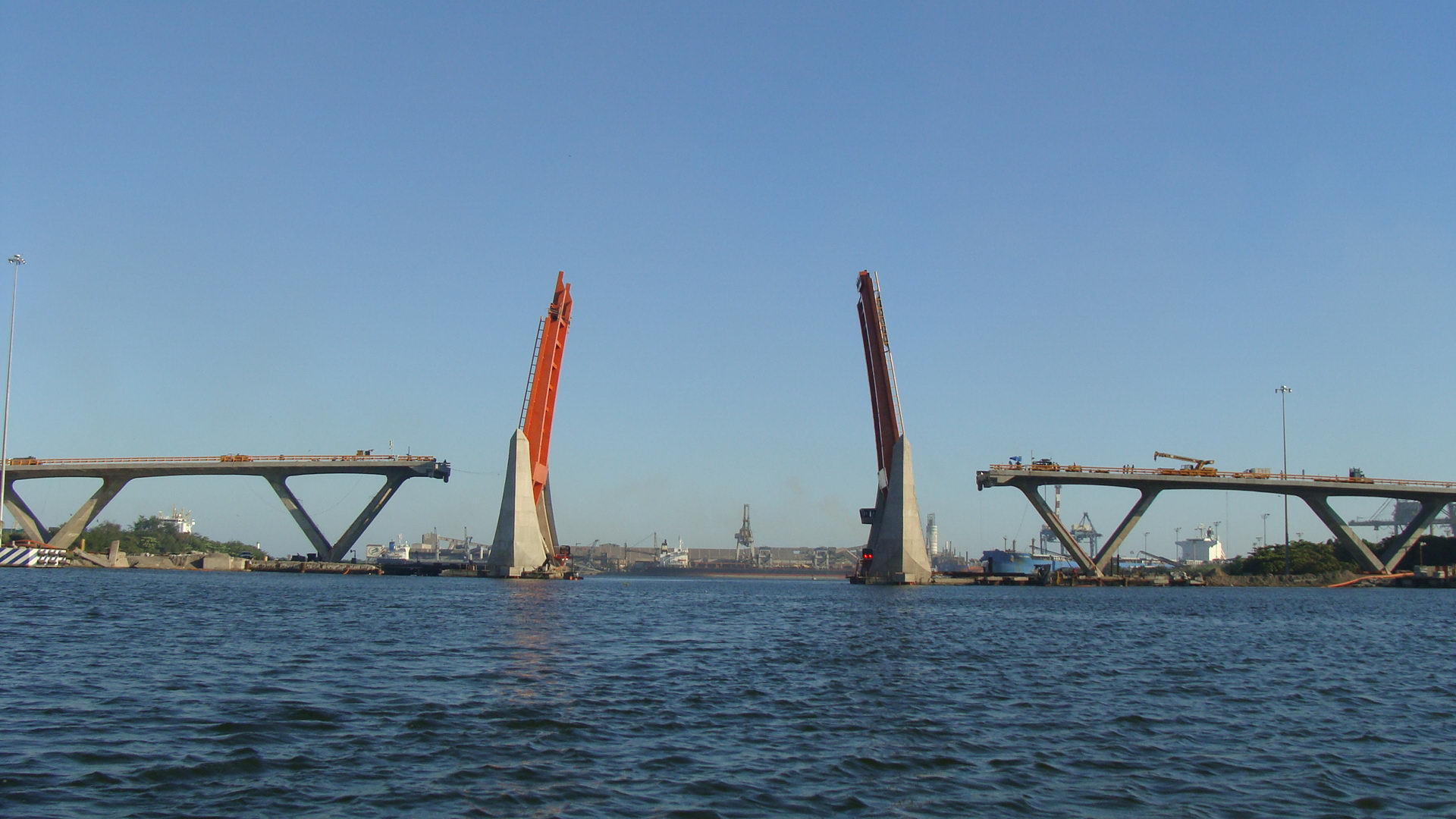
The Albatros Bridge crosses over the Northwest Channel of the Balsas River in the port of Lázaro Cárdenas on the Pacific coast of Mexico. It is a navigable channel with heavy traffic of ships of different sizes. For this reason, a viaduct has been planned with a height of about 20m above the water level, which allows most of the ships that circulate through the canal to pass under it. For larger ships, a central section has been created with a free navigation channel with an open bridge of 50m, and a span of 61.70m between turning axes. The access viaducts to the mobile section are made of prestressed concrete with lightened slabs extended laterally by means of cantilevered ribbed slabs. These viaducts have spans of 32m, until they reach the river, where two V-shaped piers are located on each side, giving a span of 50m between them. At the ends of the concrete spans are the offsets of the cantilever spans. The concrete viaduct on the right bank is divided into three branches, a main central branch and two lateral branches connecting with the road that passes under the viaduct.
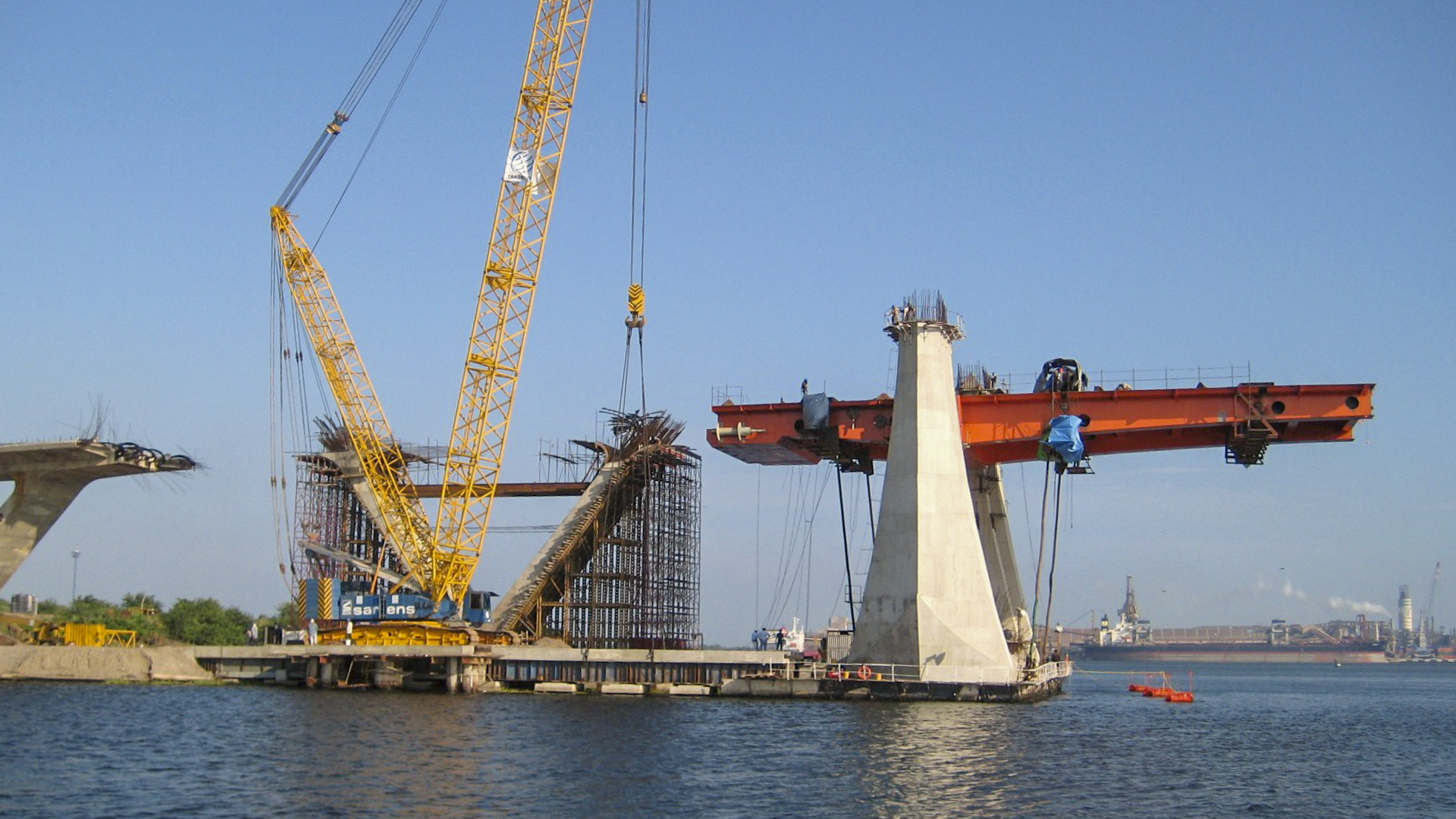
The movable span consists of a metal structure with two lateral caissons and an orthotropic slab between them. The central span of 61.7 m between ball-and-socket joints is dimensioned so that the counterweight does not reach the water when the bridge is open, which makes it possible to build open piers without the need for a closed caisson to house the compensation spans. Given the height of the viaduct, these compensations are 15.65 m long. The key locking is done by means of a system of double off-set supports, which gives continuity to the structure for overloads without the need for key locking keys. Locking spanners are only required at the junction of the compensation sections with the concrete sections. The piers are formed by a lower body where the machinery is housed and the telescopic jacks for the movement of the bridge are fixed. From this body, which is the width of the bridge, two lateral piers emerge which support the spherical plain bearings which in turn support the metal structure.
RELEVANCE OF WORK
The Albatros viaduct is made up of three bridges, two prestressed concrete accesses with structures formed by continuous beams on vertical piers, which are extended when they reach the canal with two spans supported on V-shaped piers, and a central section, formed by a bascule bridge with a central span of 61.70 m. The viaduct has a height of 20 m above the water that allows most of the ships that travel along the canal to pass under it. This viaduct is 20 m high above the water, allowing most of the boats that travel along the canal to pass under it, but it has a movable central section for the passage of exceptionally tall boats. A unique feature is the key locking by means of double off-set supports, which allows continuity in key for overloads without the need for locking keys.