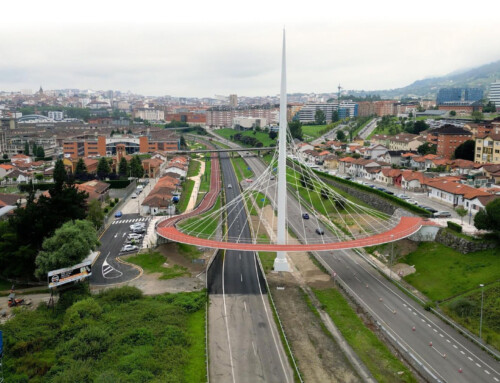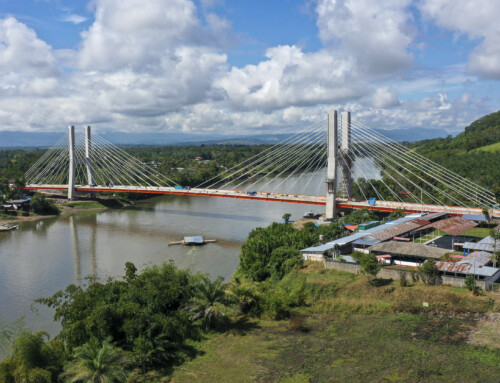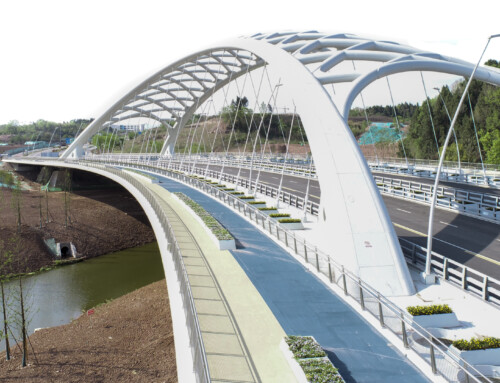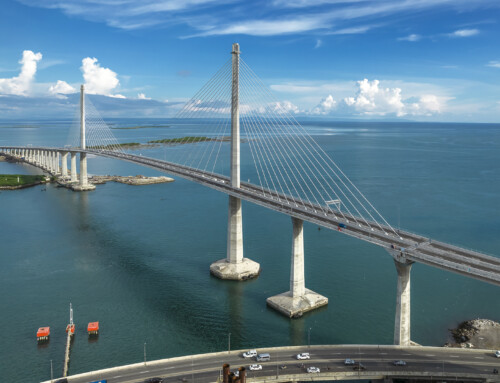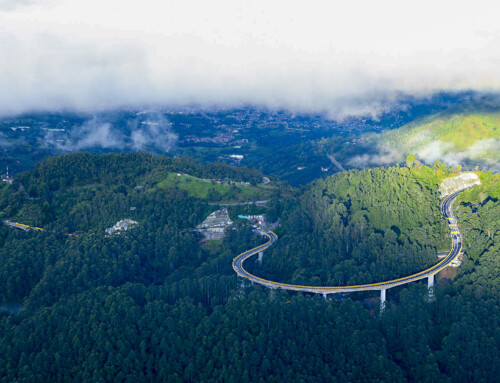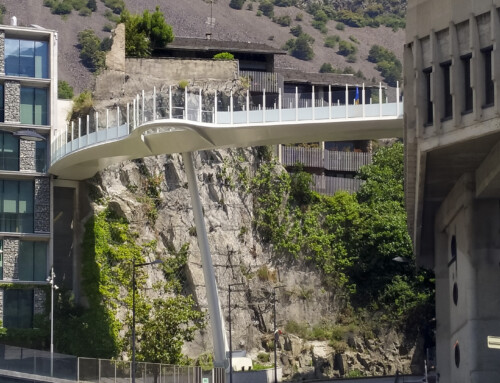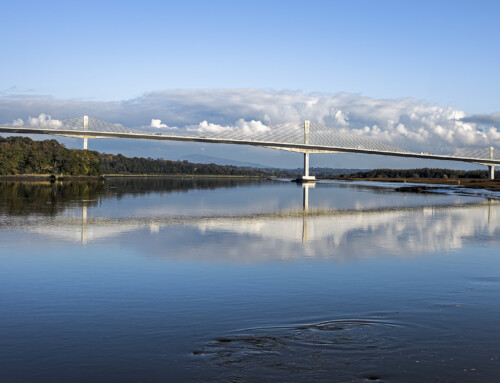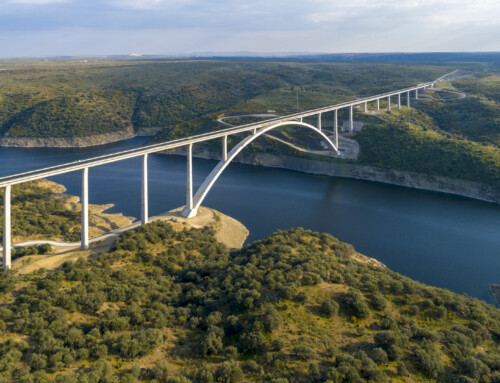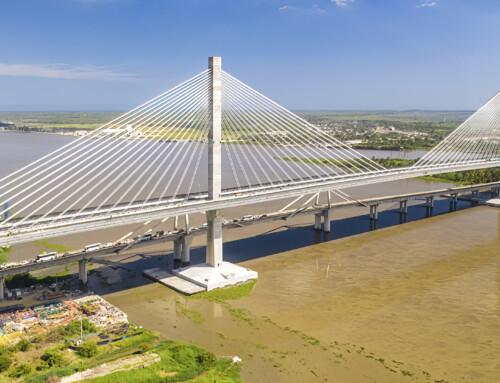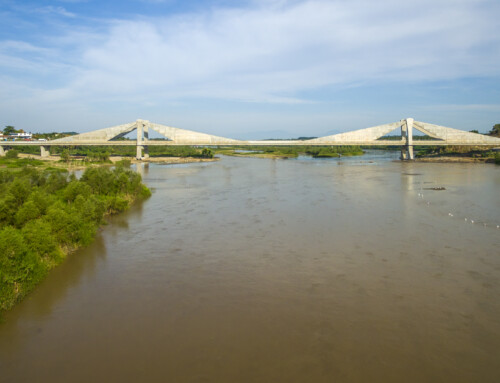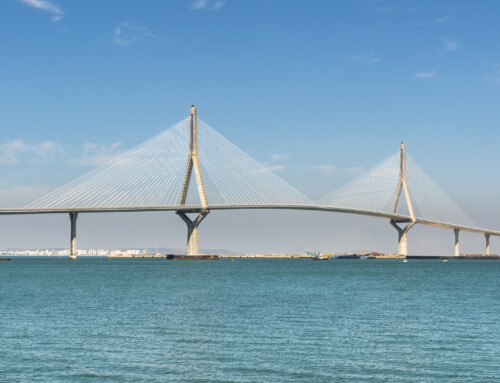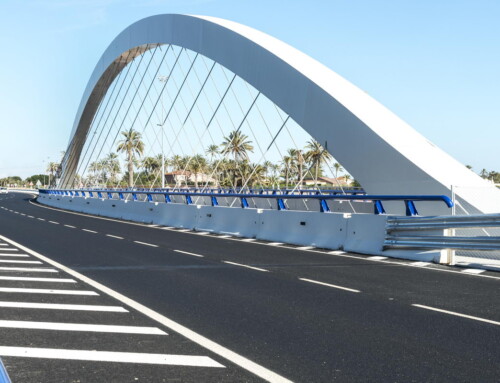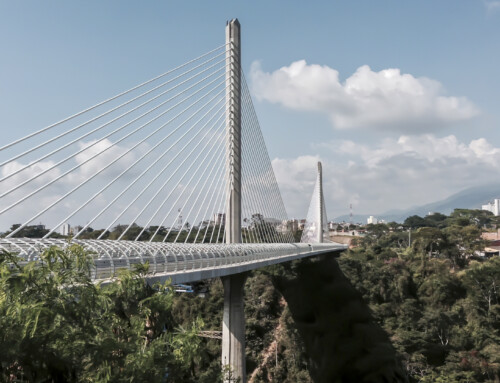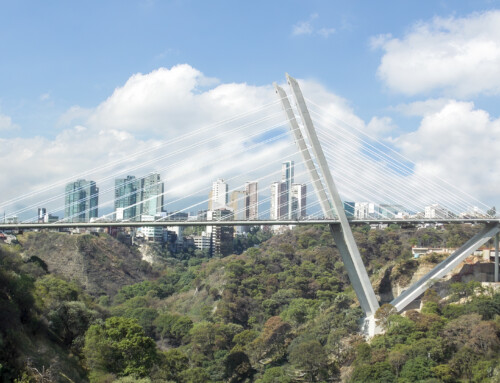


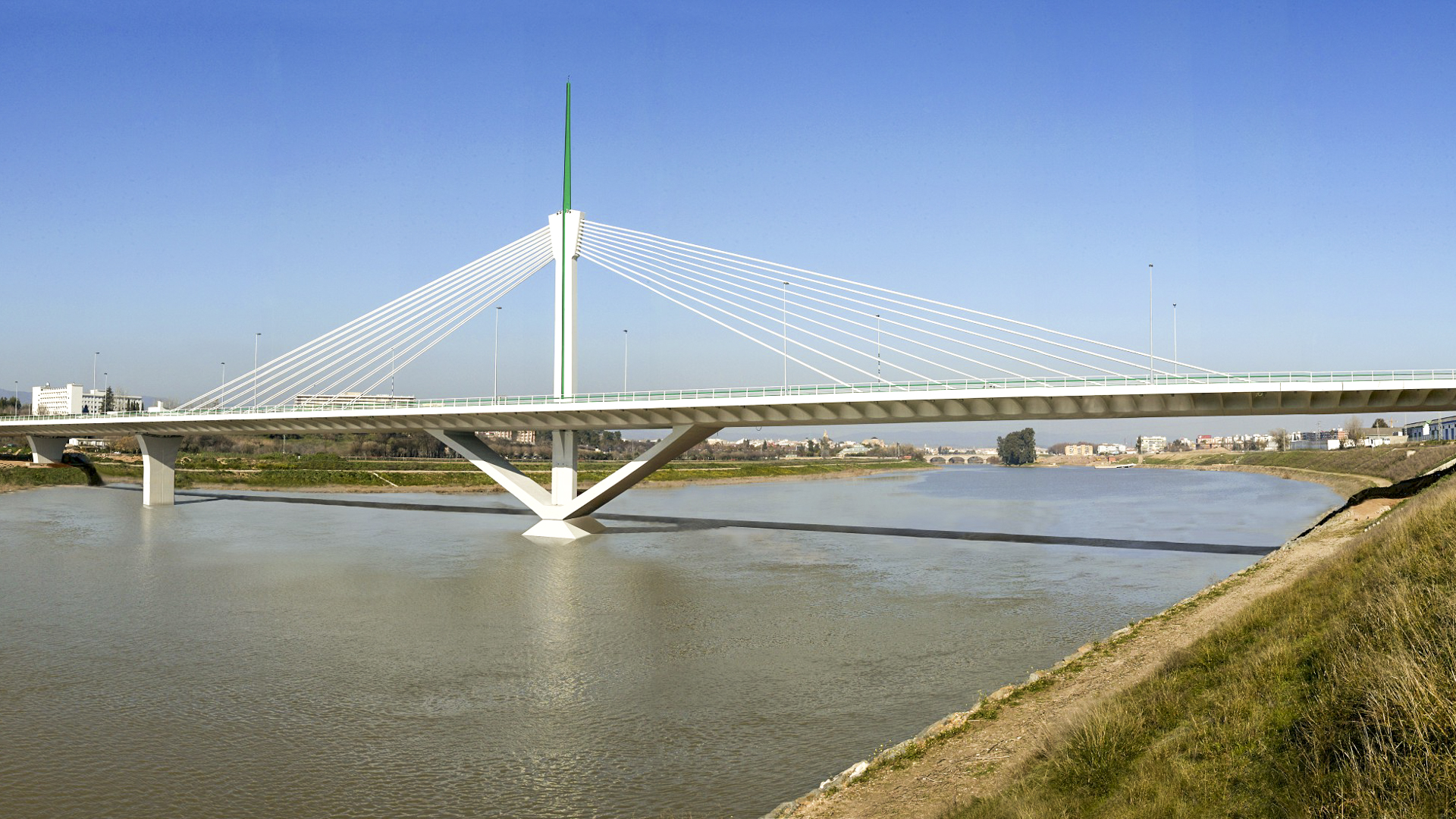
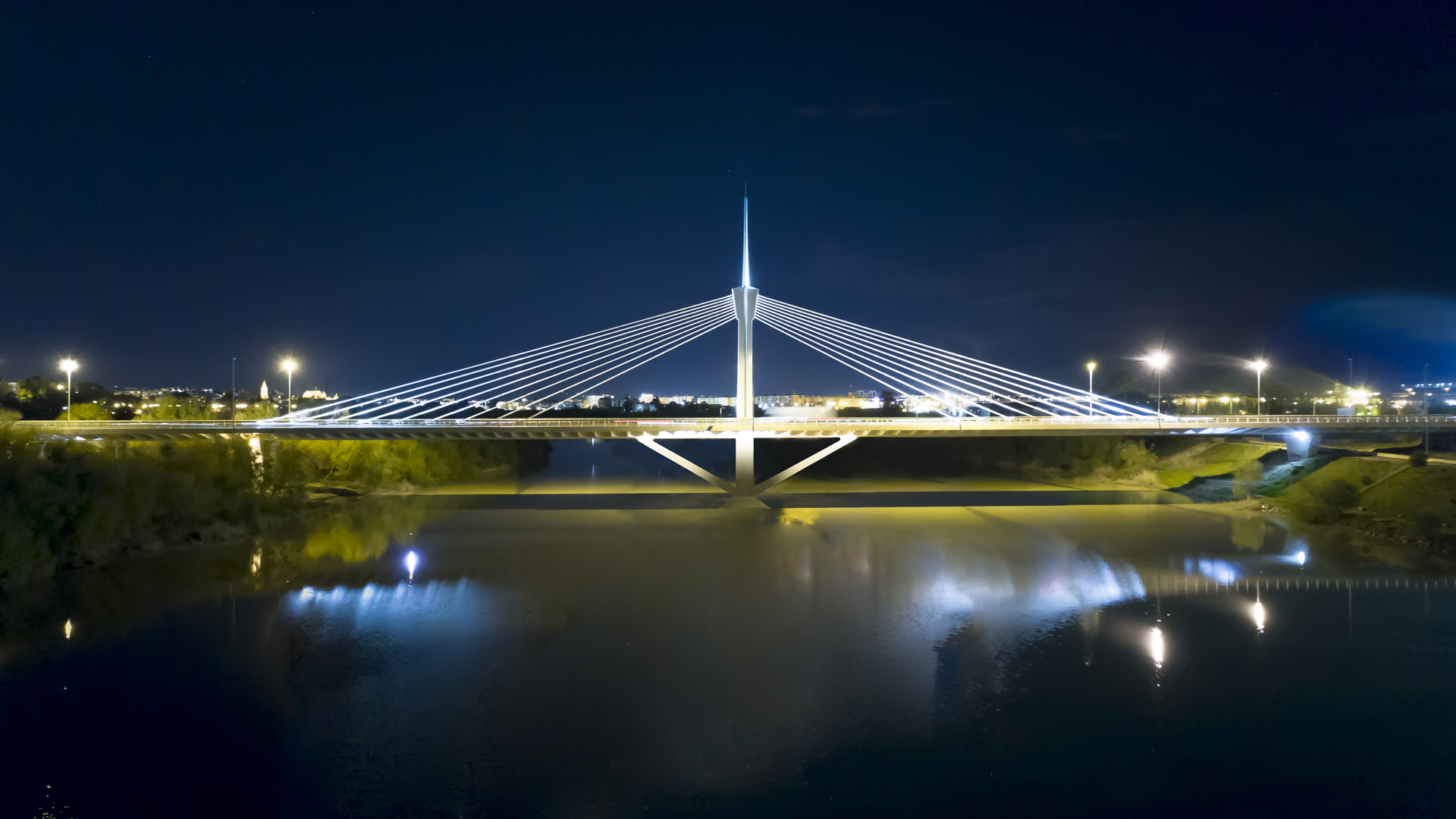
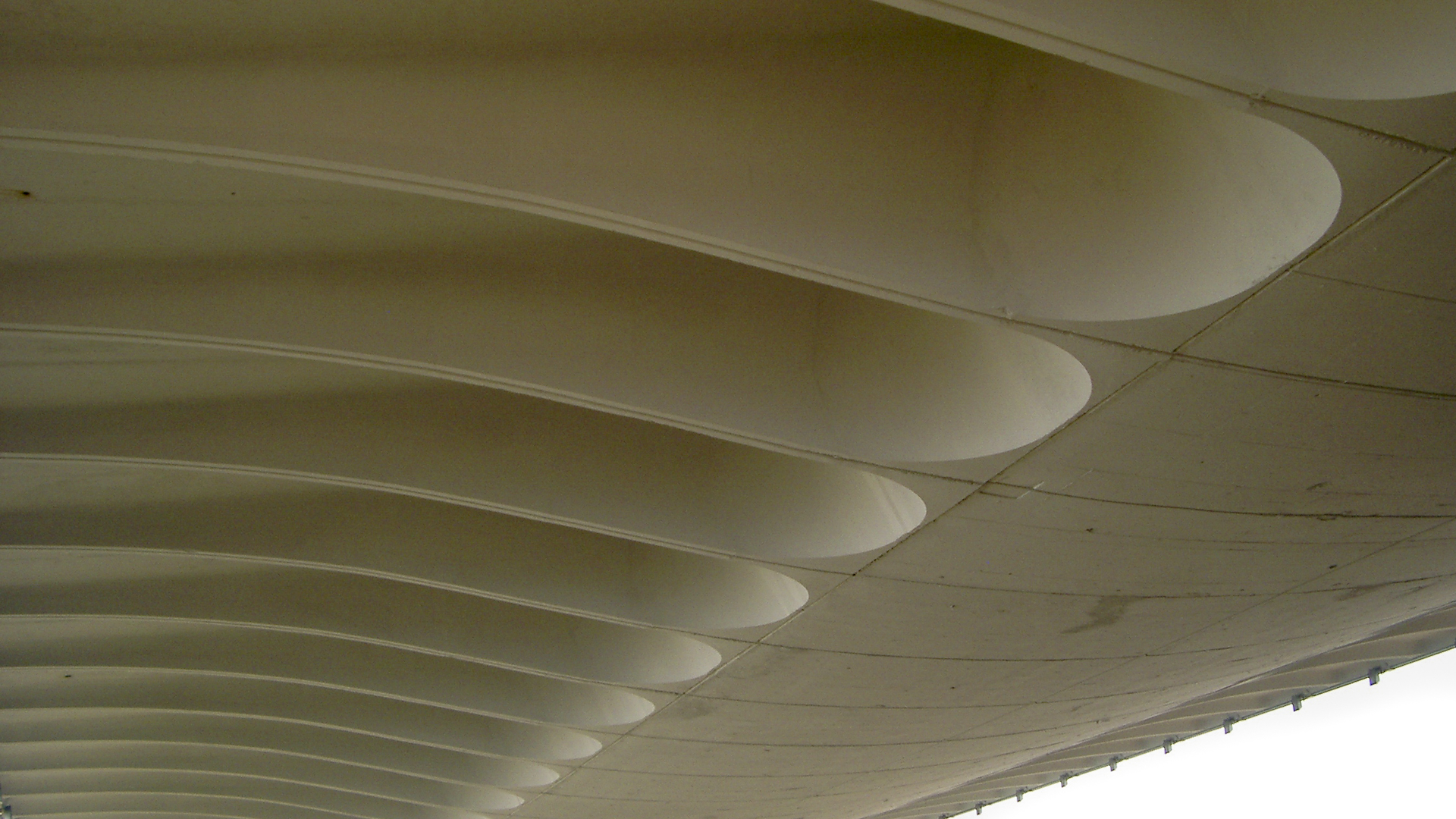
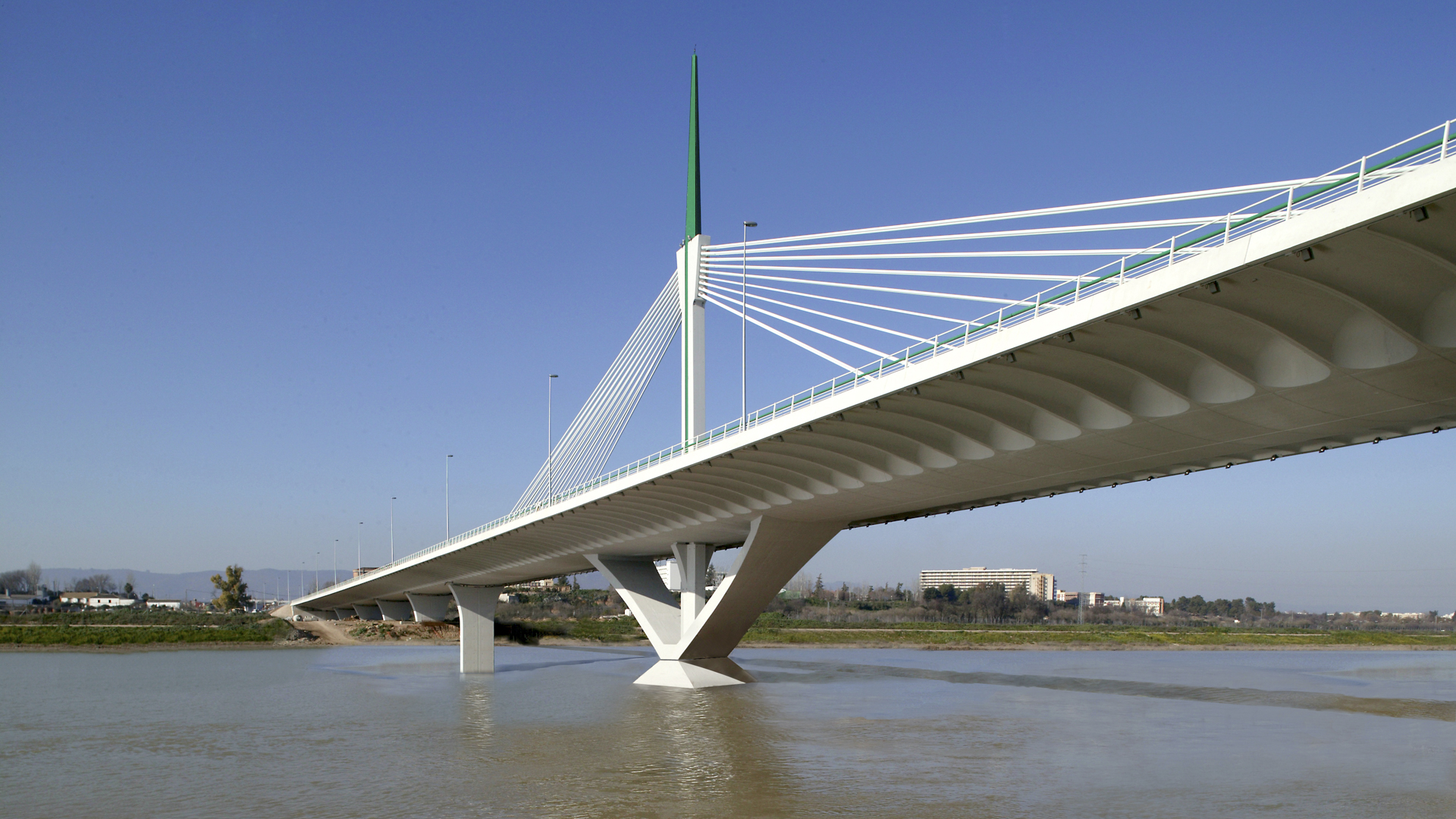
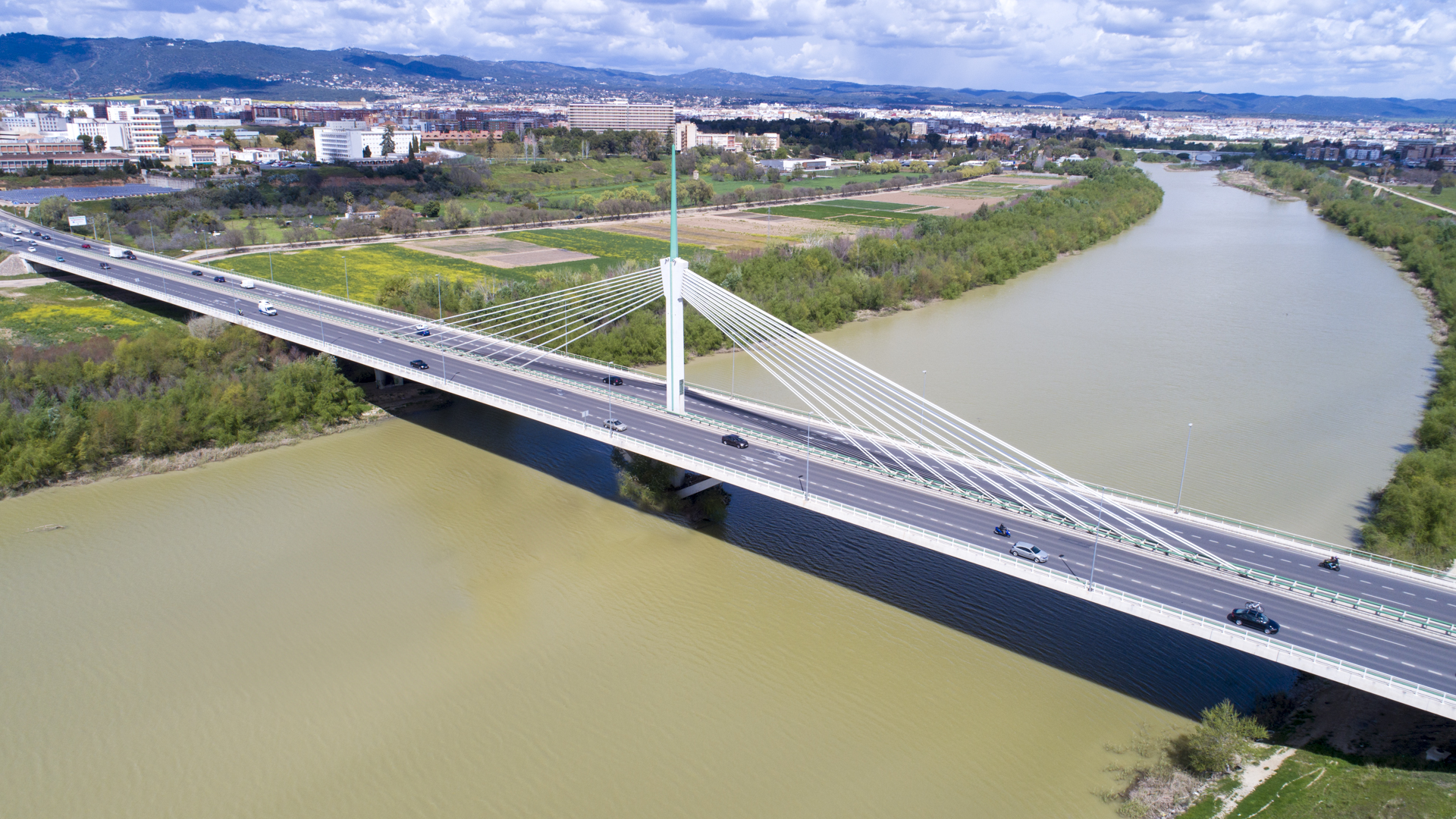
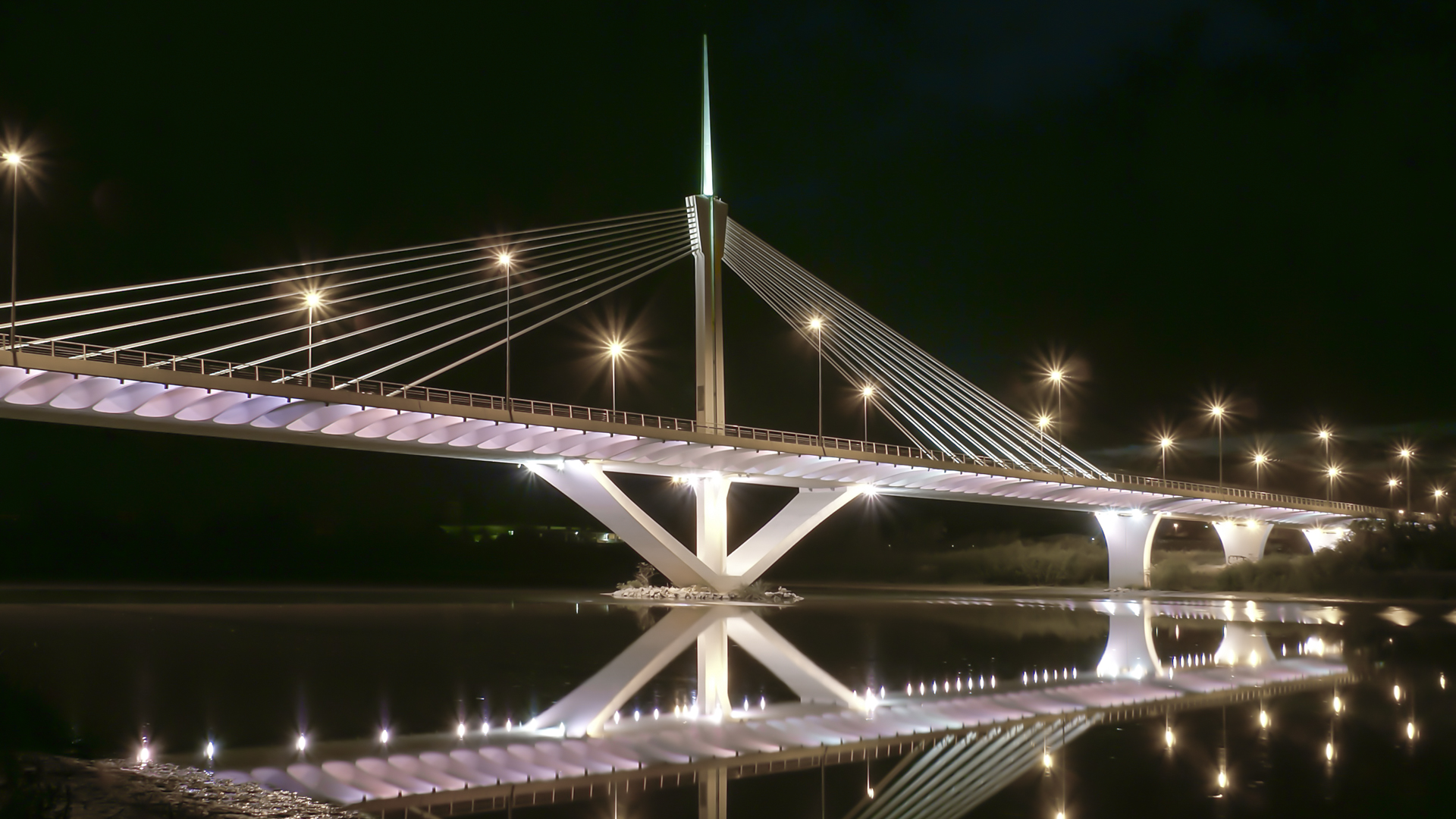
Andalusia Bridge over the Guadalquivir River. Córdoba. Spain. 2005.
It consists of a 210 m long bridge with an extra-salt cable-stayed bridge followed by a 201 m long access viaduct along the right bank of the river.
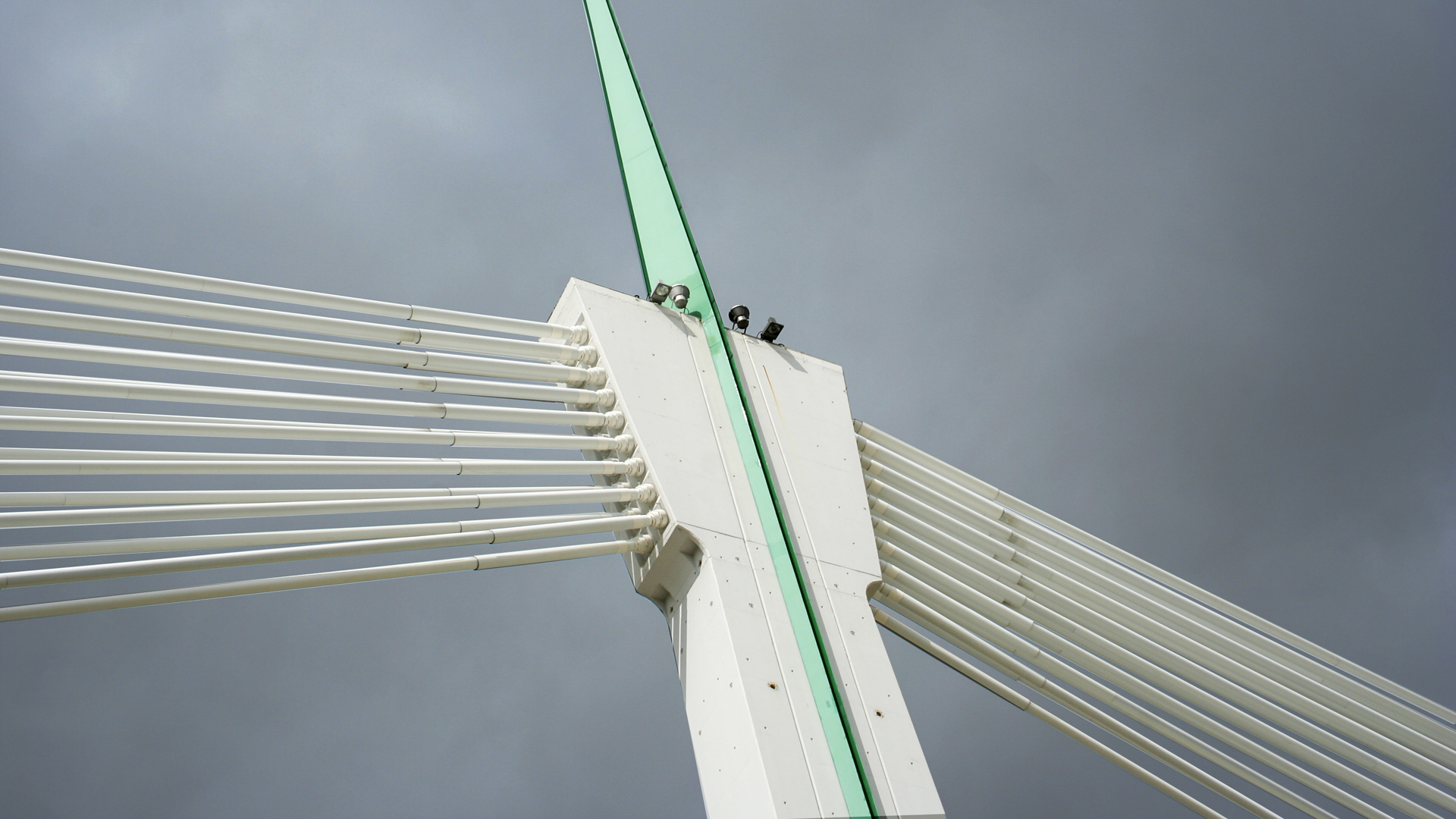
The two main cable-stayed spans have spans of 114 + 96 m and hang from a single tower 28 m high from the deck and 40 m from the foundation.
The shape of the main support is constituted, in addition to the tower, by two inclined struts that have a double role. They reduce the main span and increase the stiffness of the lintel, so that the extradosural bracing effect is more effective in spite of having a tower height greater than L/10.
This increase in the height of the tower, compared to normal, reduces the load and the area of the stay cables, as these have a greater inclination. I understand here by the efficiency of the extra-salt bracing, in that the volume of tie rods required is smaller and also the load oscillation that occurs in the tie rods is smaller.
In addition, struts, tower and suspenders form an interesting formal and structural unit.