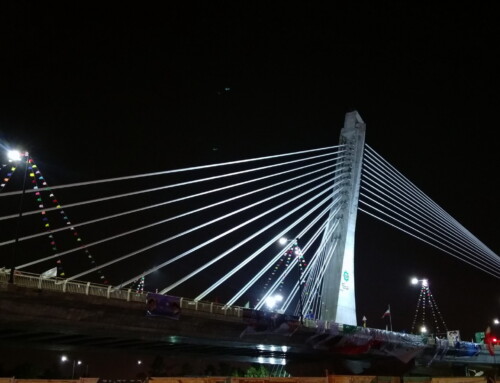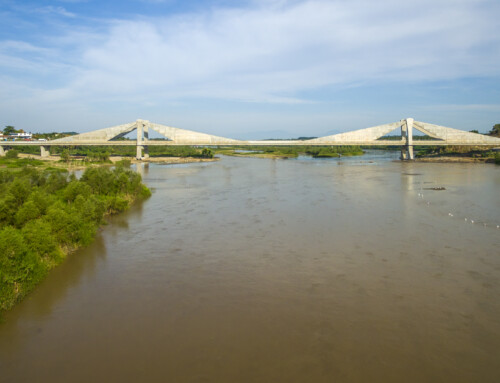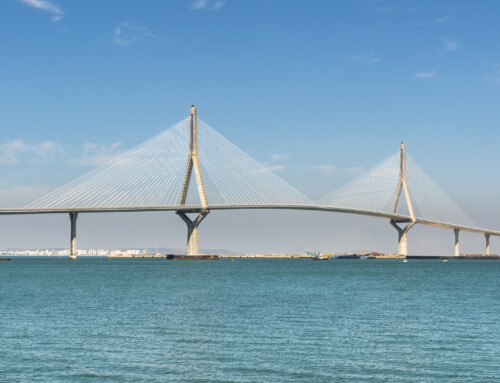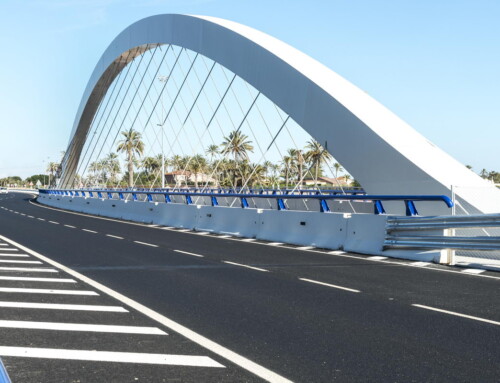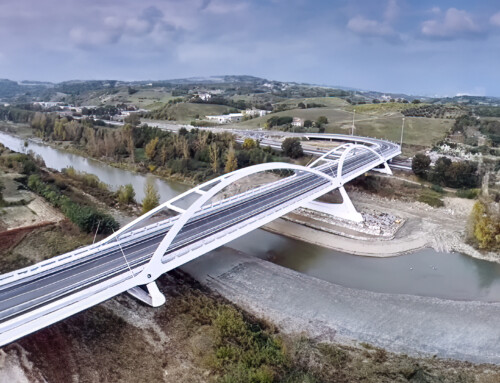


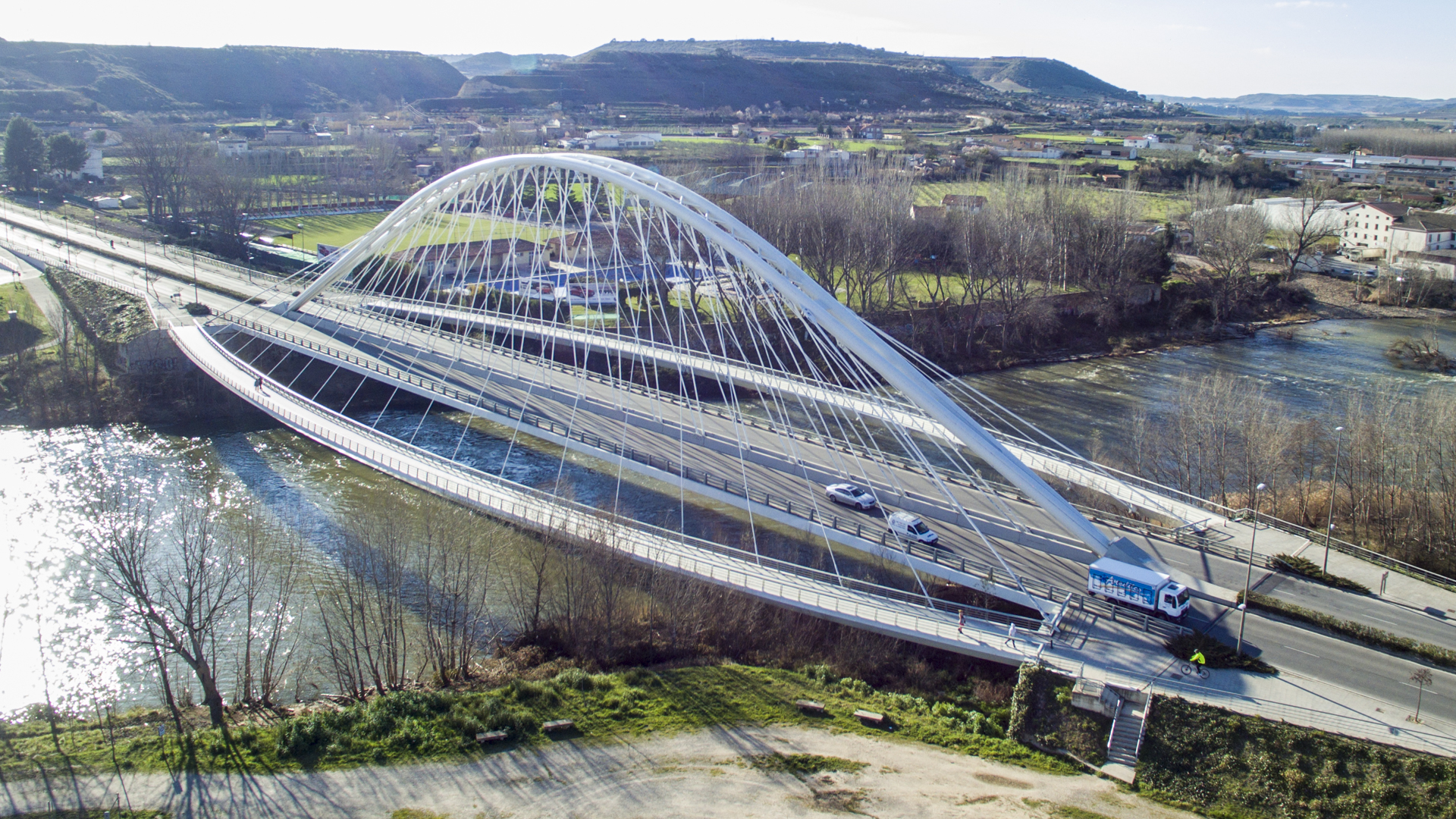
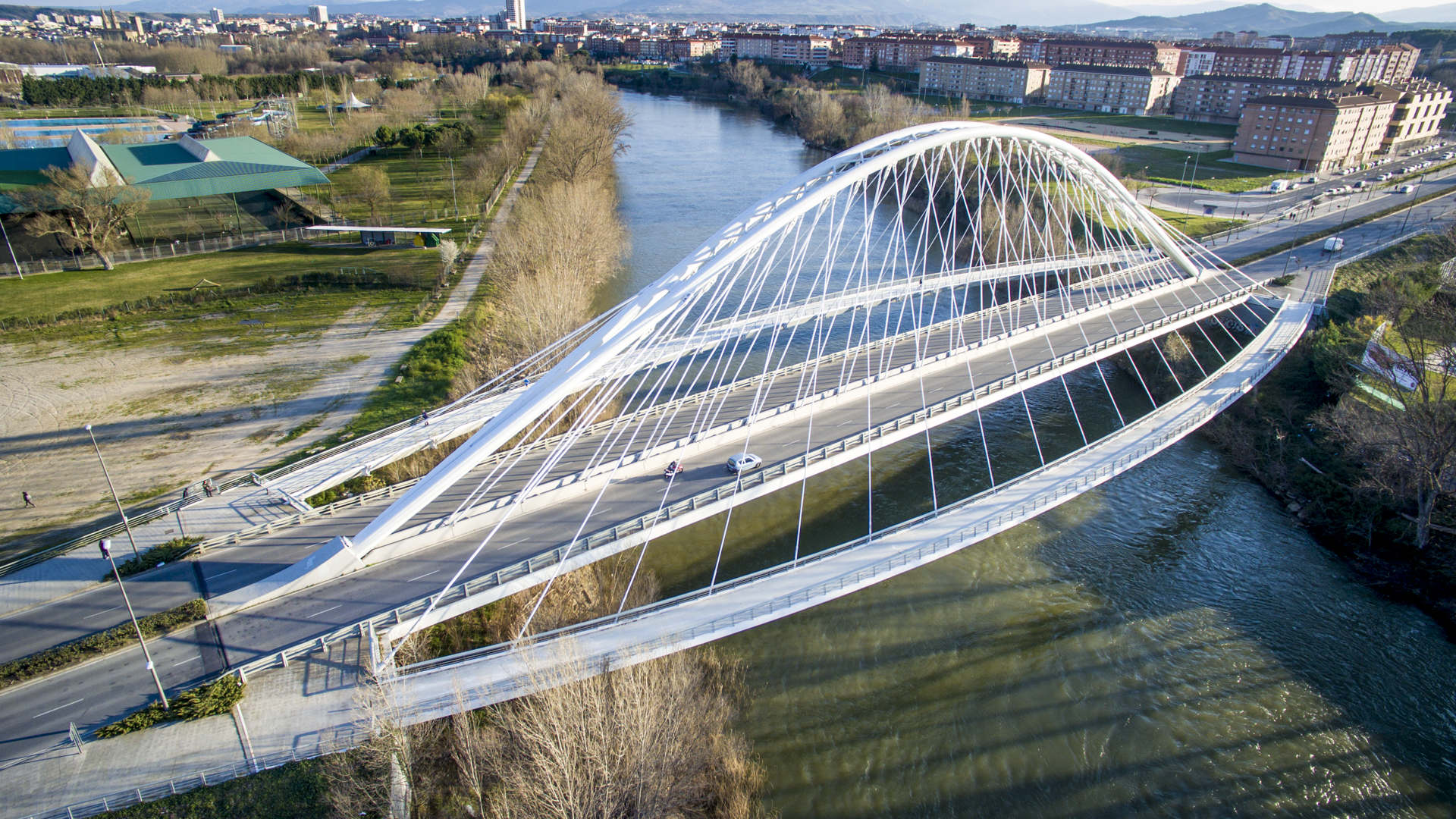
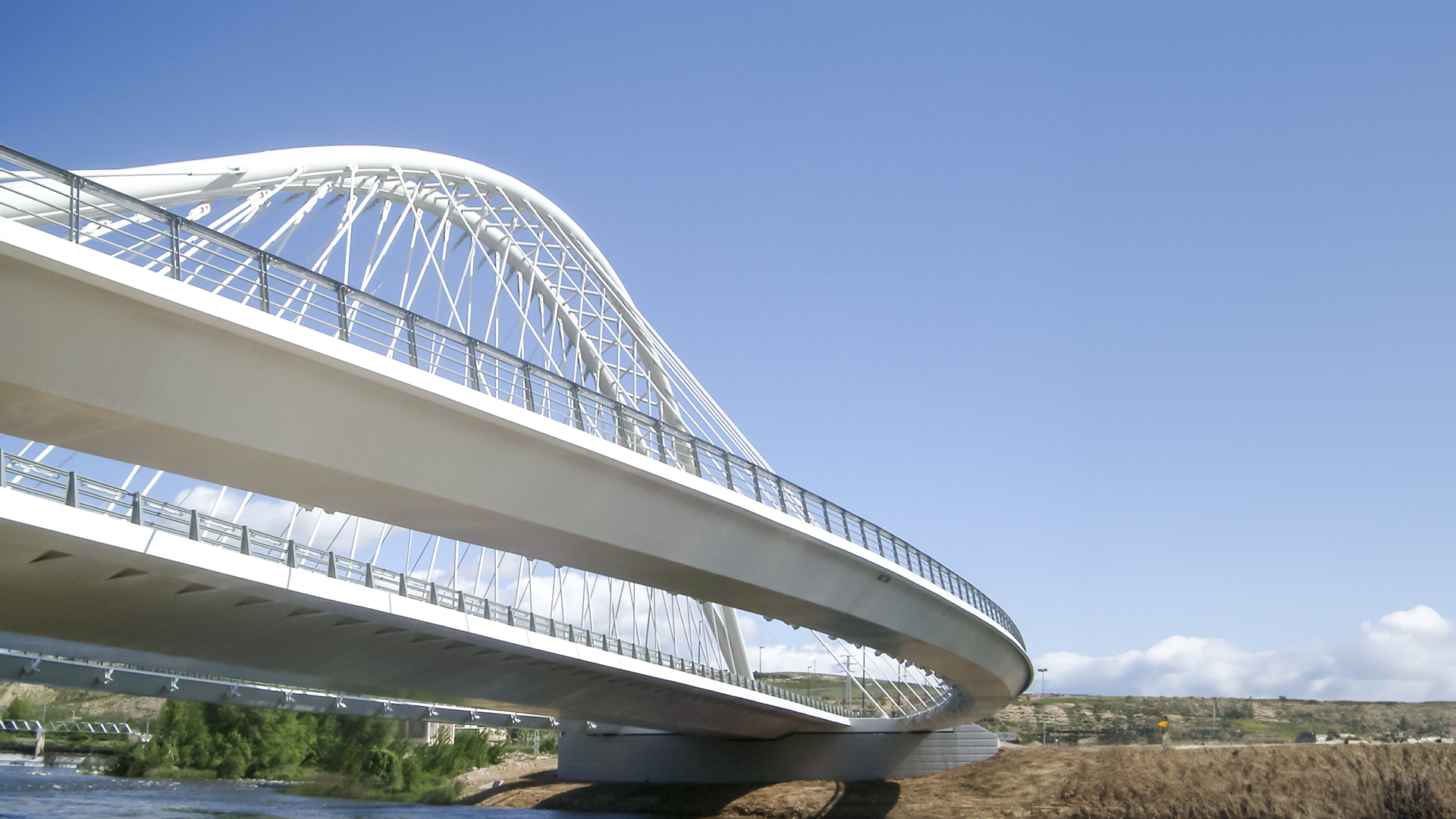
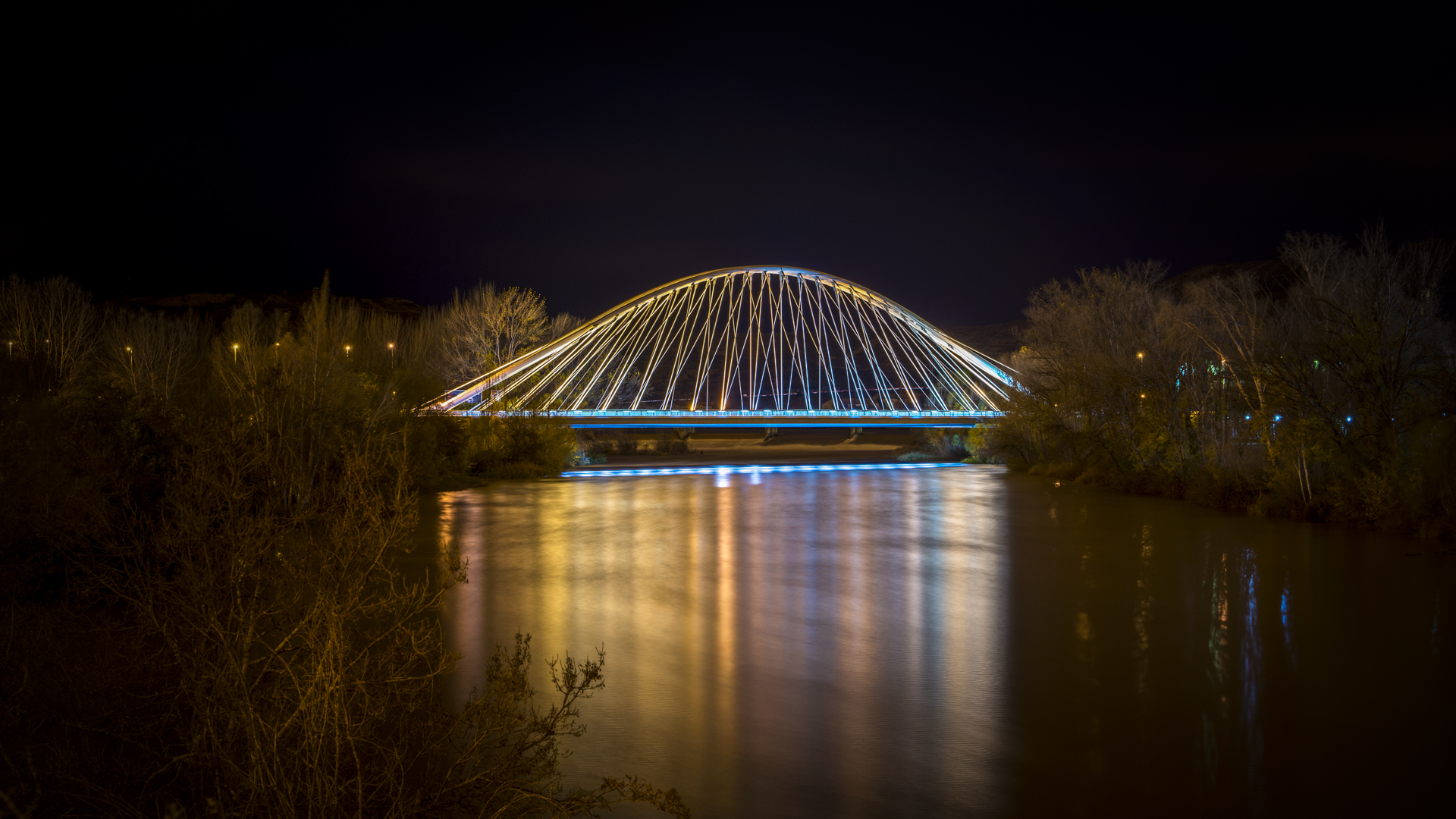
Fourth bridge over the Ebro River. Logroño. Spain. 2003.
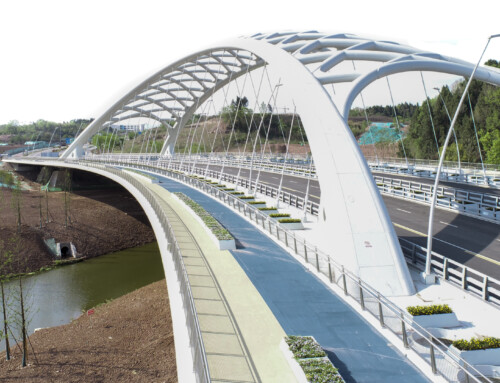
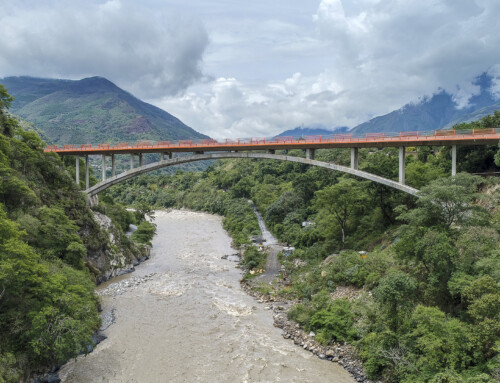
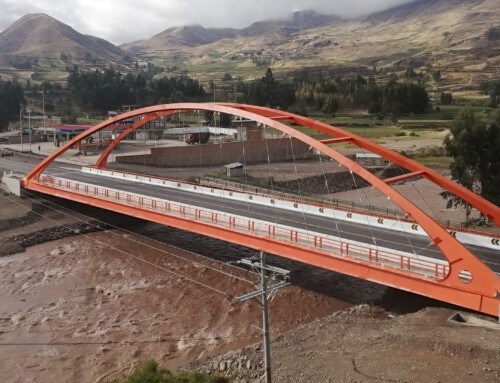
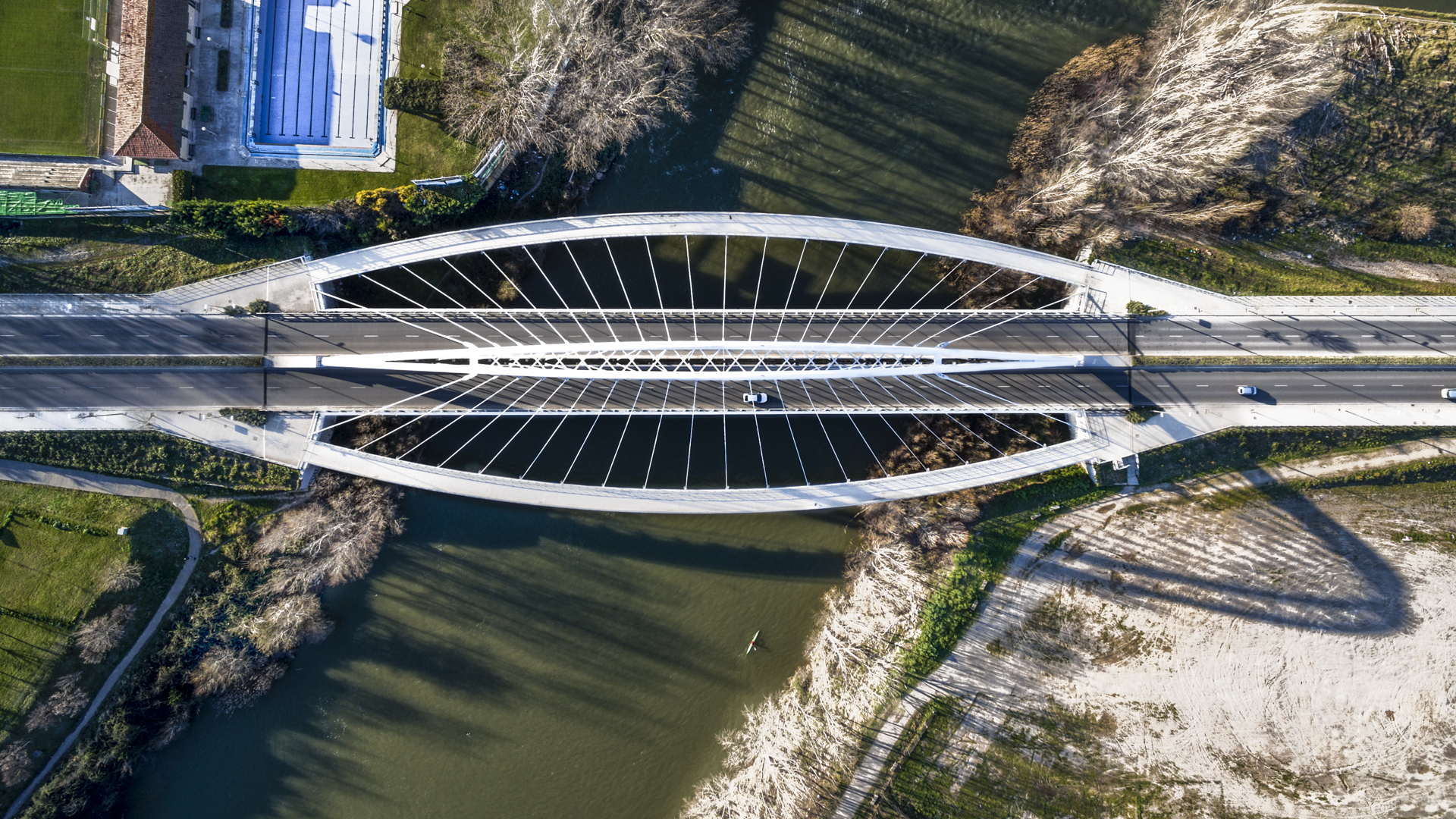
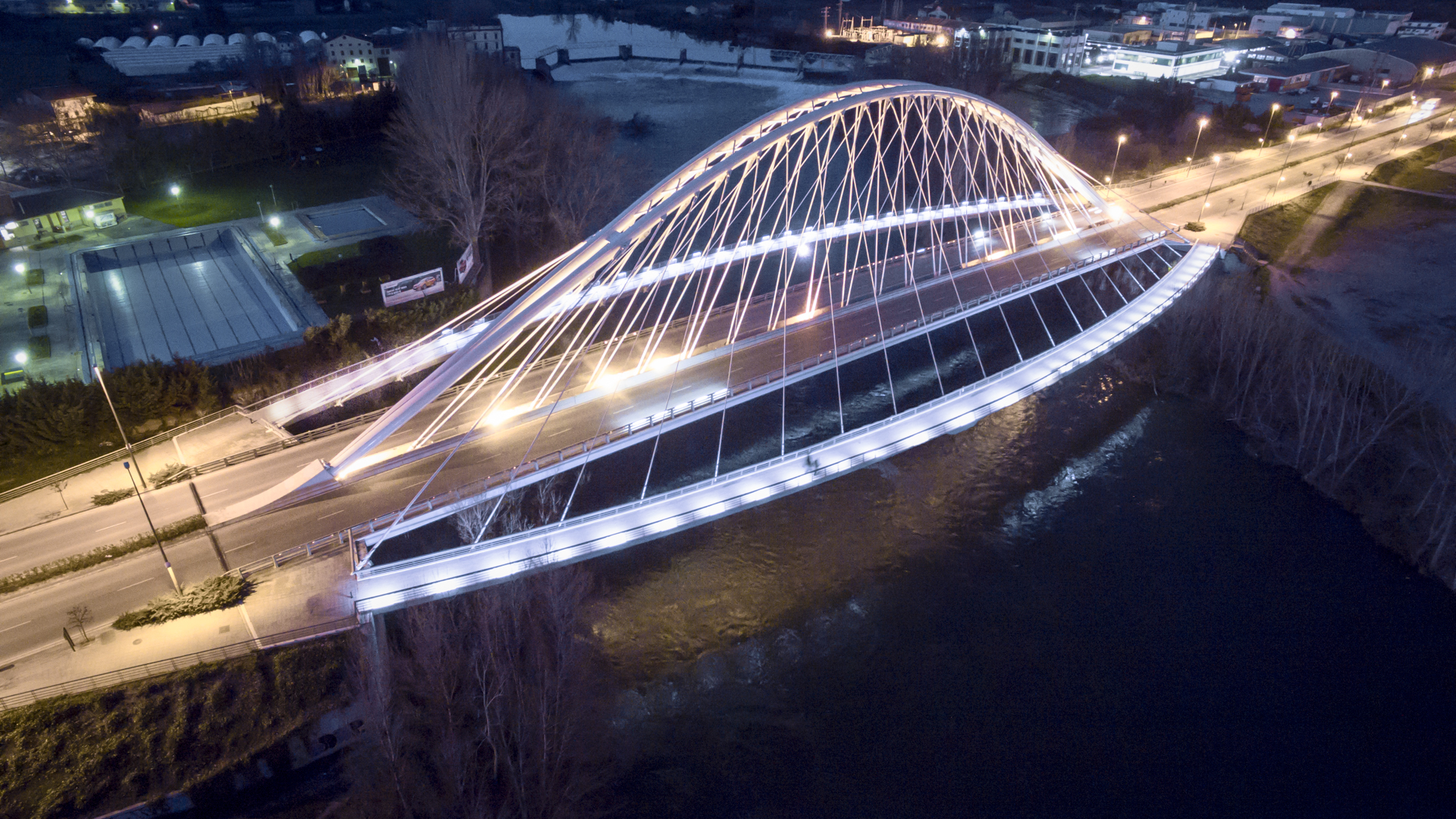
The Logroño bridge crosses the Ebro River in the city itself. This fact has led to two things: the installation of wide sidewalks and the design of a new formal and resistant configuration. To obtain the latter condition, we separated the sidewalks from the central body of the bridge, thus achieving several advantages: Reducing traffic noise for pedestrians, creating a spatial structure made up of the stays that support the walkways along their inner edges.
On the Logroño bridge, only the sidewalks are separated and the roadway remains straight. The bridge has a span of 140 m.
The deck, to support the weight of the traffic, consists of a mixed beam with a trapezoidal section, 2.0 m high and 18.6 m wide. The lateral decks that support the walkways have a metal section of 4.00 m in upper width, 2 m in lower width and 1.1 m in depth.
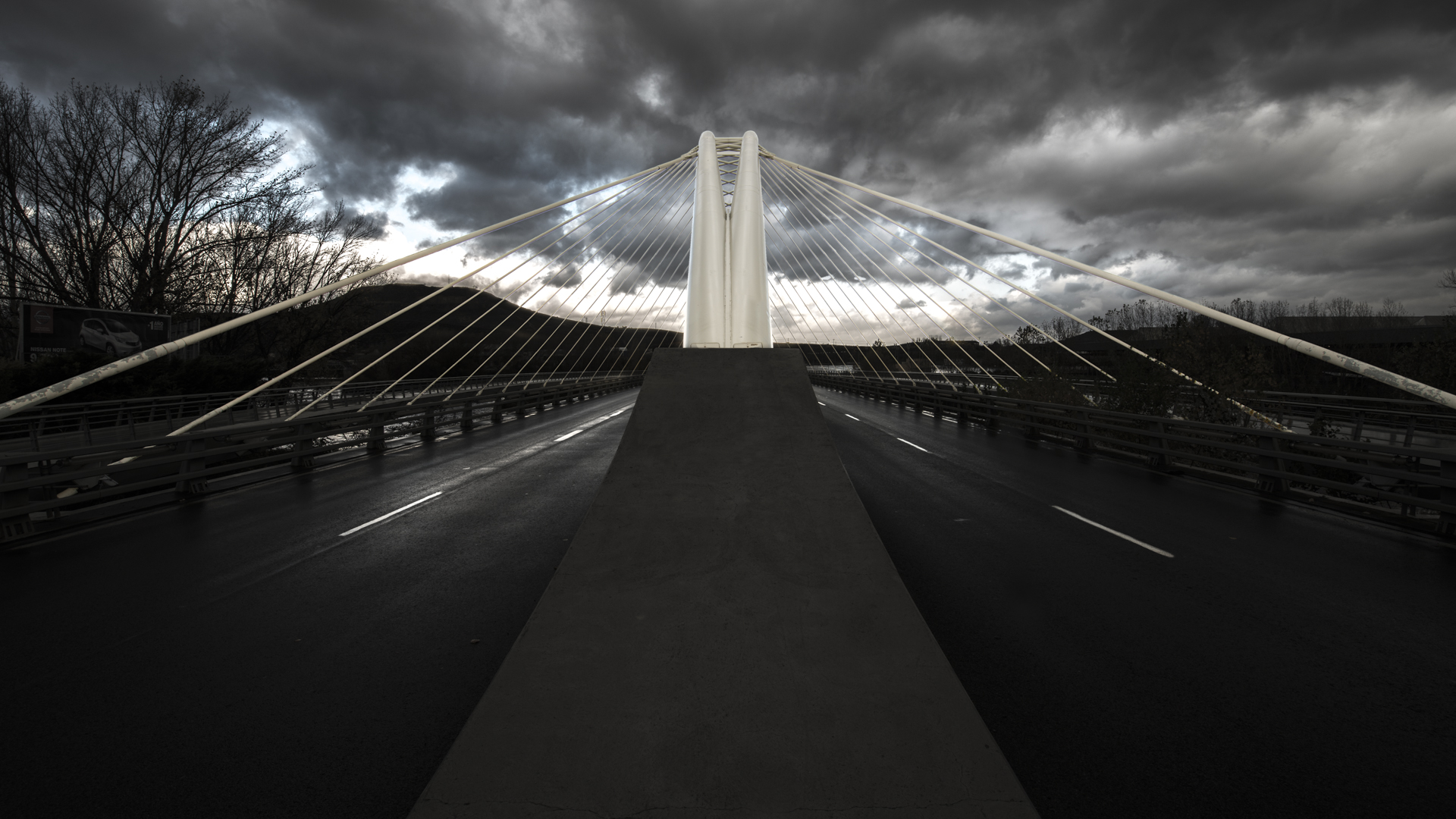
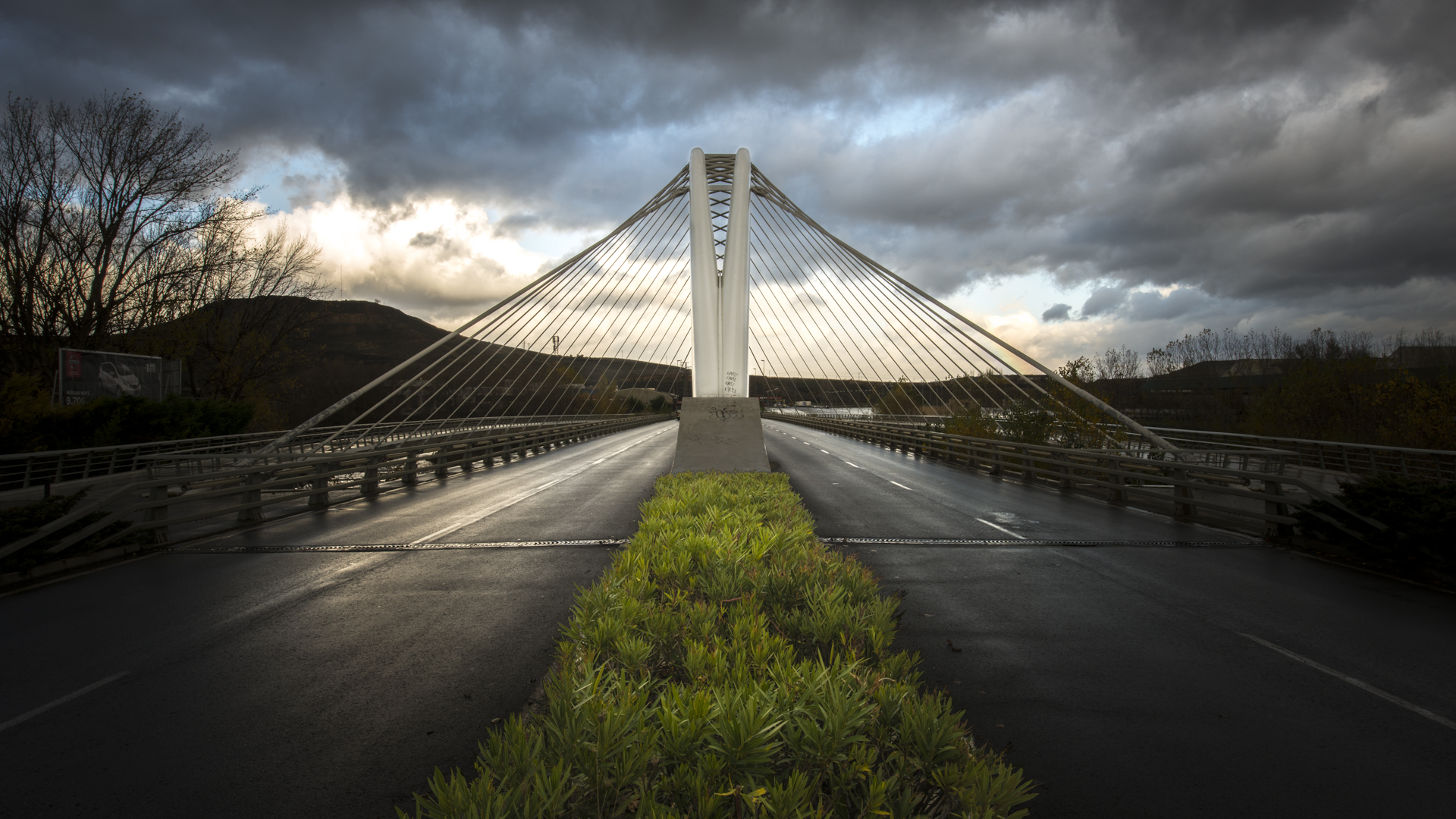
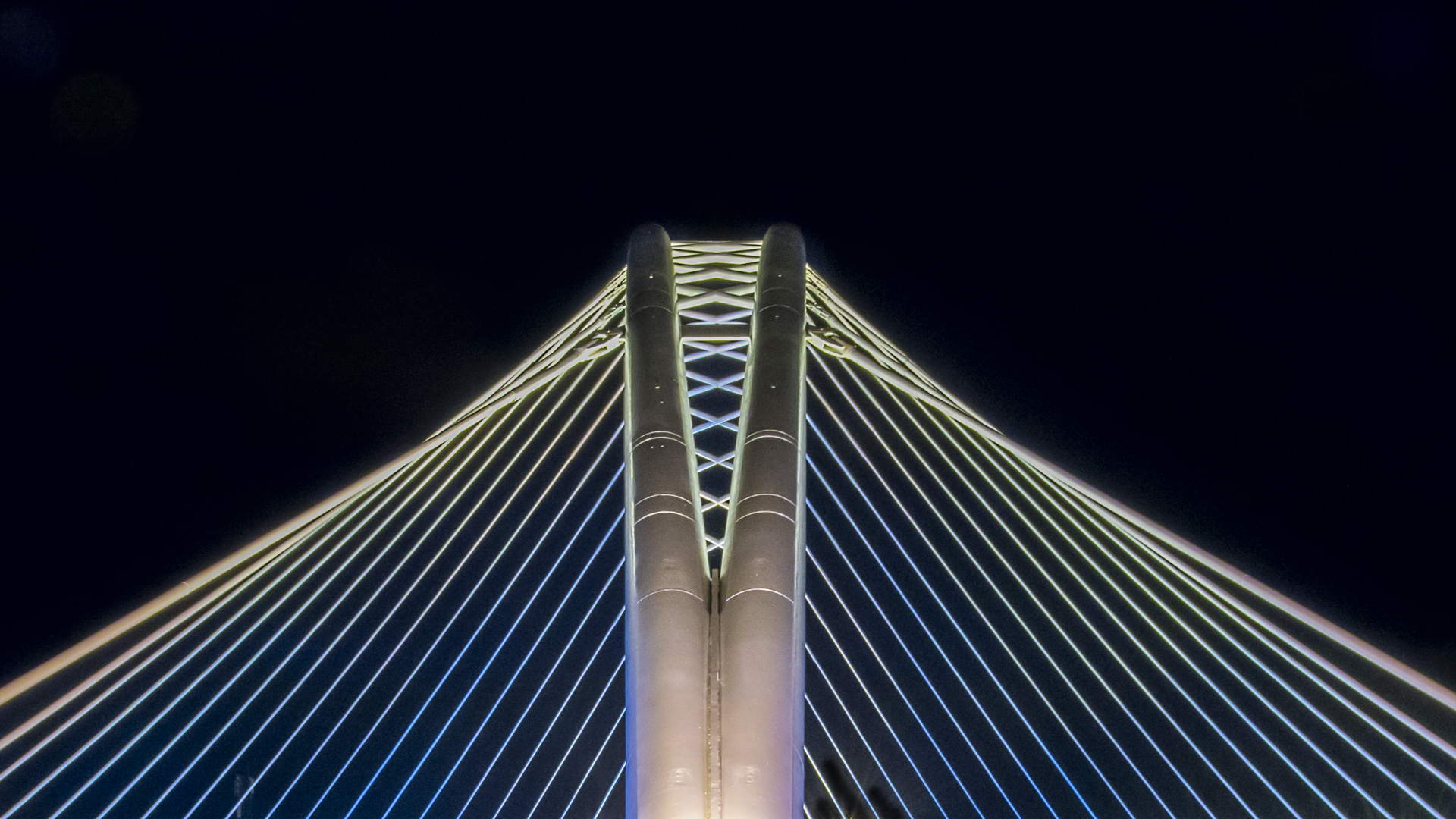
The arch is divided into two 1.2 m diameter tubes, which are separated from each other to achieve out-of-plane bending resistance, necessary when one walkway is loaded and the other is not, which produces a large transverse deformation to the arch and therefore a significant vertical deflection in the walkways. However, this transverse stiffening of the arch was not sufficient.
The last 4 suspenders, one at each end, which connect the walkways to the arch, are anchored to the stirrup and thus provide the arch with the necessary additional transverse stiffness.
The bridge was built by pushing the central metal lintel over temporary piers installed in the river, and then concreting the upper slab. Subsequently, the outer walkways were assembled from the central deck.
Finally, the arch was assembled on the deck, the deck and walkway were braced, and finally the temporary pillars located in the river were removed.