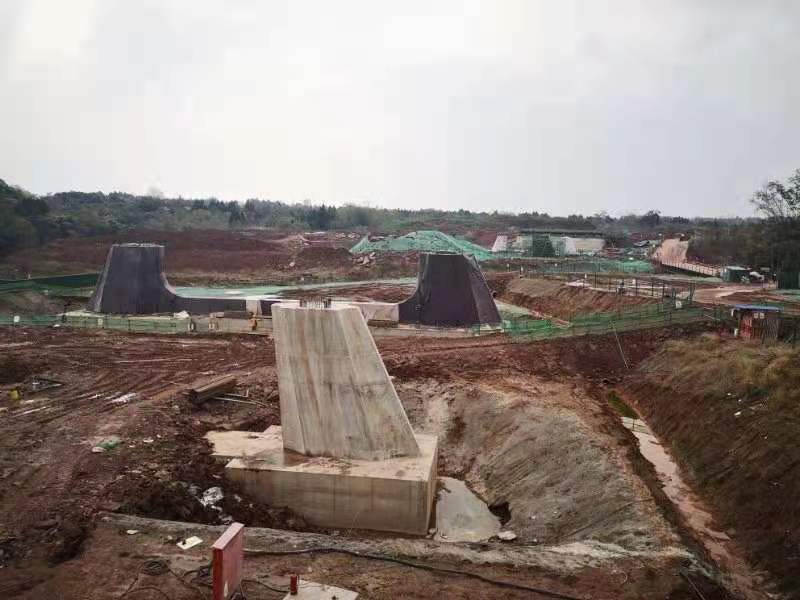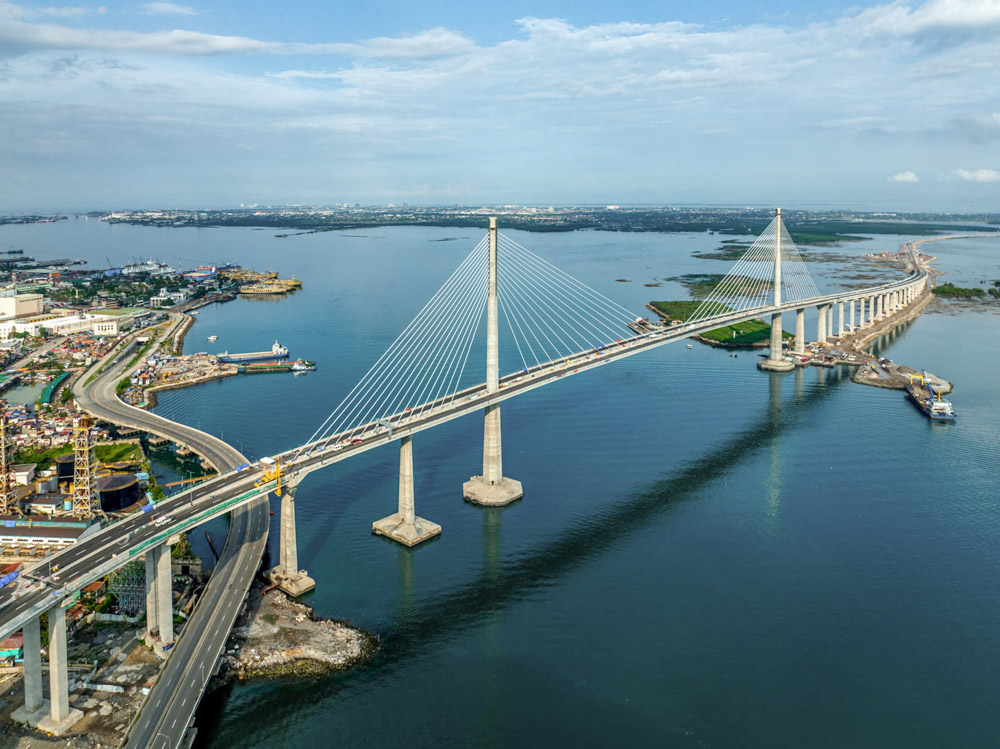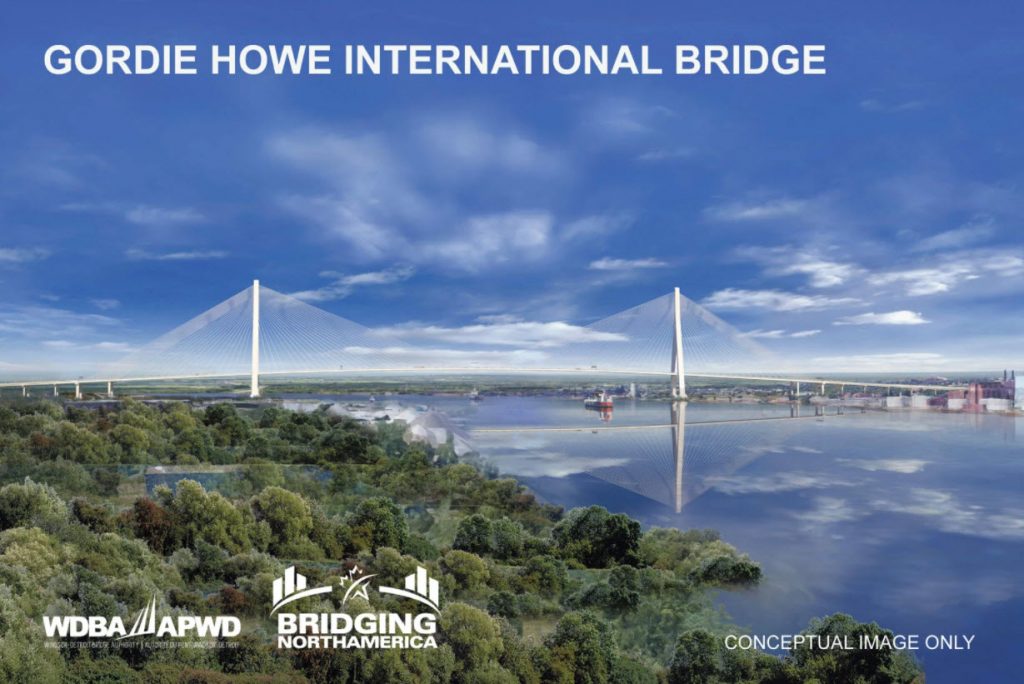


Work started on the bridge over the Jiangxi River in Chengdu. China.
After the completion of the detailed engineering, developed by SMEDI, work has started on the East Bridge, which is being executed by the company SRBG (Sichuan Road and Bridge Group). Completion is scheduled for the end of 2021.
The CFC-SMEDI group participated together with AECOM, SBP, Zaha Hadid Architects, ARUP and Super Geometry Architects in the international restricted competition called by the authorities of the city of Chengdu, China, entitled Sollicitations of Proposals for the Conceptual Design Scheme of Six Bridges in Jiangxi River, Chengdu Hi-Tech Zone.
The action is part of an ambitious expansion plan for Chengdu City, in the so-called airport city, planned to accommodate more than 10 million people. The axes that have guided the design of this new urban space are the integration with the natural environment and the sustainability of the action.
The CFC-SMEDI proposal won the East Line Cross-Jiangxi River Bridge in June 2019. The detailed design has been developed by a local design institute with the collaboration of CFC-SMEDI, from that date until early 2020.
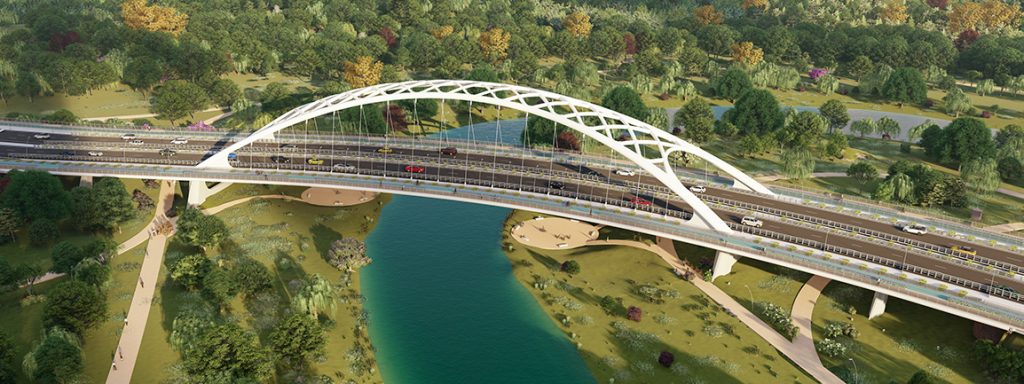
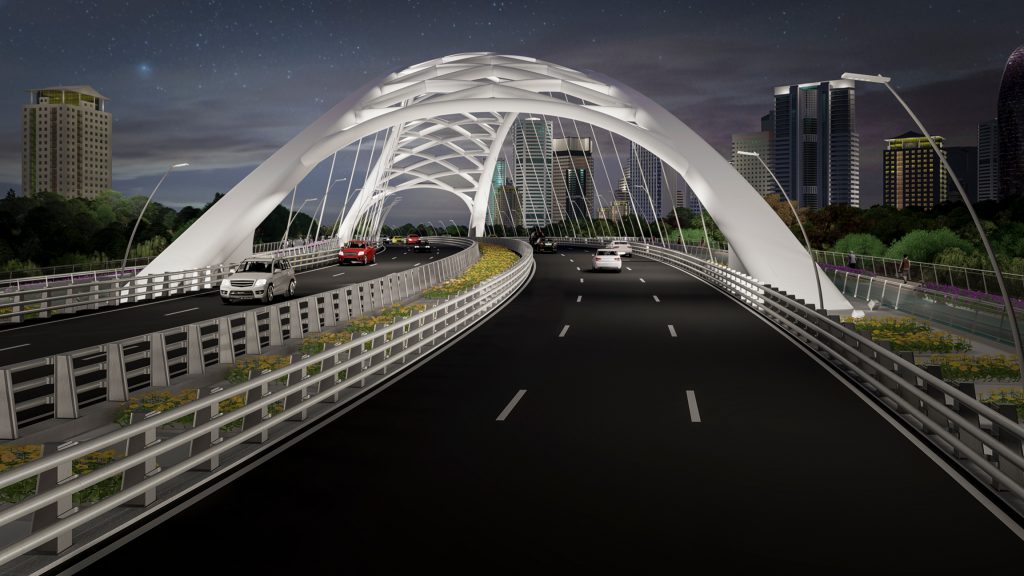
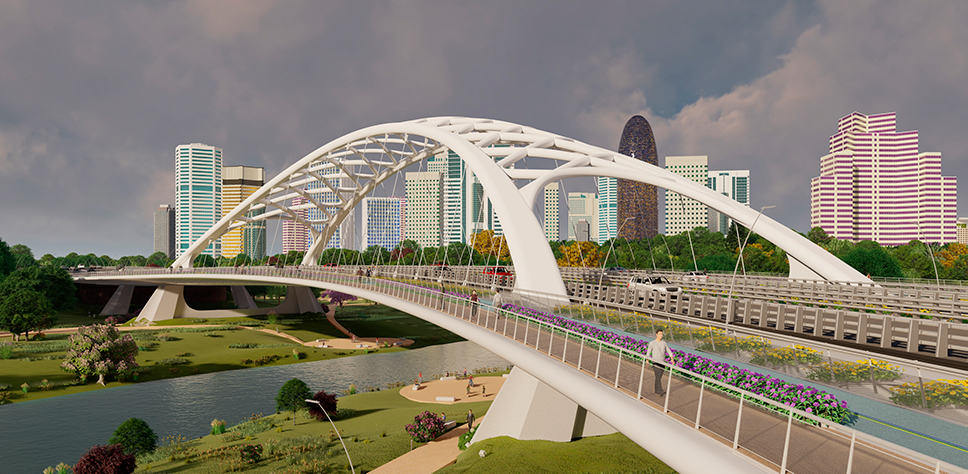
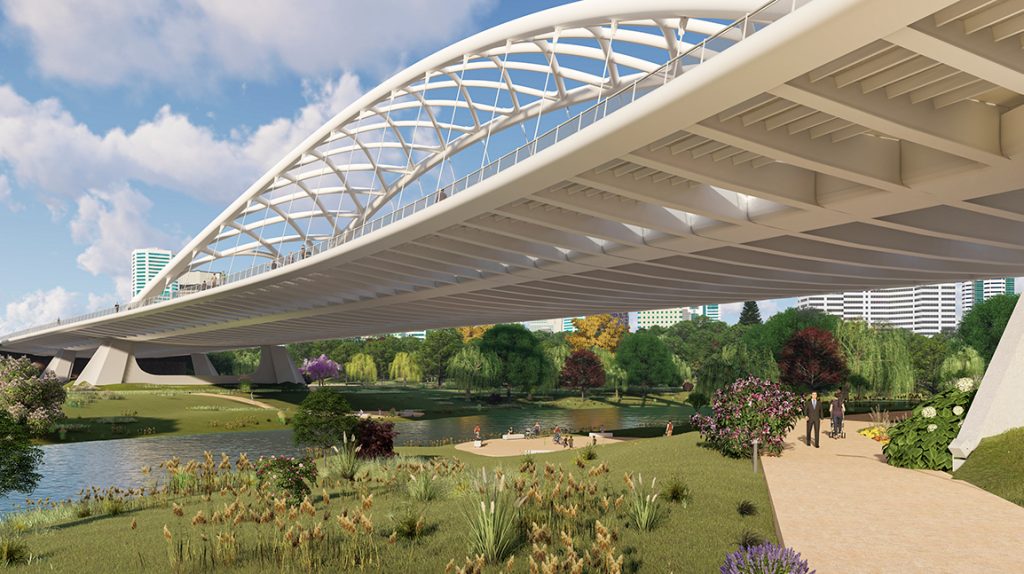
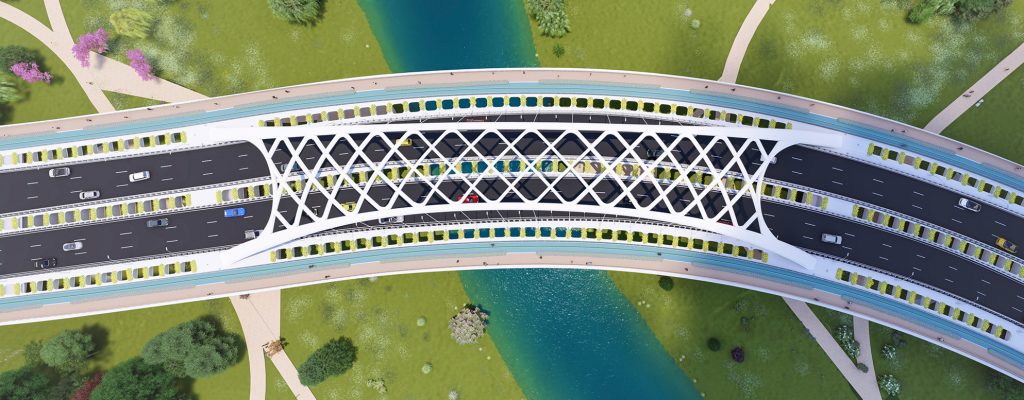
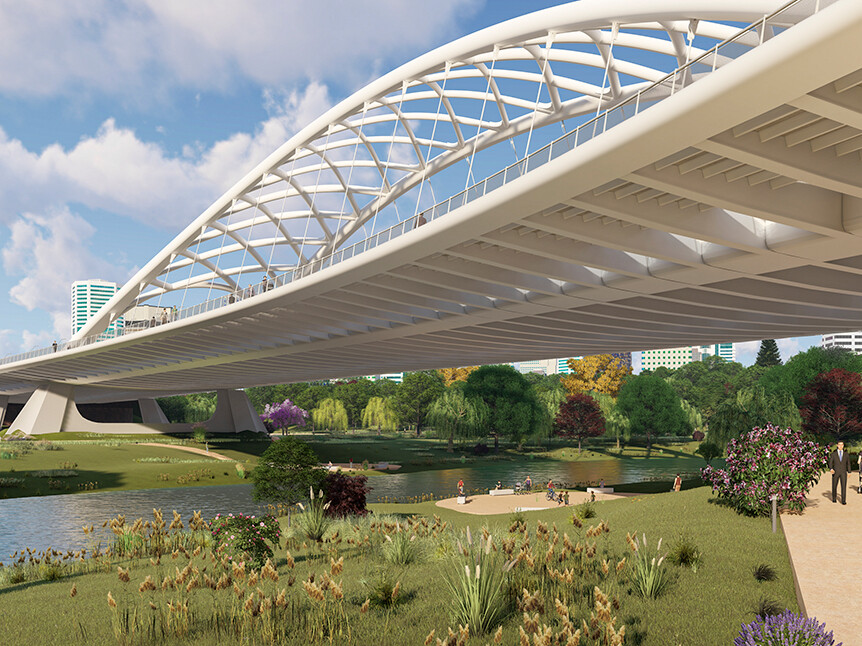
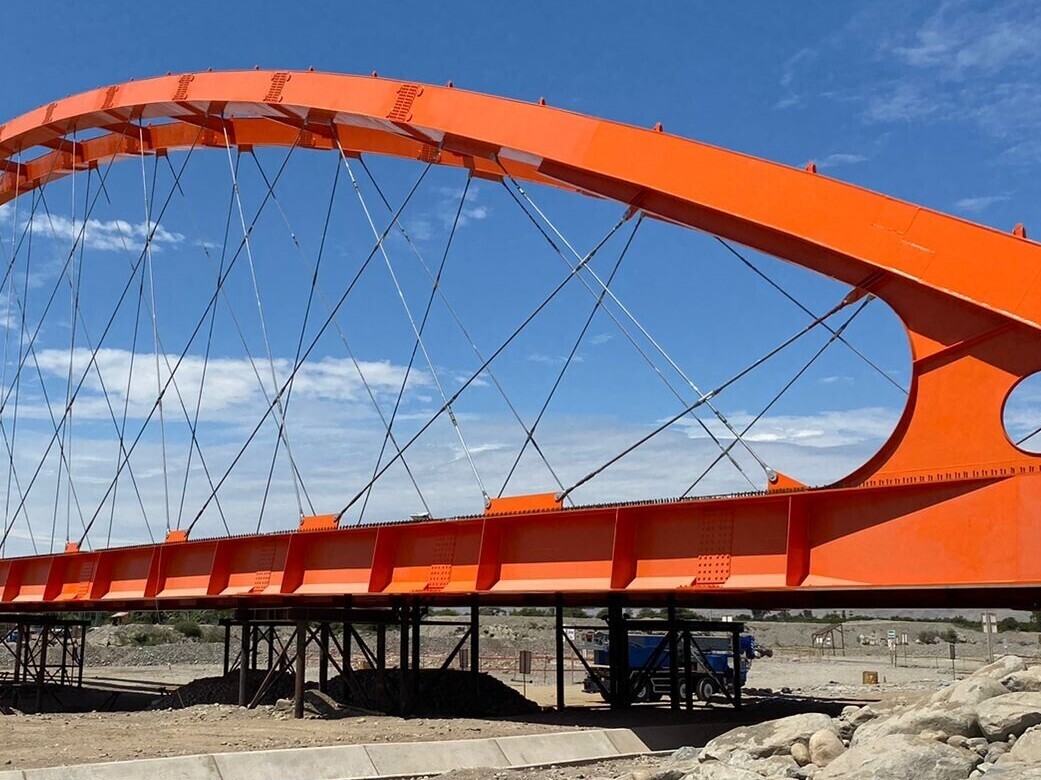
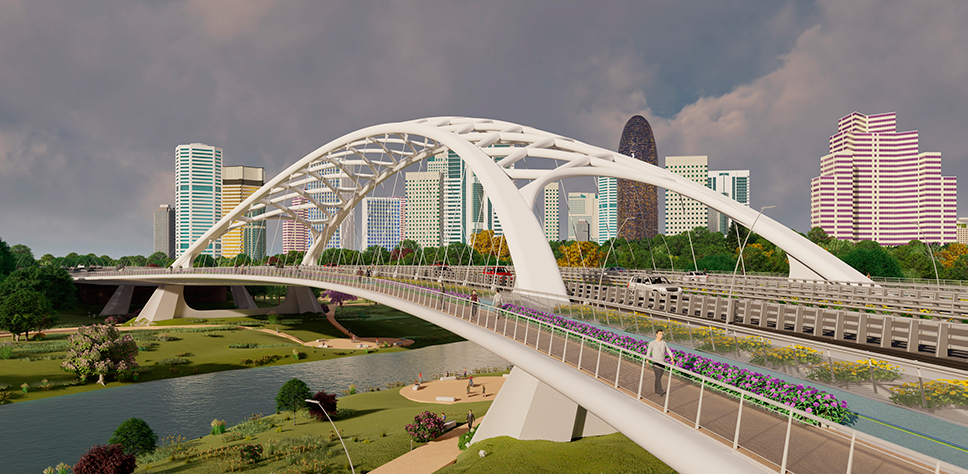
Bridge for road traffic, pedestrian and cyclist of a total length of 280 m. whose distinctive element is a self-signed arch that saves the river of 152 m. span and arrow of 21.7 m. The formal and resistant particularity of the work comes from the cross of the curved path of the bridge combining the curvature in the plant with an inclination to the interior thus configuring from the structure, a work with a marked spatial dimension that provides a great visual dynamism.
The cross-sectional stresses caused by the winged geometry generated by this arrangement are collected by a higher bracing formed by a lattice of tubes, essential element also in the formal configuration of the work, by having it in a domed shape between the arches to accentuate the spatiality of the structure. The deck is resolved with an orthotropic deck formed by two intermediate longitudinal caissons hung from inclined pendants and curved transversal beams every 4.50 m.