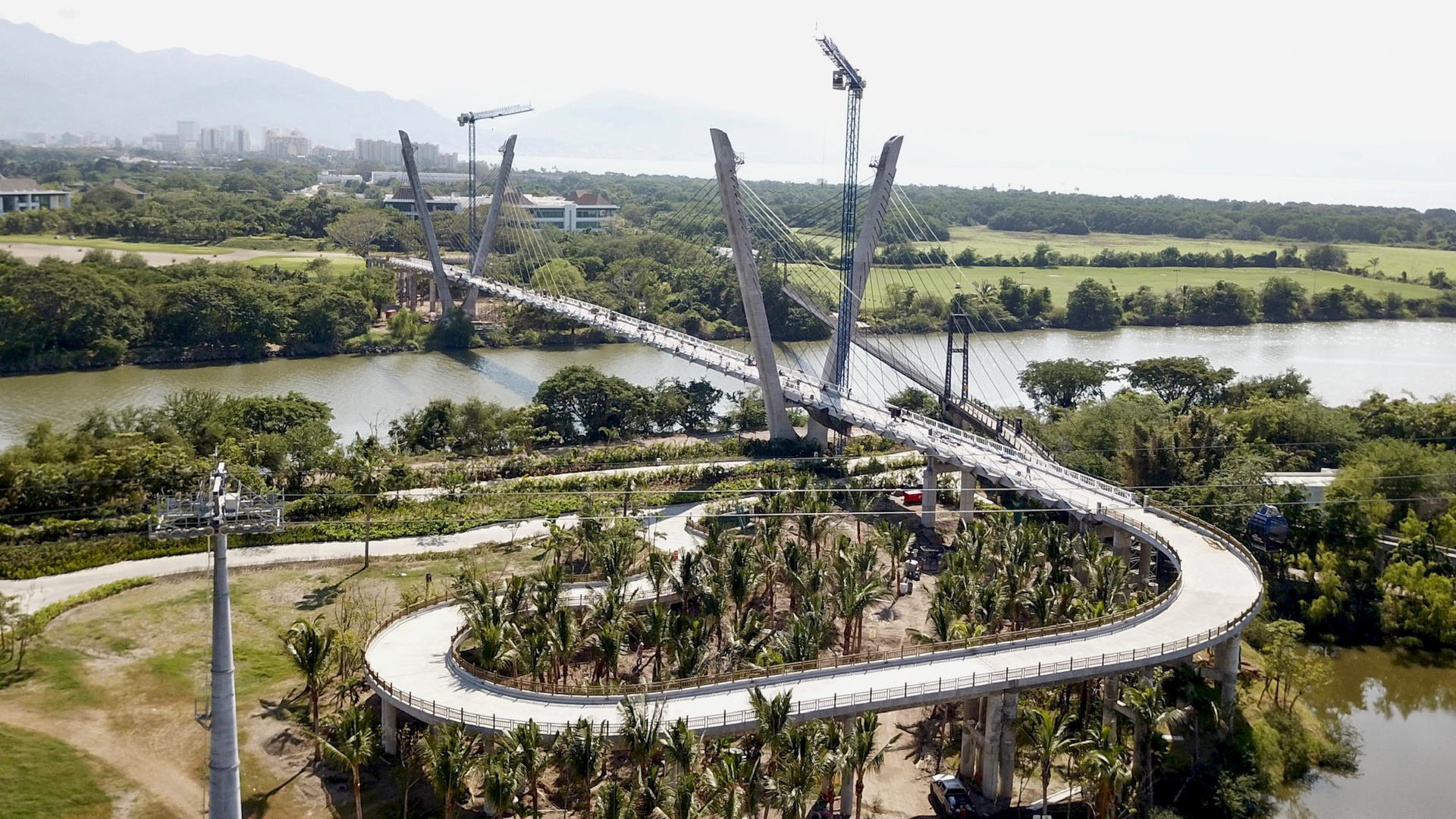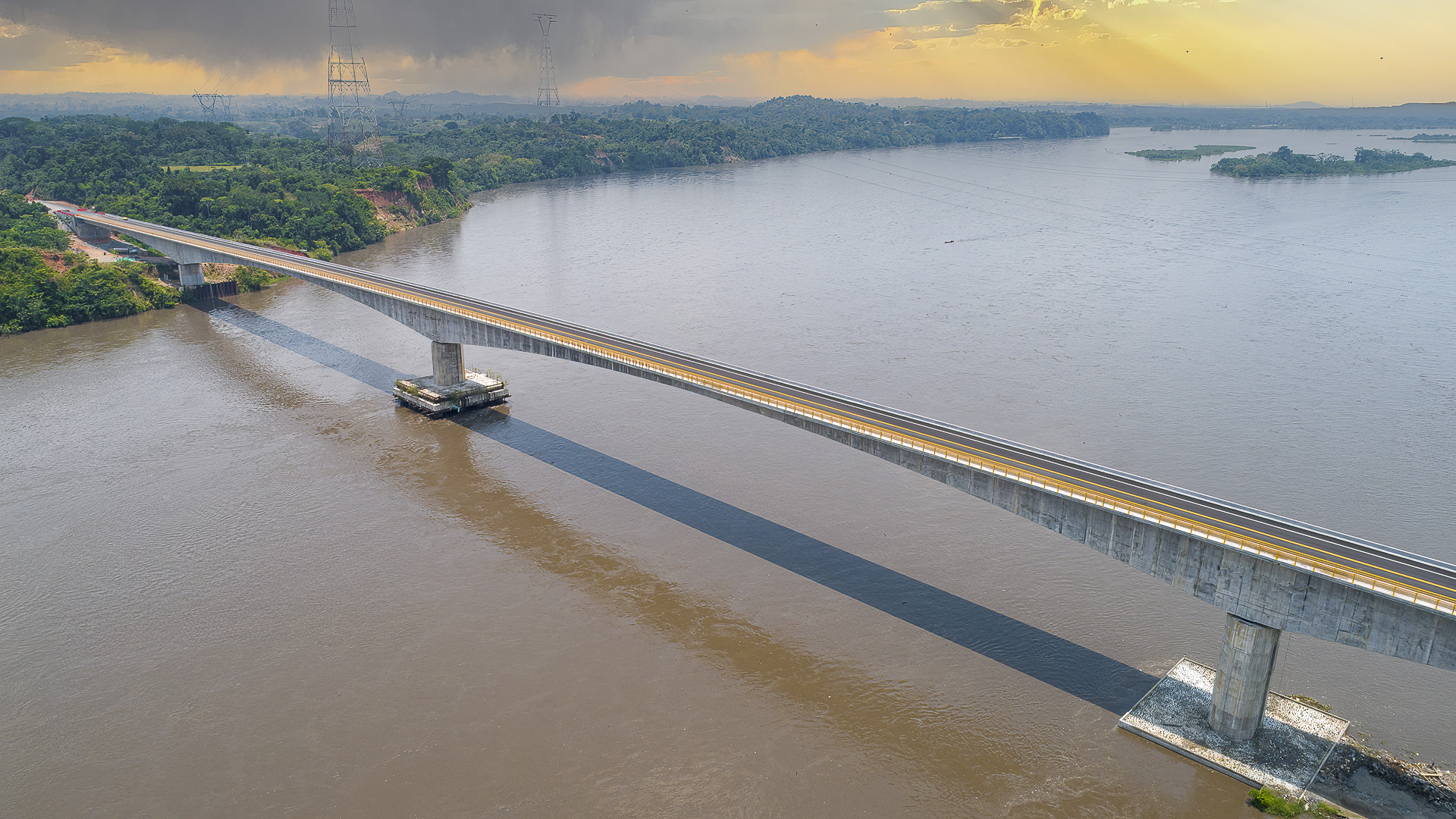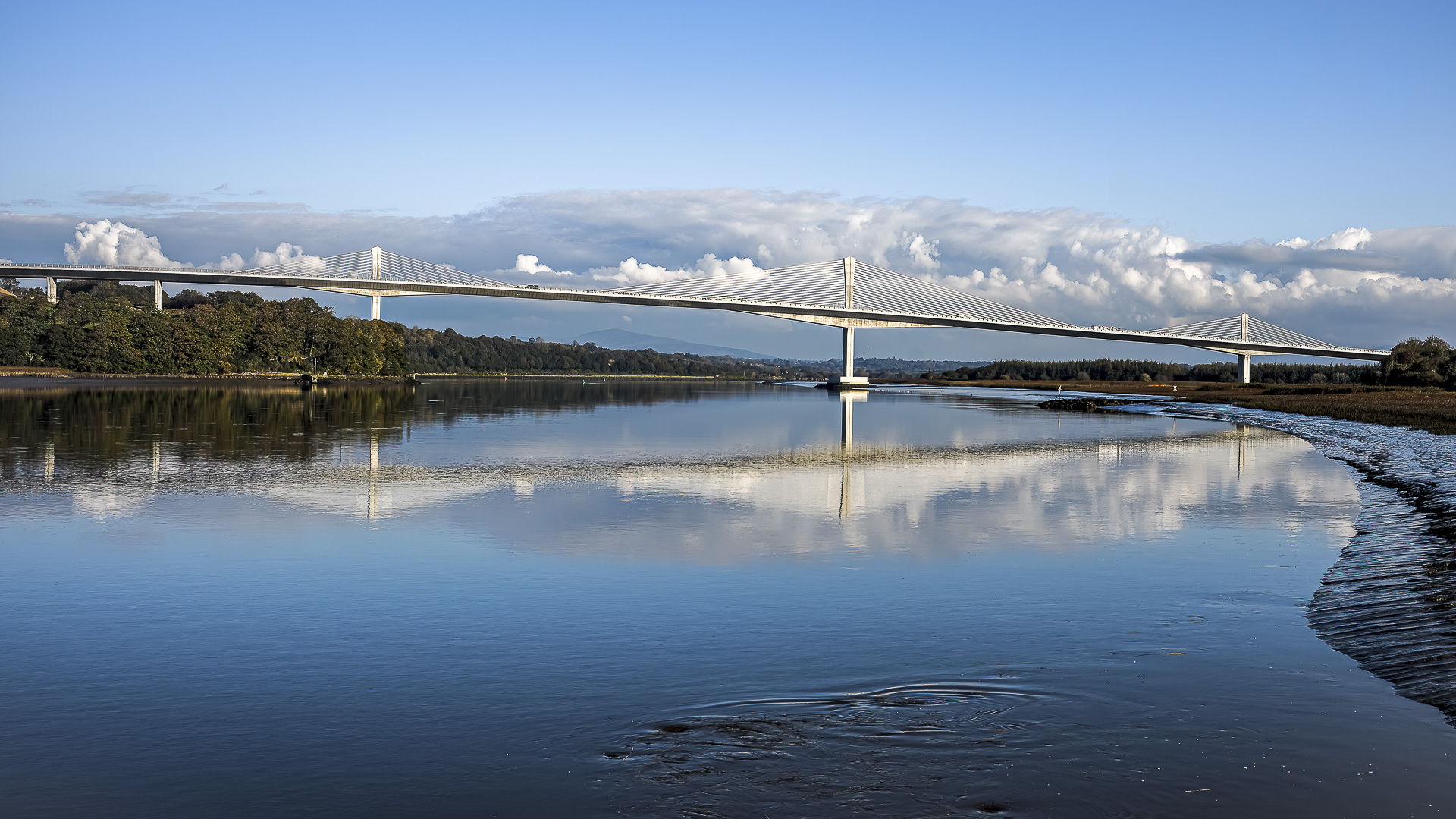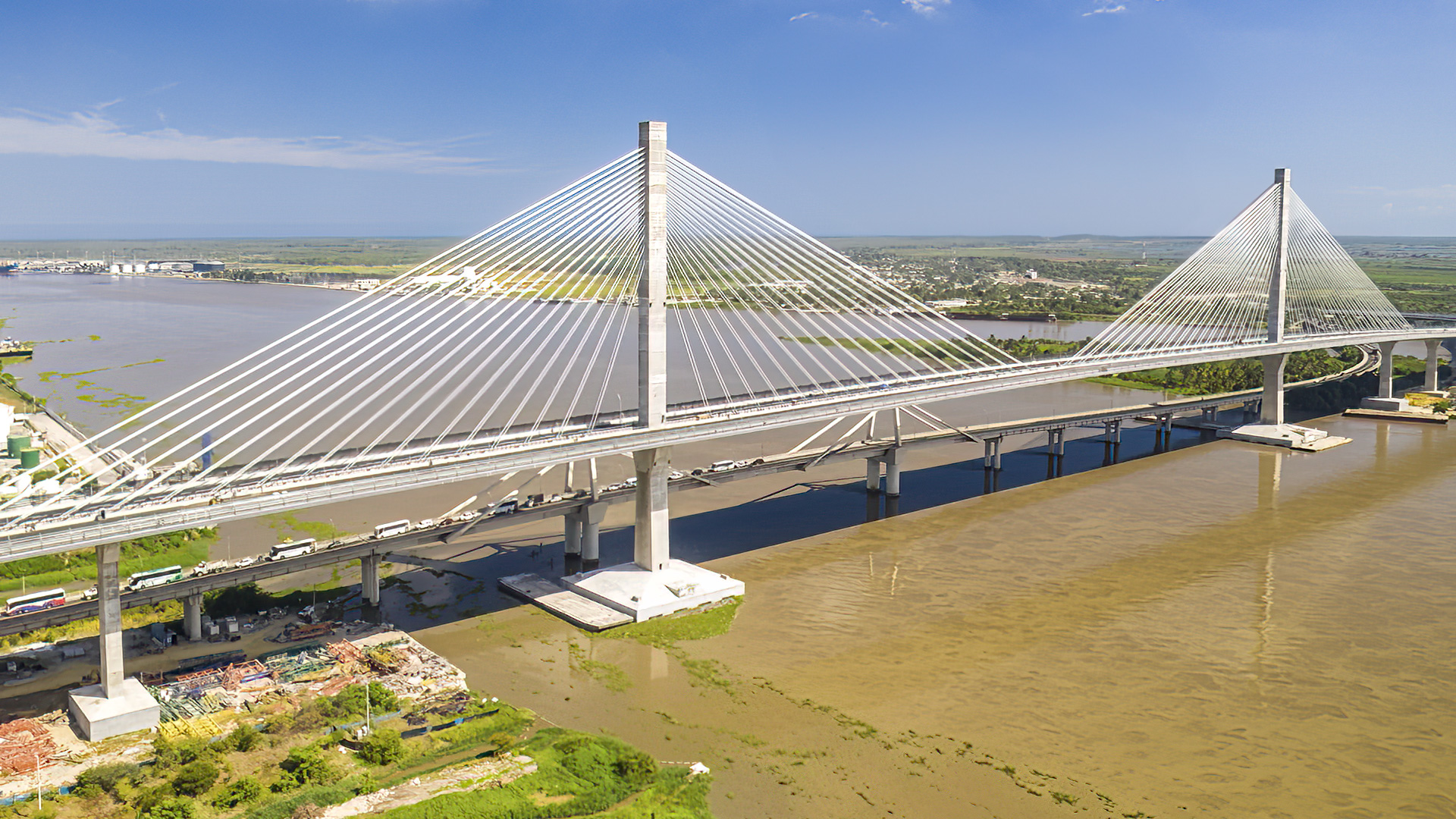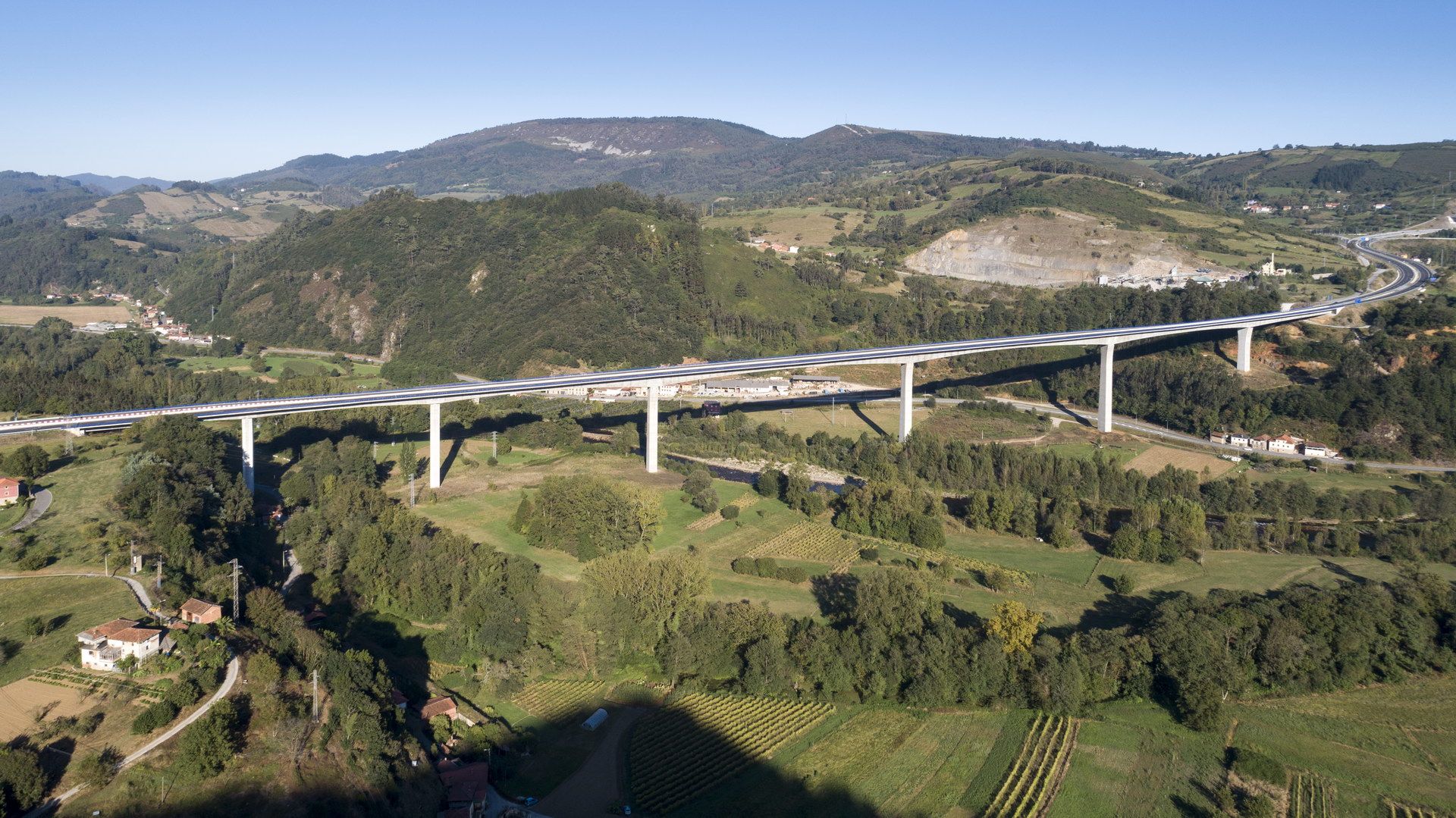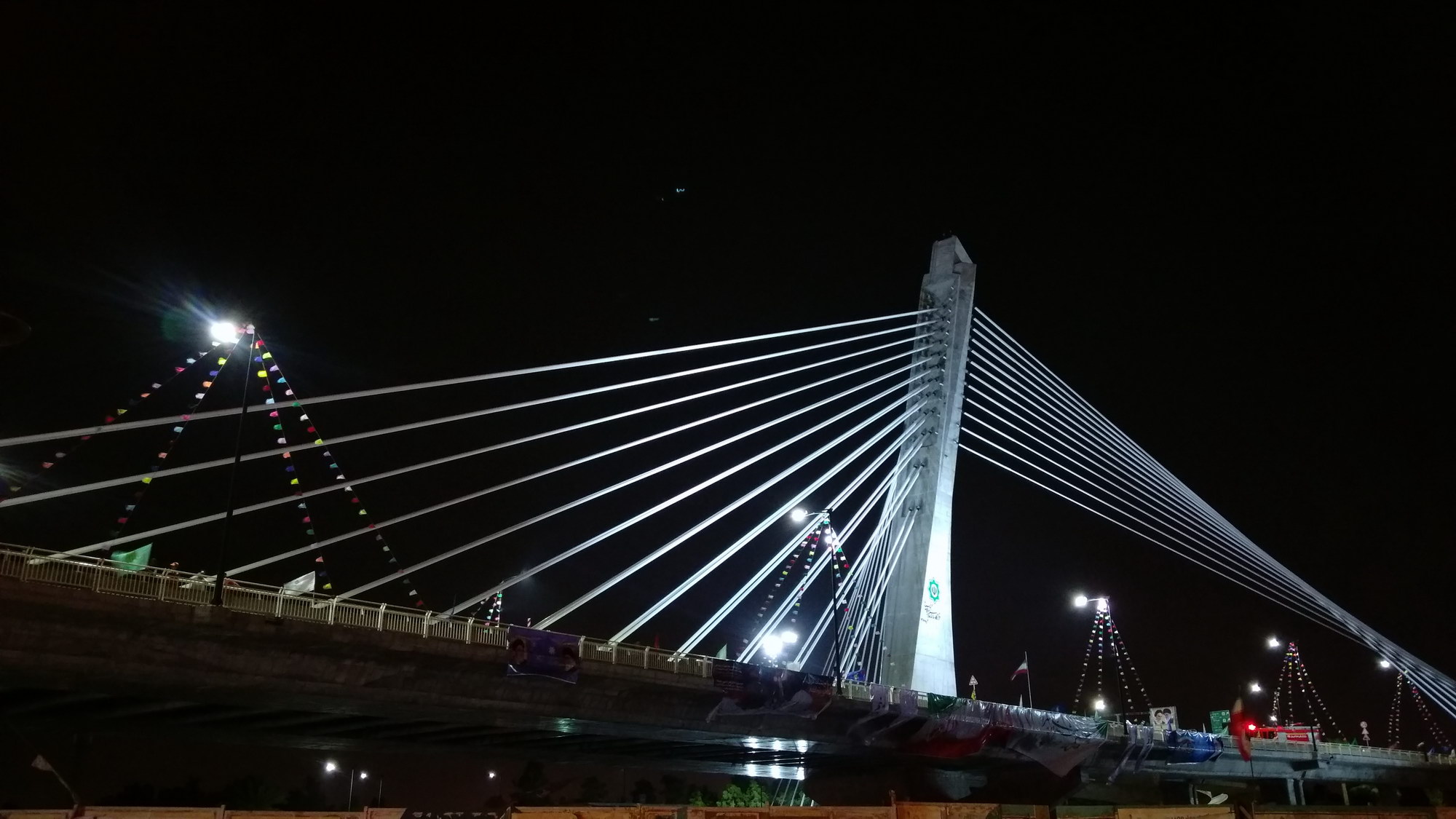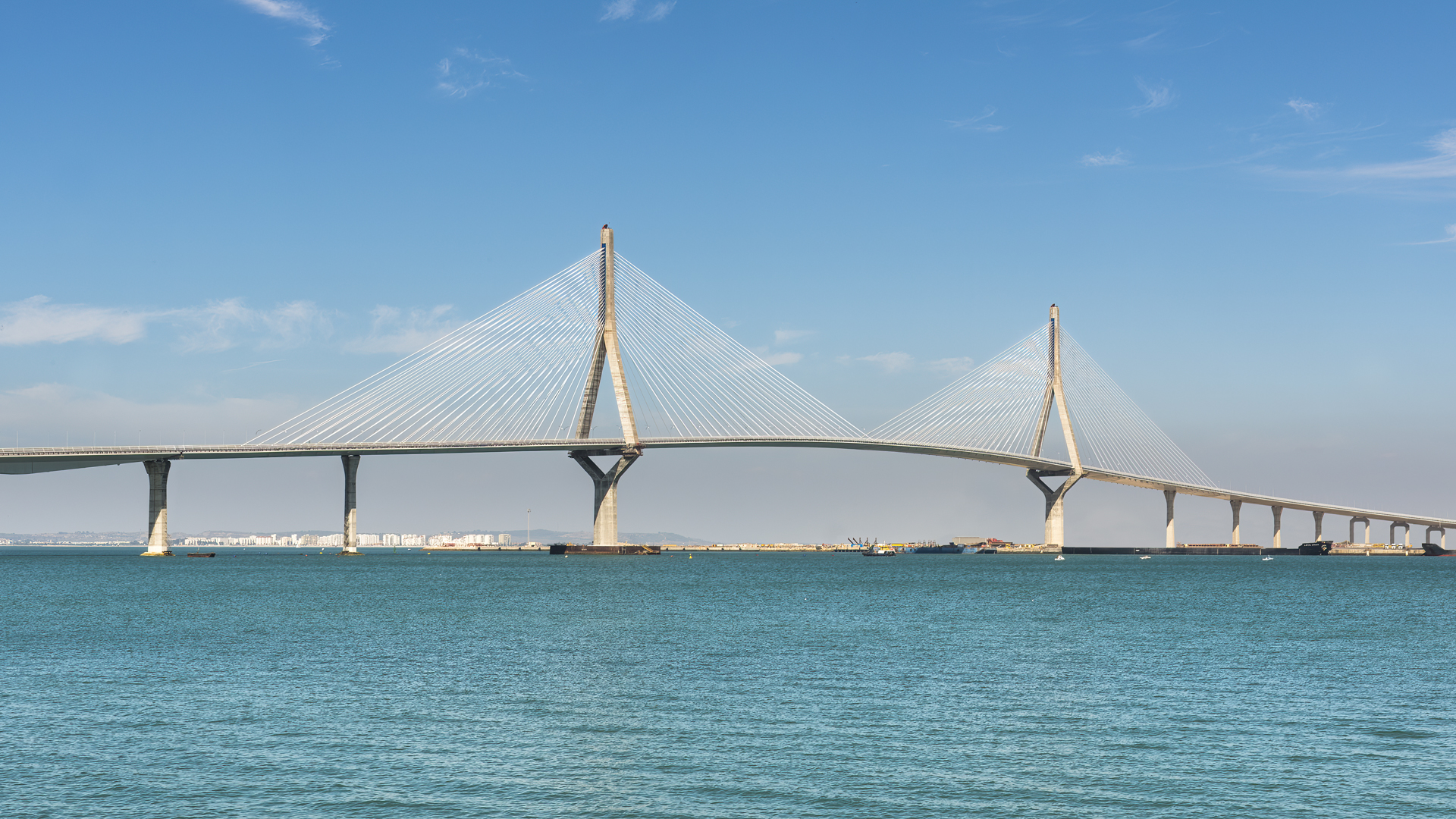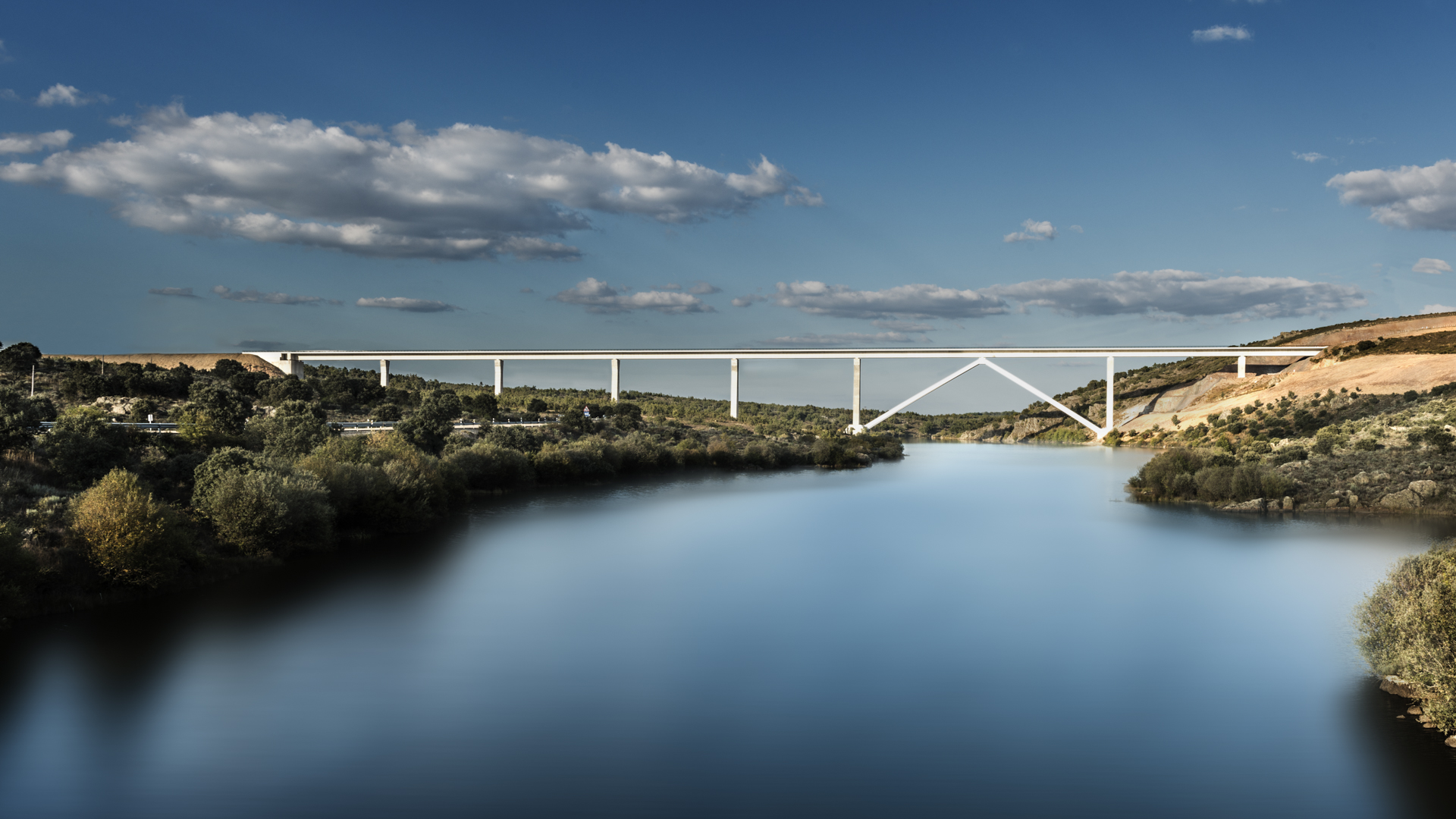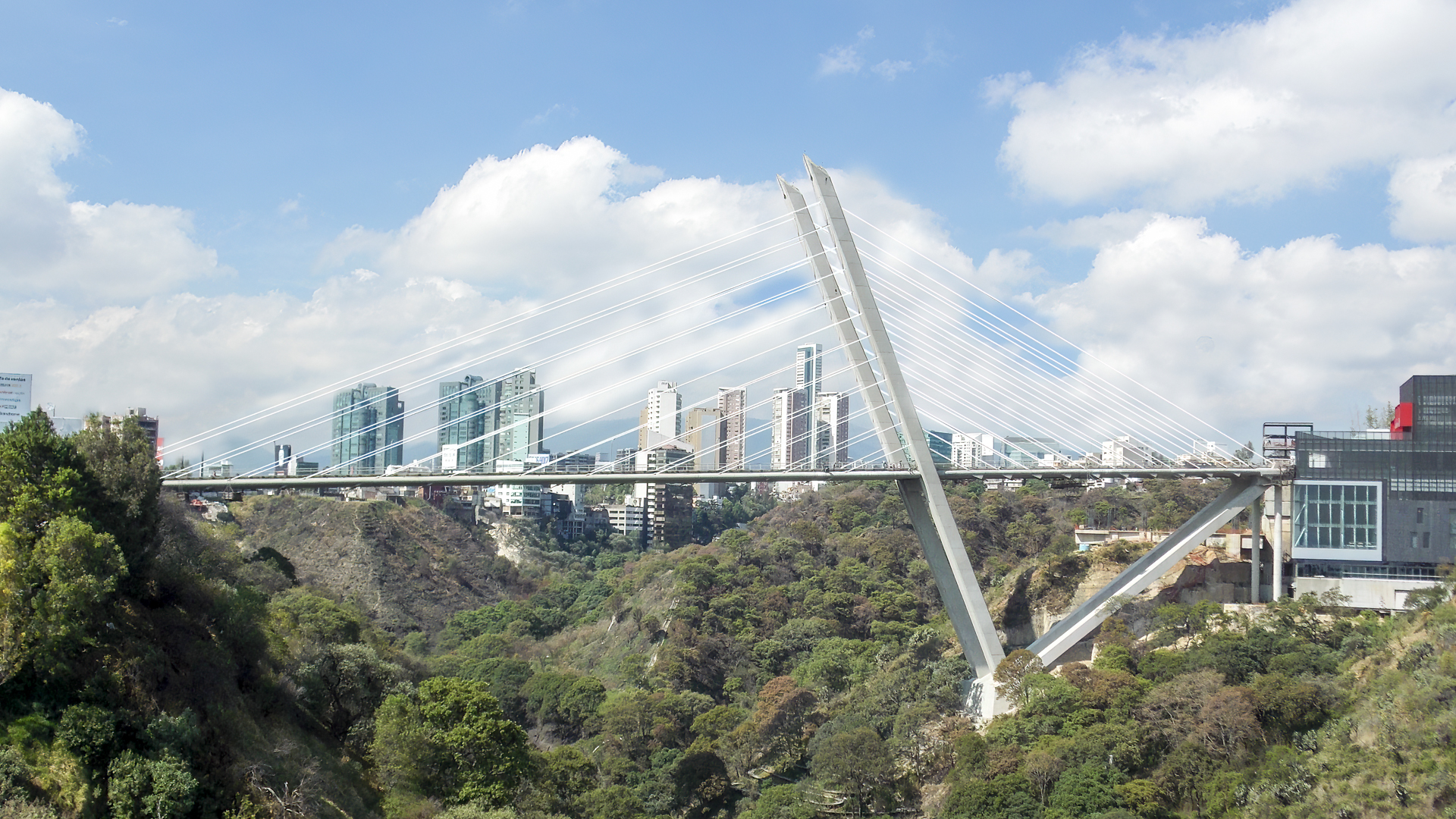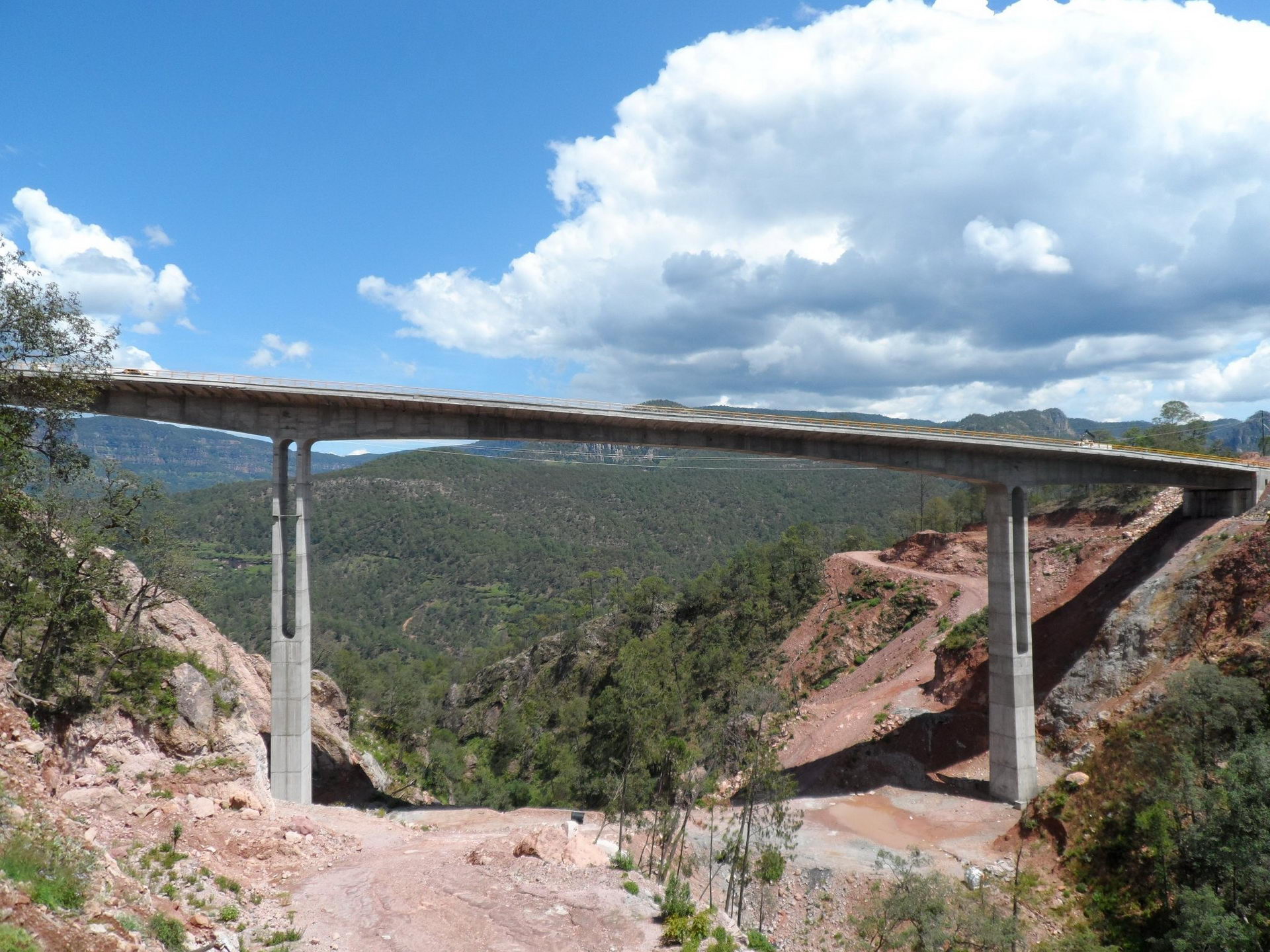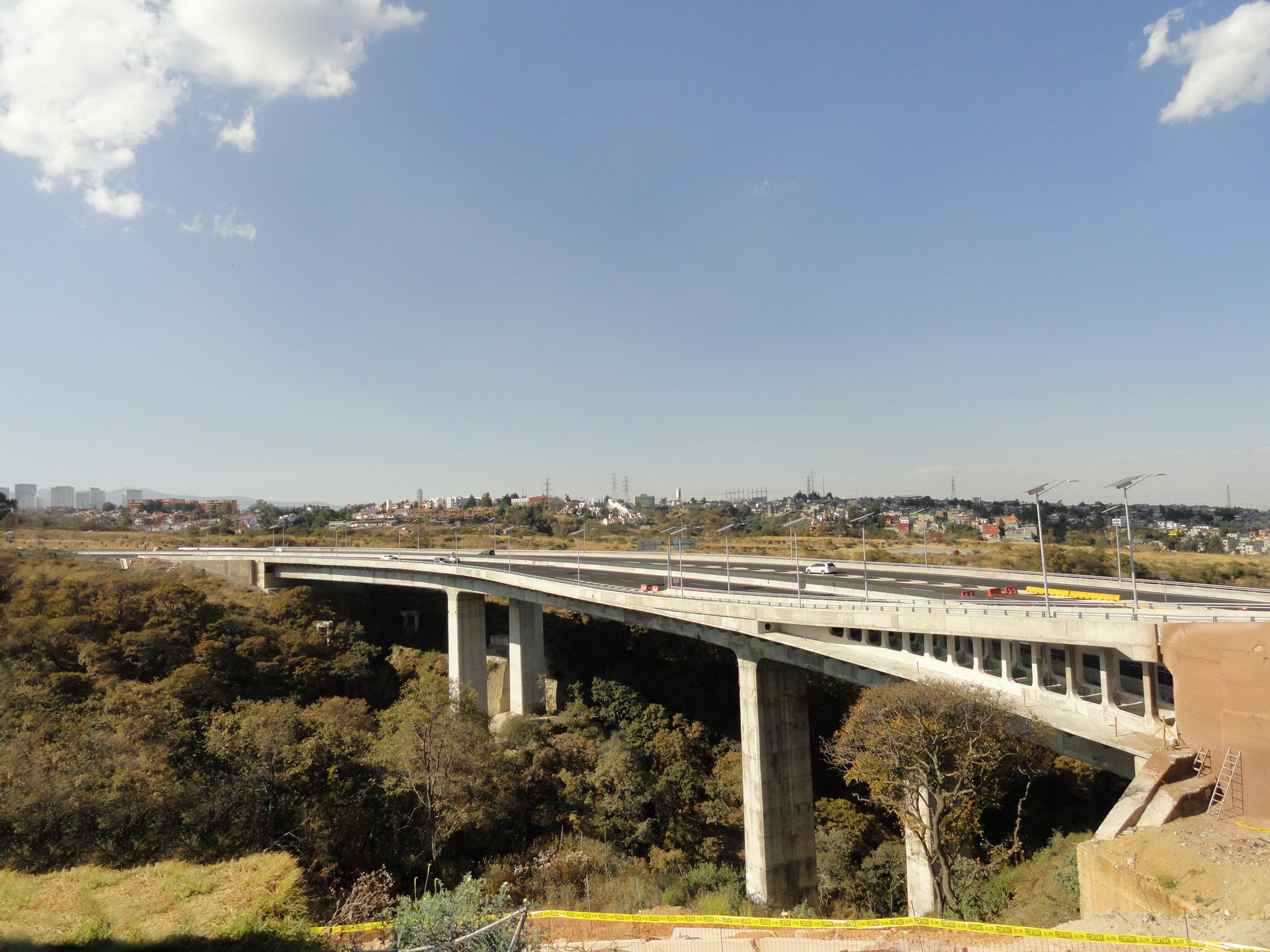


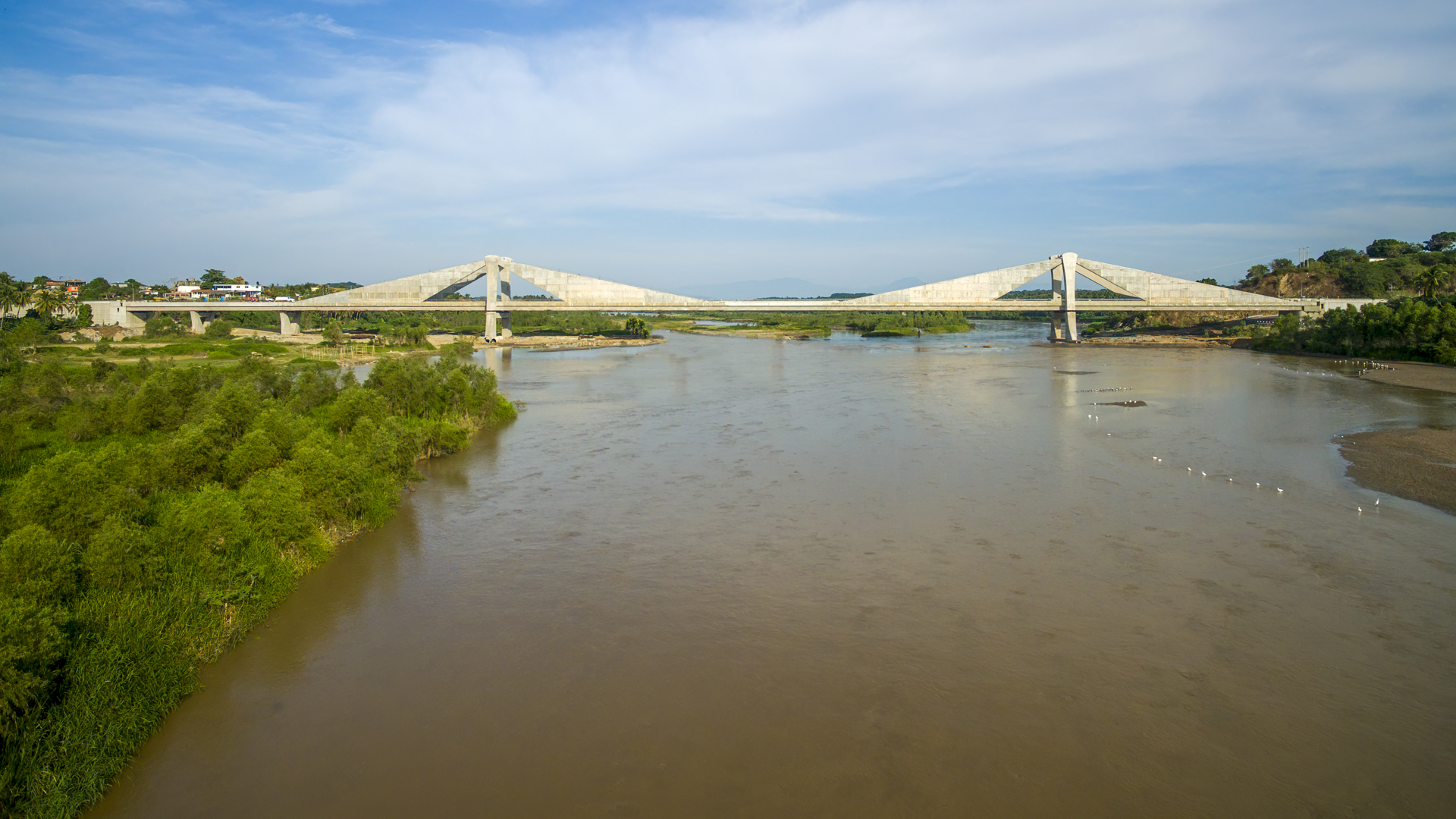
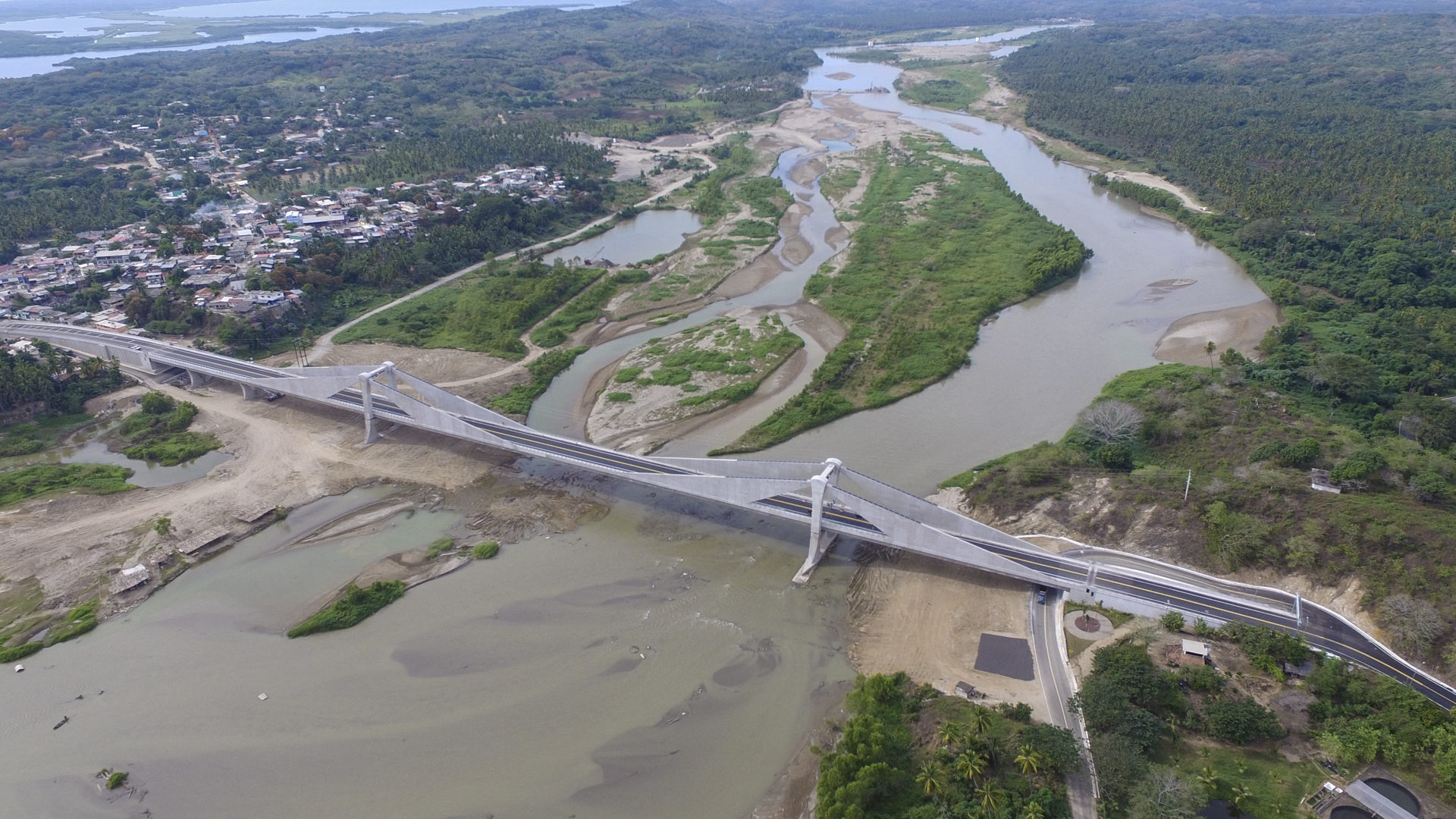
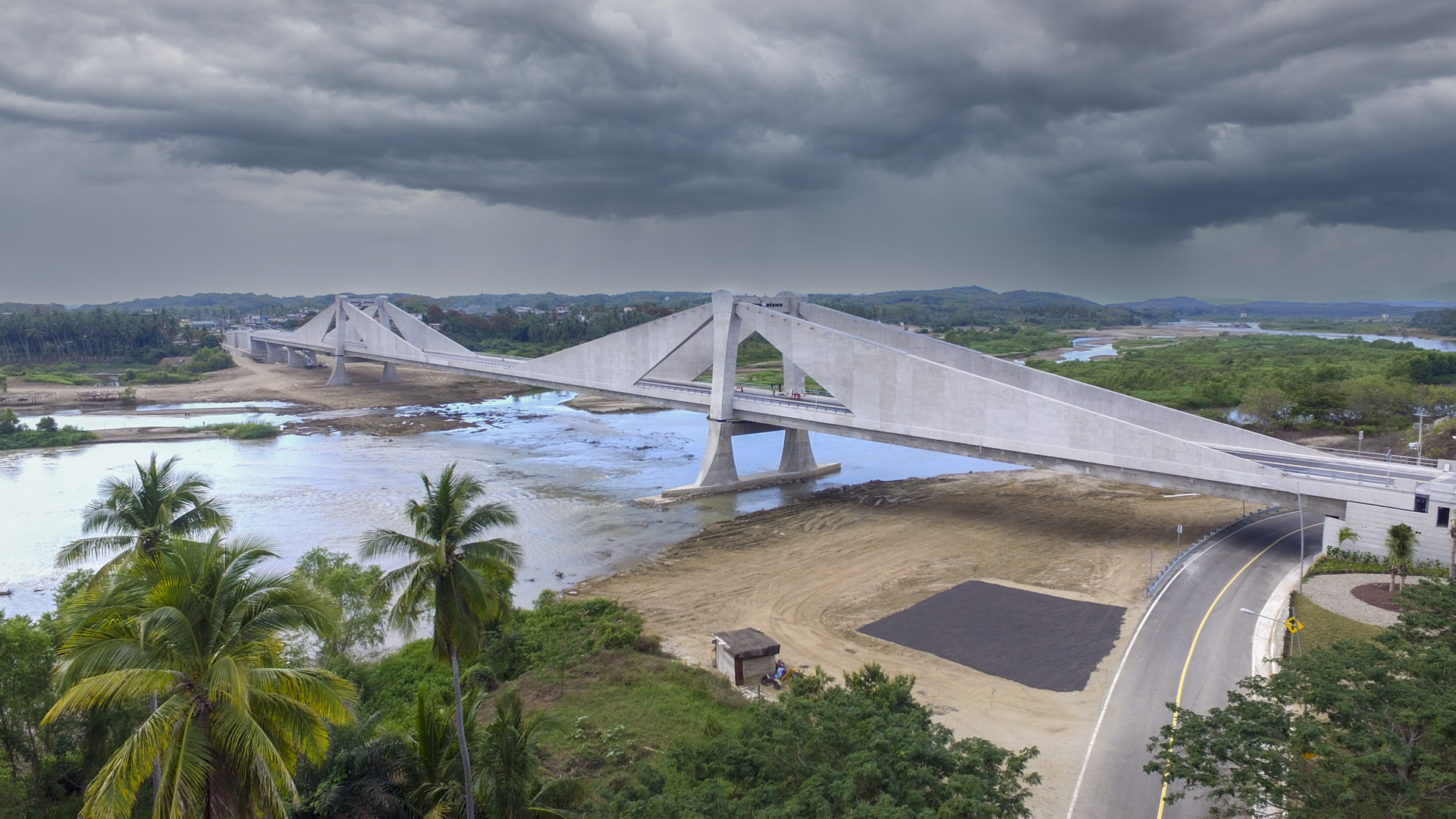
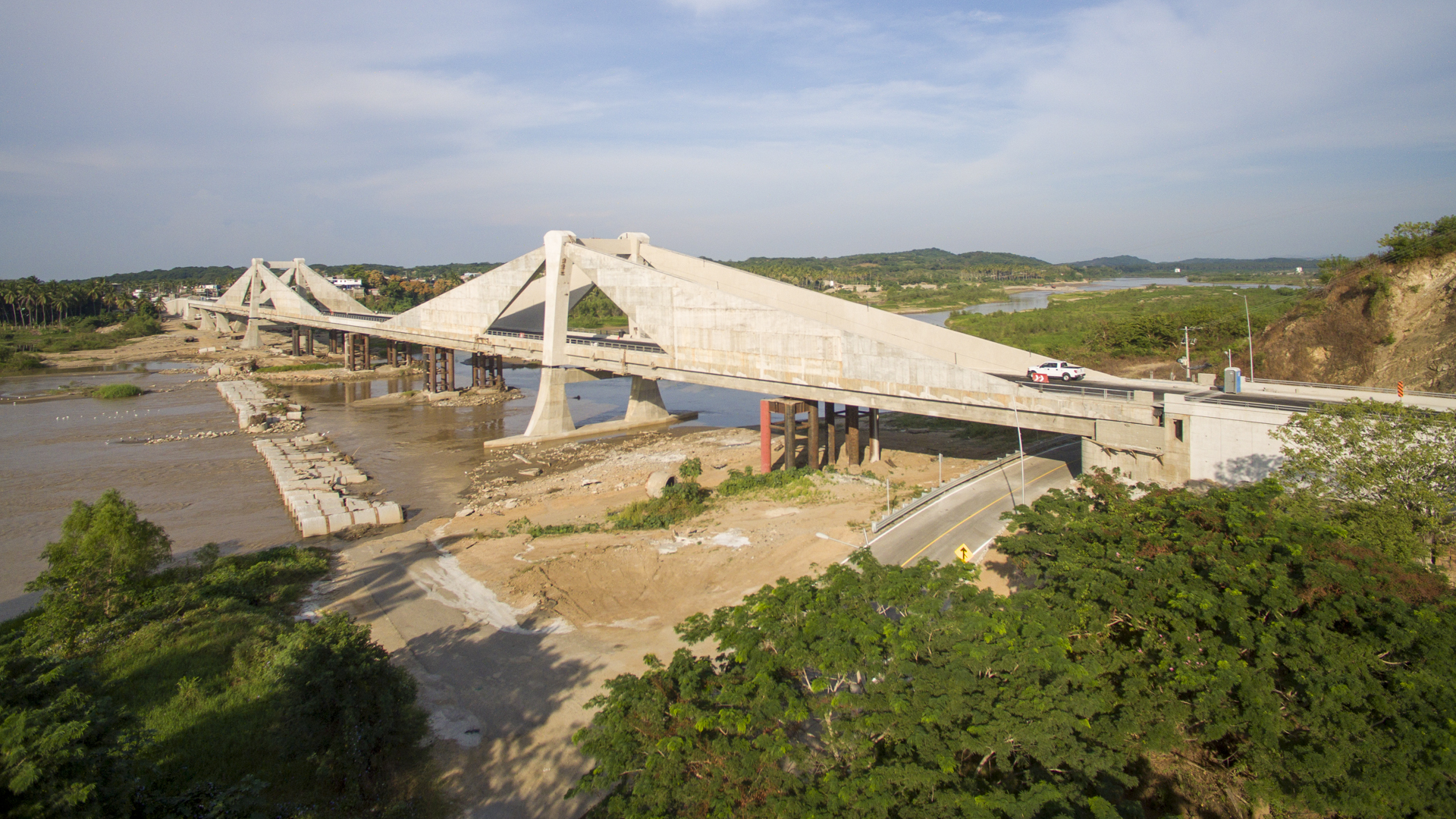
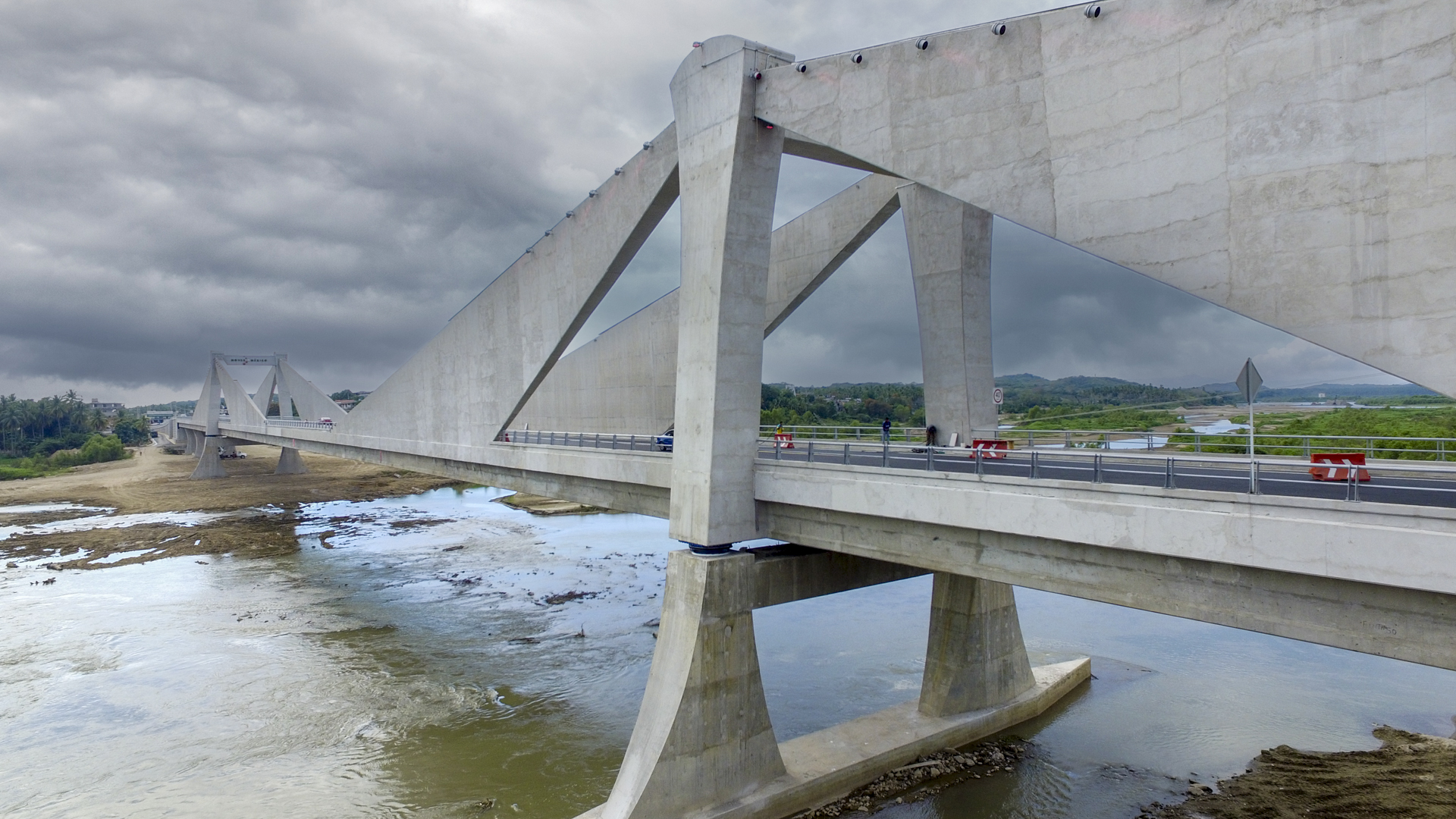
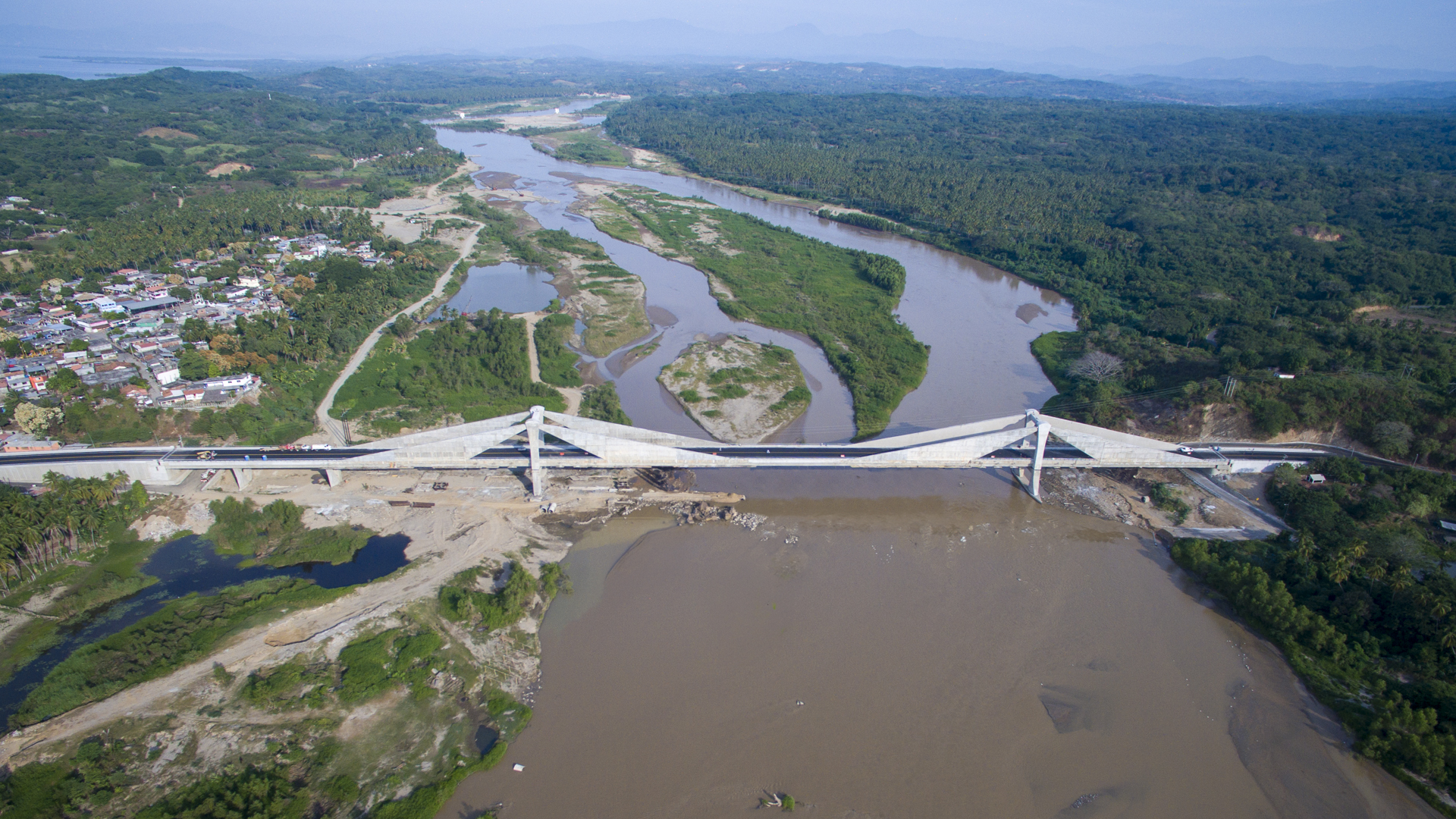
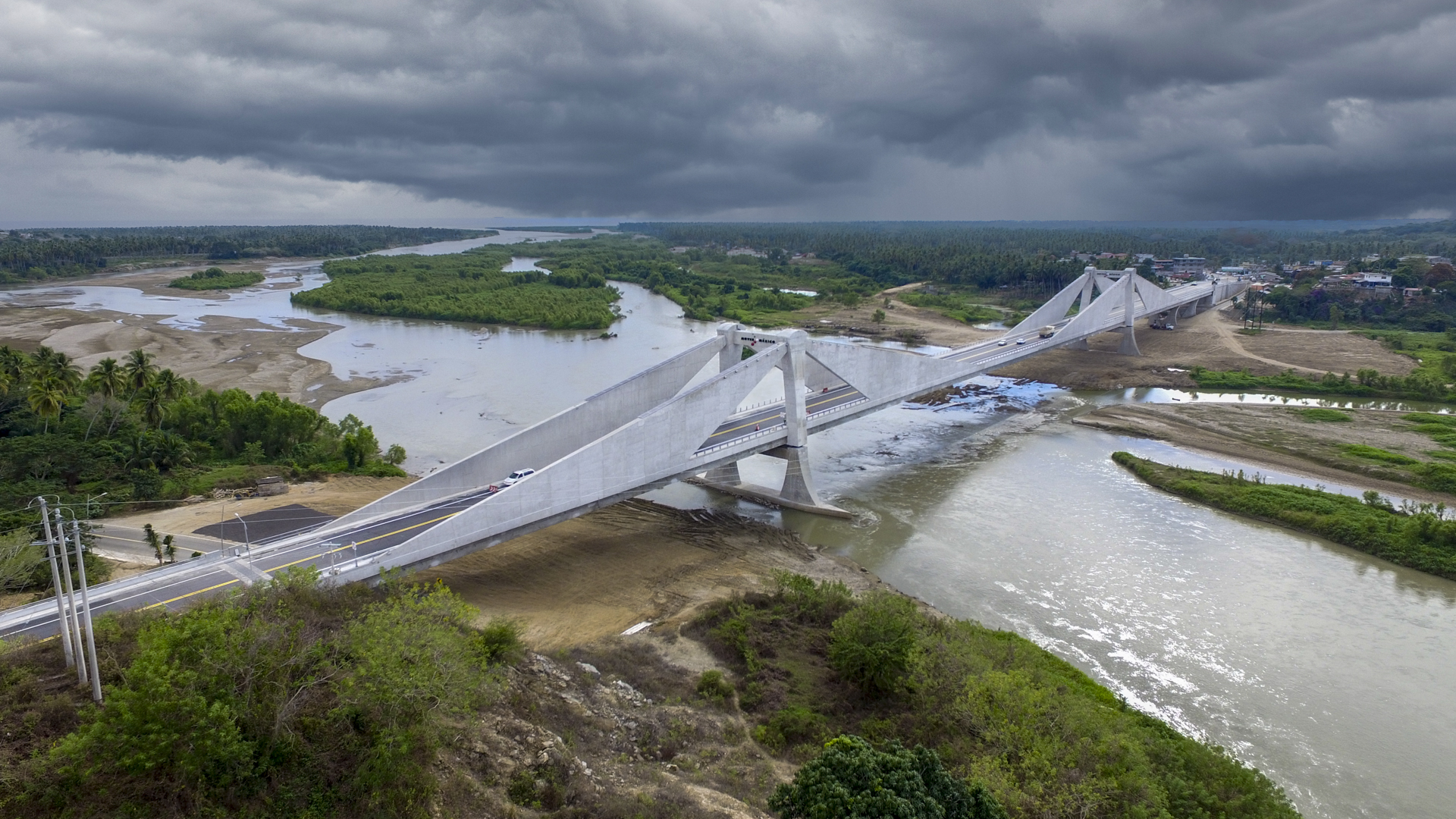
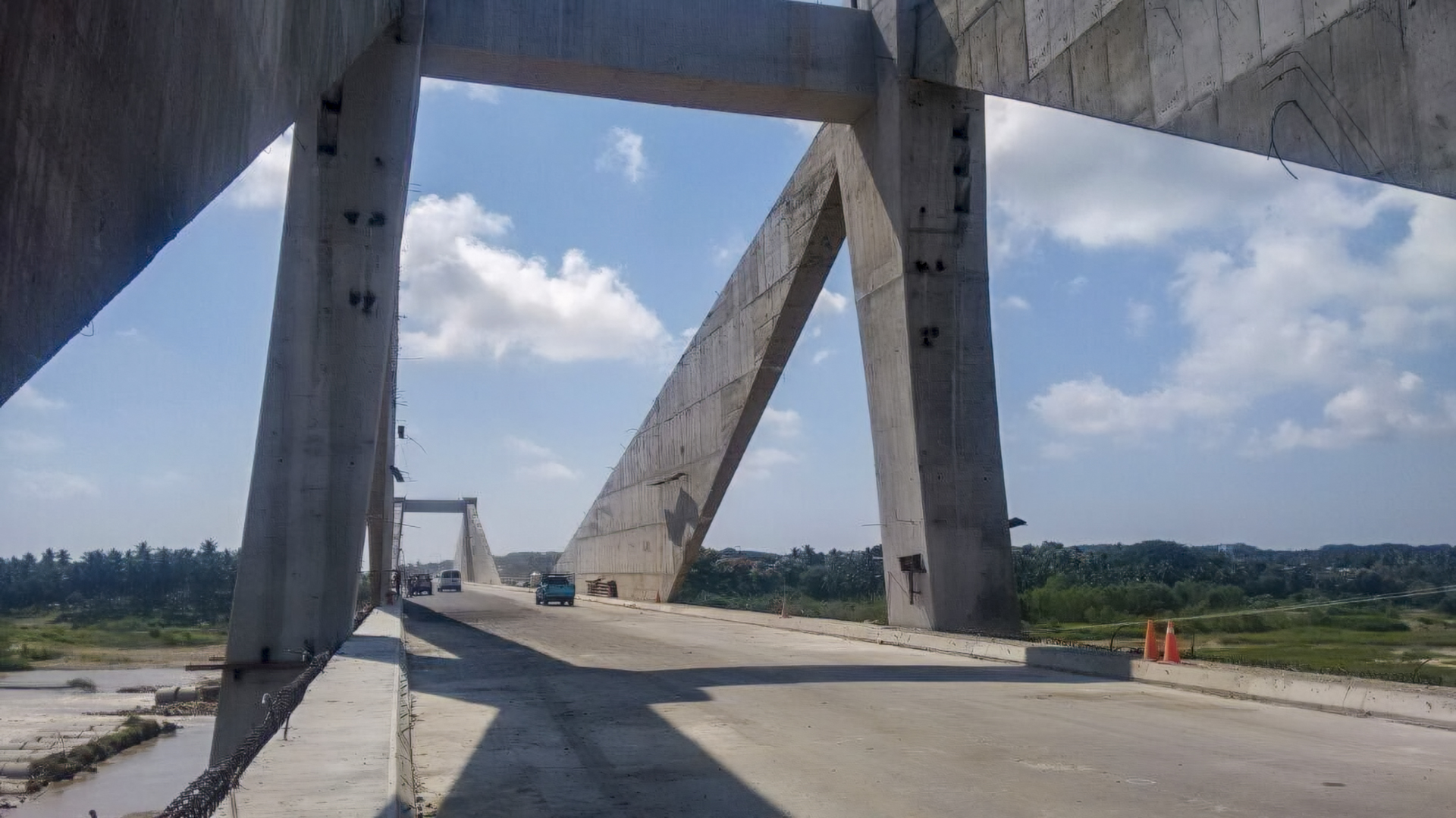
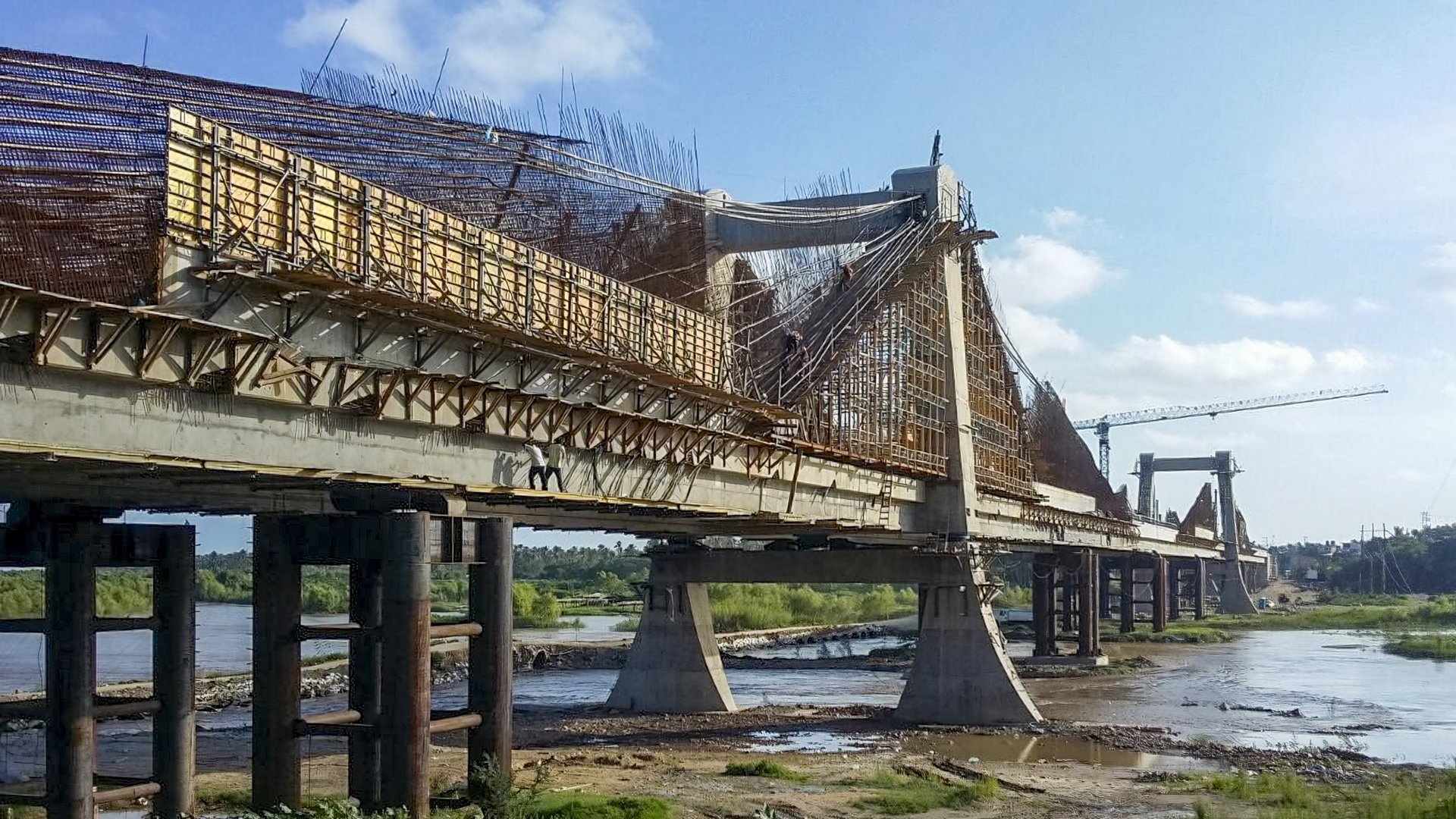
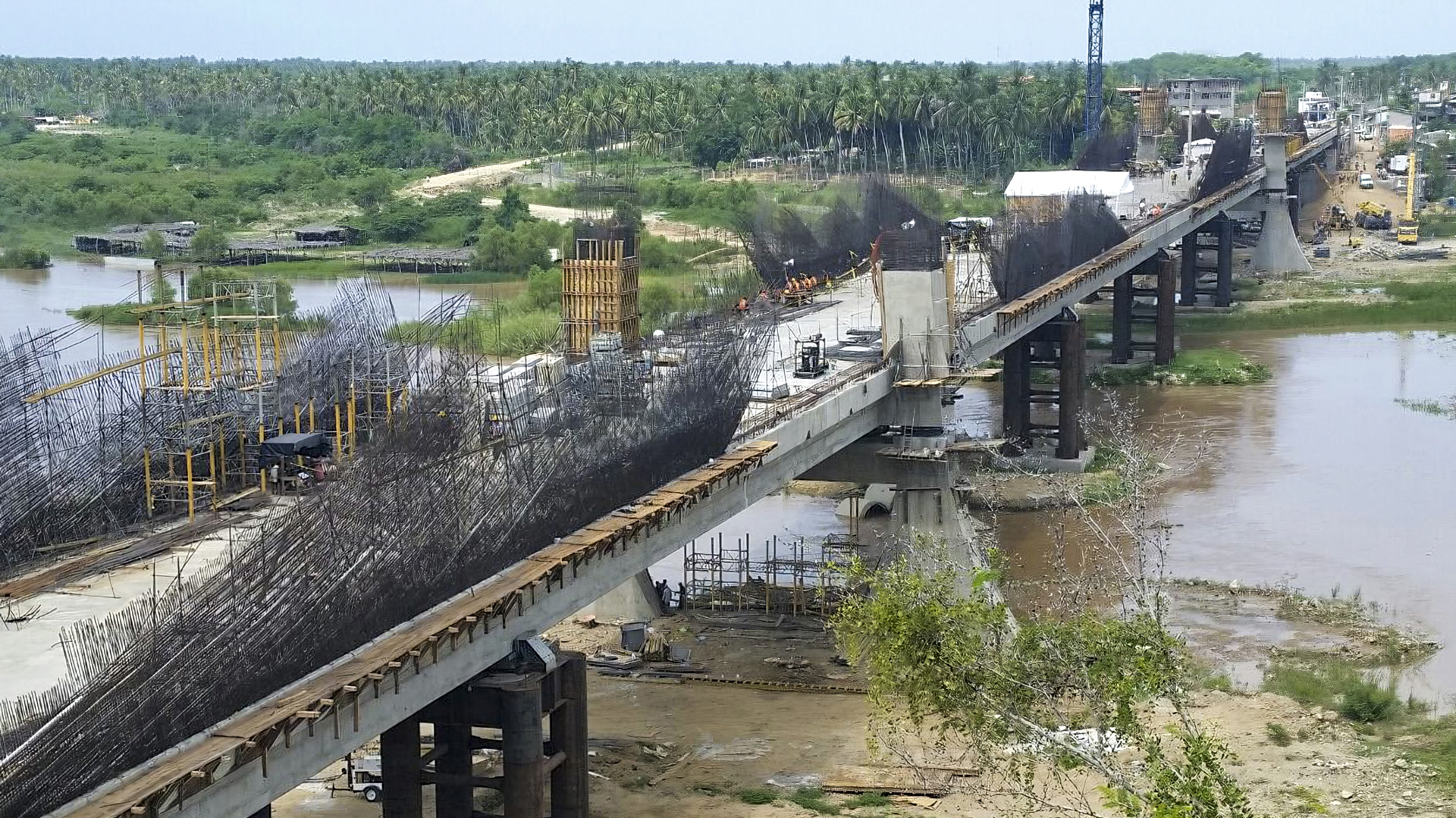
Barra Vieja Bridge over the Papagayo River. State of Guerrero. Mexico. 2016. 2016.
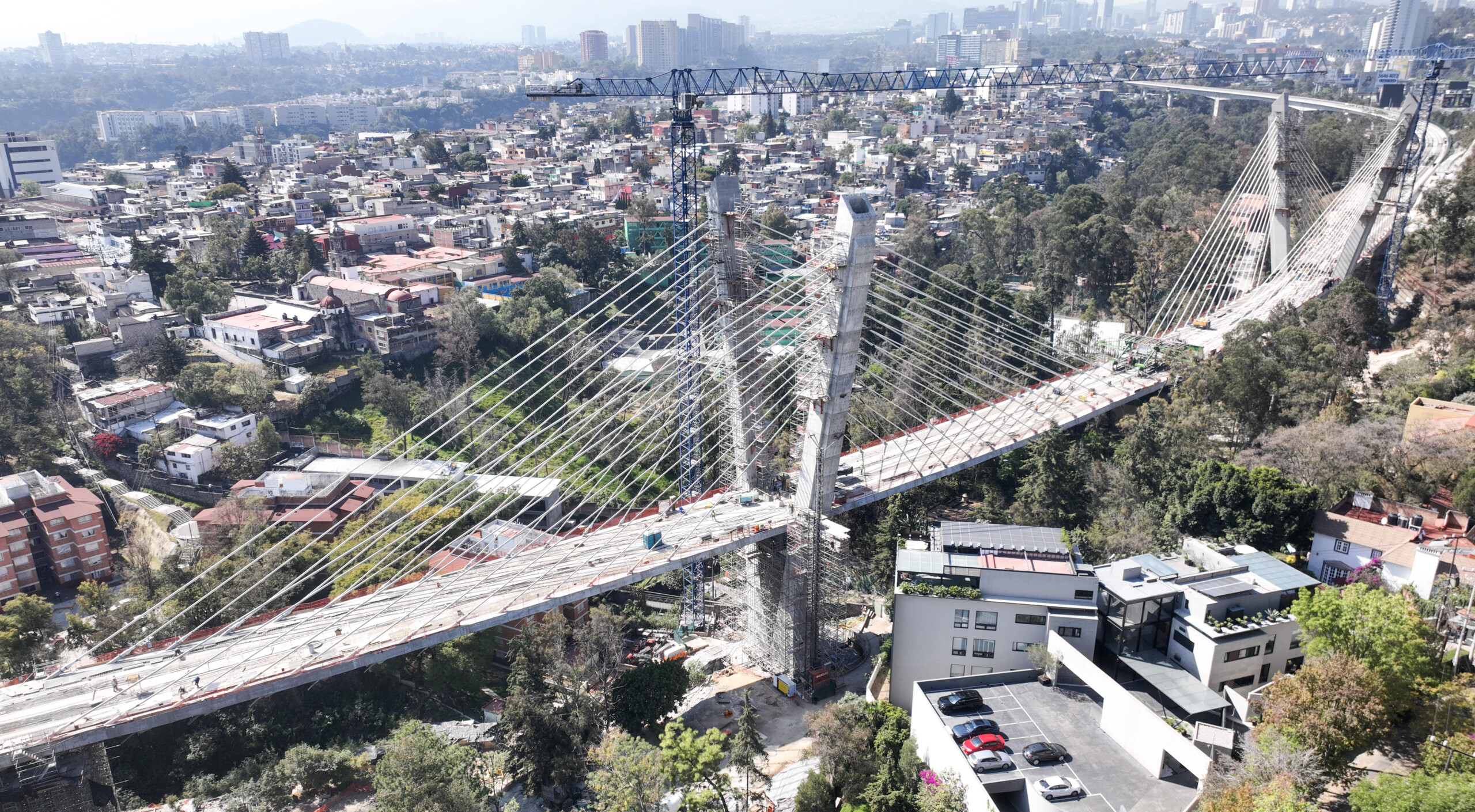
Barra Vieja Bridge is located in Lomas de Chapultepec, south of Acapulco, at the mouth of the Papagayo River, in the state of Guerrero, Mexico. Originally where the bridge is located there was another bridge that was destroyed by the floods that occurred in September 2013, caused by the rains of tropical storm “Manuel”. The projected structure is a concrete sail bridge with a main span of 220m. The total length of the bridge is 470 m and five spans of spans 30+40+90+90+220+90 m. The structure has been designed without piers in the middle of the riverbed since the foundation is unfeasible due to liquefaction phenomena of the soil under seismic action, which is very high in this area. The deck is formed by two longitudinal box girders connected by ribs every 5 m. It has a width of 15.05 m, with a constant edge of 3.10 m. The top slab is 0.28 m thick. The tie system consists of 28 cables that are embedded in the concrete sail. Prestressing technology is used for these cables instead of tensioning, with the consequent economic savings. The sail is triangular in shape and varies in thickness from 1.48 m at the tower to 0.36 m at the deck. The sail starts 30 m from the tower and continues for 56.3 m more. The height of the towers is 17 m. One of the most unique aspects of this project is the construction process employed. Initially, there was a great hurry to build the bridge, so it was decided to push the deck, then build the upper part of the towers and lay out the stay cables, which are concreted in a final phase. This process required the arrangement of five temporary metal piers arranged in the 90 m spans at 50 m from the tower, and in the central span every 55 m. Given the type of terrain, the entire foundation was made with 1.50 m diameter piles in abutment 1, piles and towers, while 1.2 m diameter piles were used in the temporary piles. One of the issues that has been most studied in this project is how to resist the seismic effects, which, as mentioned above, are important, largely due to the existing terrain. In this case, two longitudinal dampers of 6000 kNs/m each have been installed in abutment 1, and transverse dampers of 2000 kNs/m in pile 2 and abutment 6, 3000 kNs/m in abutment 1 and pile 3, and 6000 kNs/m in the towers. The maximum displacements for which these dampers have been designed are ±290 mm in the longitudinal direction and ±370 mm in the transverse direction. Since the dampers were not recentered, pendular supports were chosen for all the supports, except for abutment 6, where neoprene-teflon supports were used.