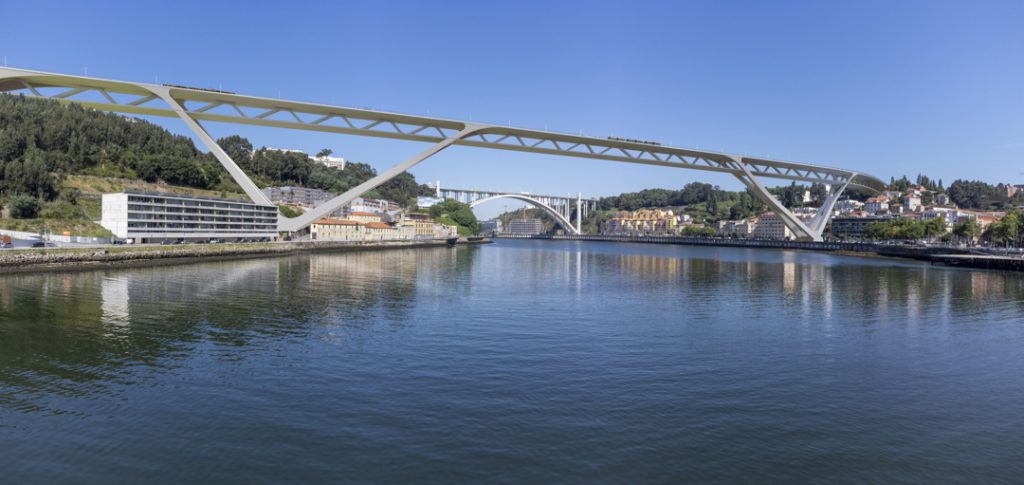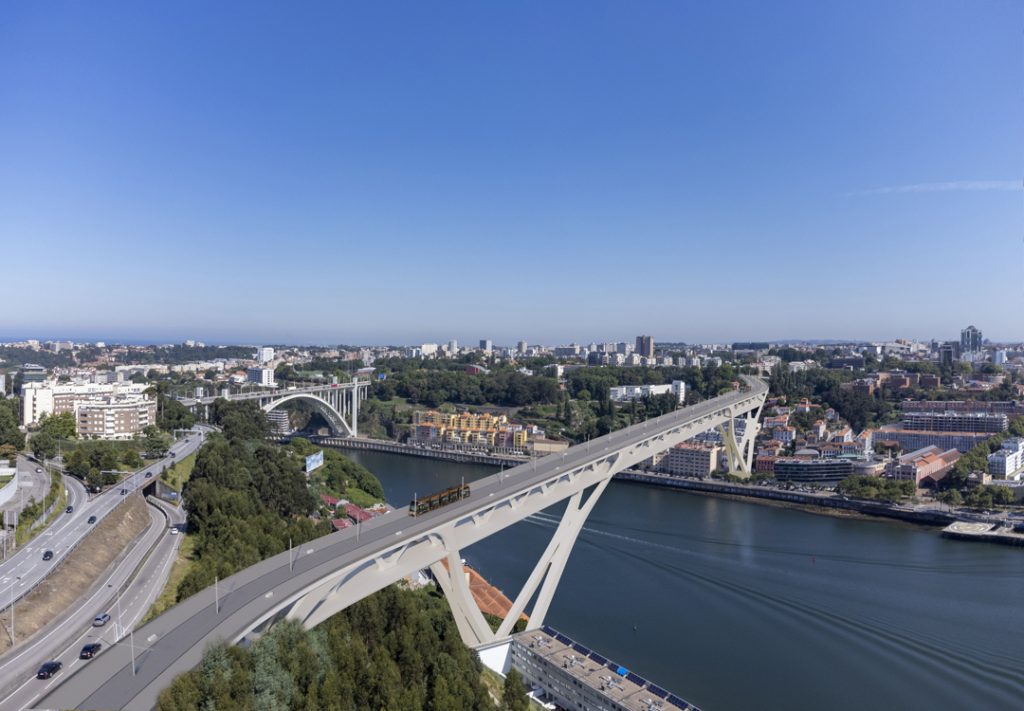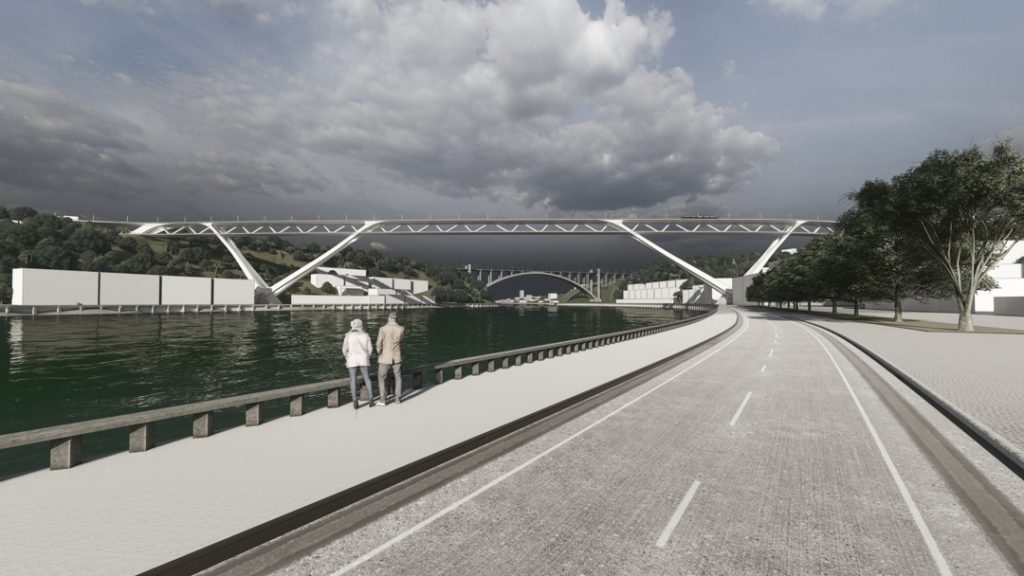


CFC/STRENG proposal for the new bridge that will cross the Douro River between Vila Nova de Gaia and Porto.
Although CFC’s proposals in the international design competition for the new bridge that will cross the Douro River between Vila Nova de Gaia and Porto were not finally selected, given the uniqueness and relevance of this competition we share the first of them developed with the Portuguese firm STRENG.
We also take this opportunity to congratulate the winning team, also the Portuguese-Spanish group formed by the firms Edgar-Cardoso and Arenas Asociados, for their success and excellent solution.
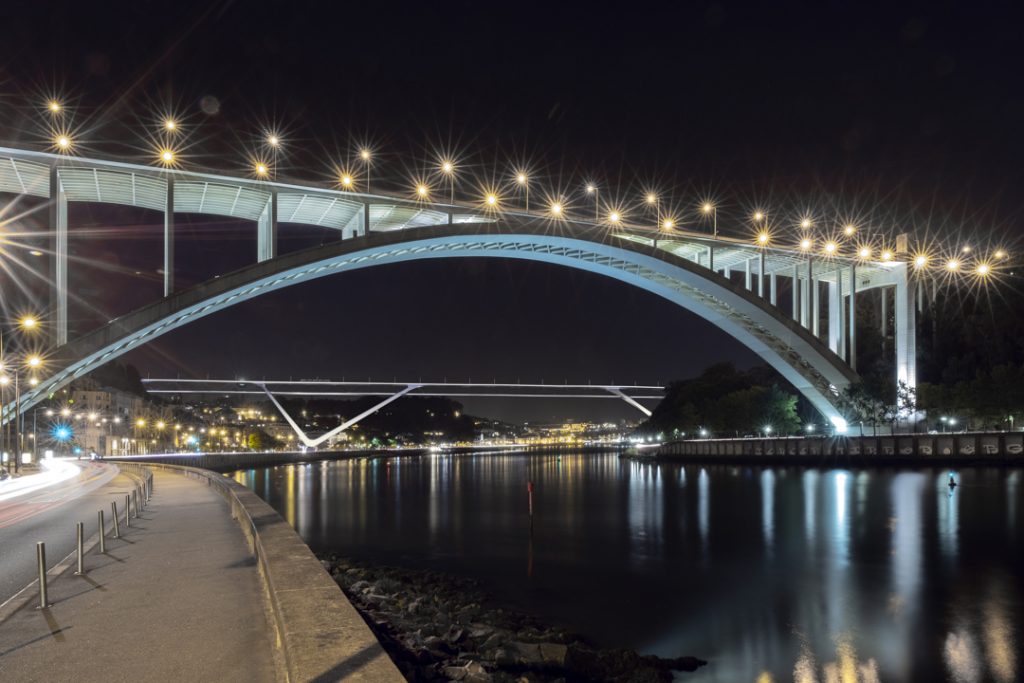
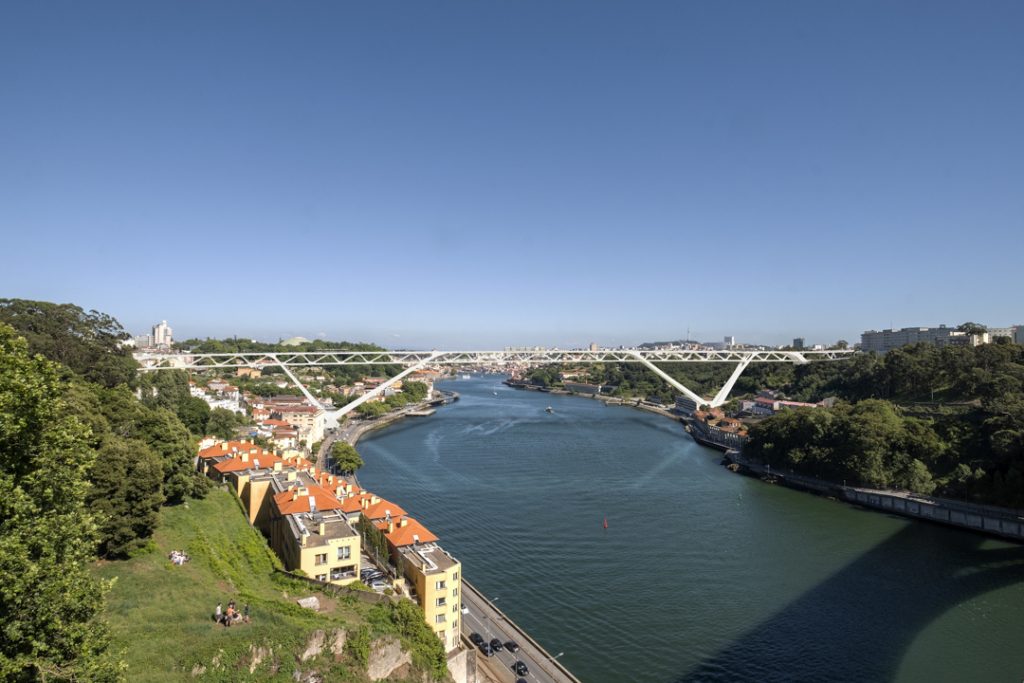
Designing a bridge is always an exciting challenge and even more so in an environment as unique and relevant to the history of bridges as Porto. In addition to the technical challenge of building a bridge with a considerable main span, there was also the need to get the right fit and shapes so that it would not interfere visually in a negative way with the Arrábida Bridge, without giving up the presence and personality to be on a par with the select group of bridges in this beautiful city.
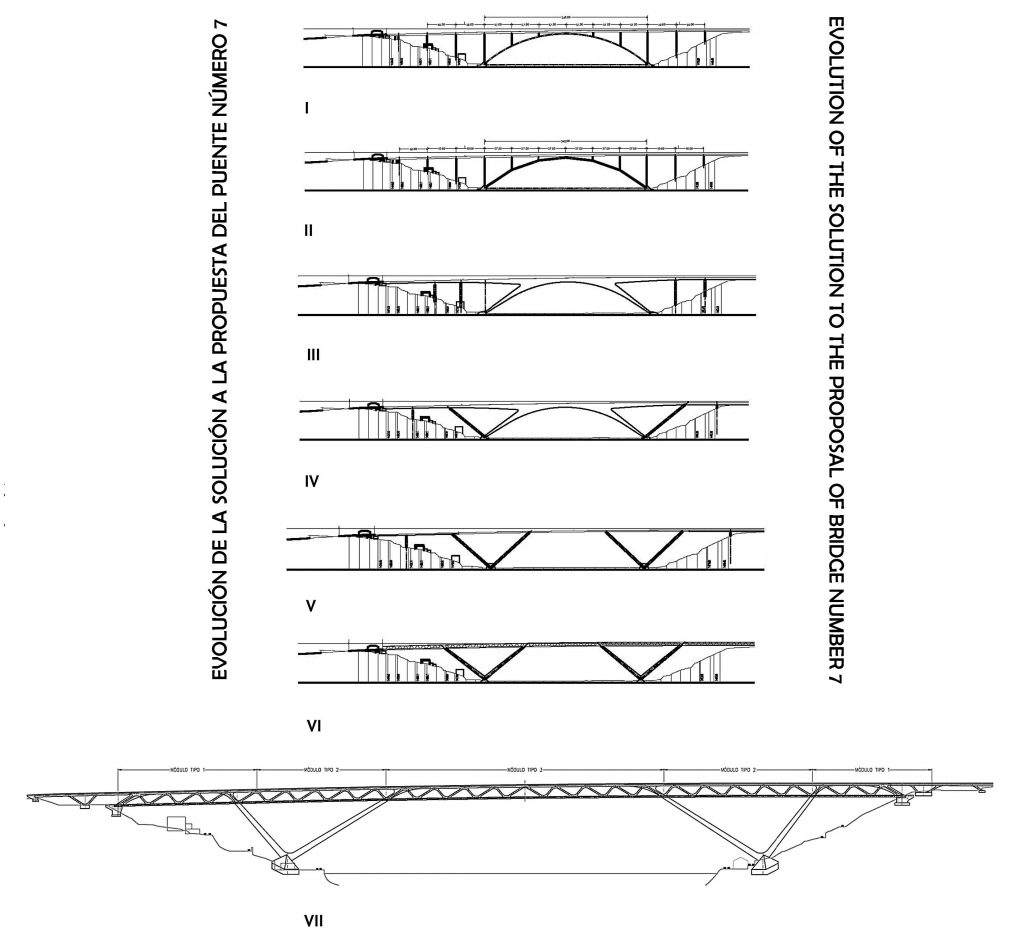
Our interpretation of the conditioning factors and of what the new crossing should entail both in terms of its implantation in the city and in terms of what it means to be part of the exclusive list of works that cross the Douro in Porto led us to opt for a risky solution, proposing a novel and innovative bridge, both formally and structurally, with the clear intention of living up to and giving continuity to what all the previous bridges in the city and in the history of engineering have meant.
All of them are exemplary in that they introduced new forms and languages reflecting the capabilities of the time in which they were built and, however controversial or not they may have been at the time, over time their personality and presence have led to form inseparably with the rest of the elements of the city, the urban landscape along the river.
Although it was a risky option, we chose to look for a solution very different from the previous bridges, but based on a lattice solution, thus creating a link with those developed in the 19th century to carry out the magnificent works of the bridges of Maria Pia and Don Luis Il. The formal language is very different because we have based our work on a new interpretation of this type of structure, taking advantage of the possibilities that 21st century technology allows.
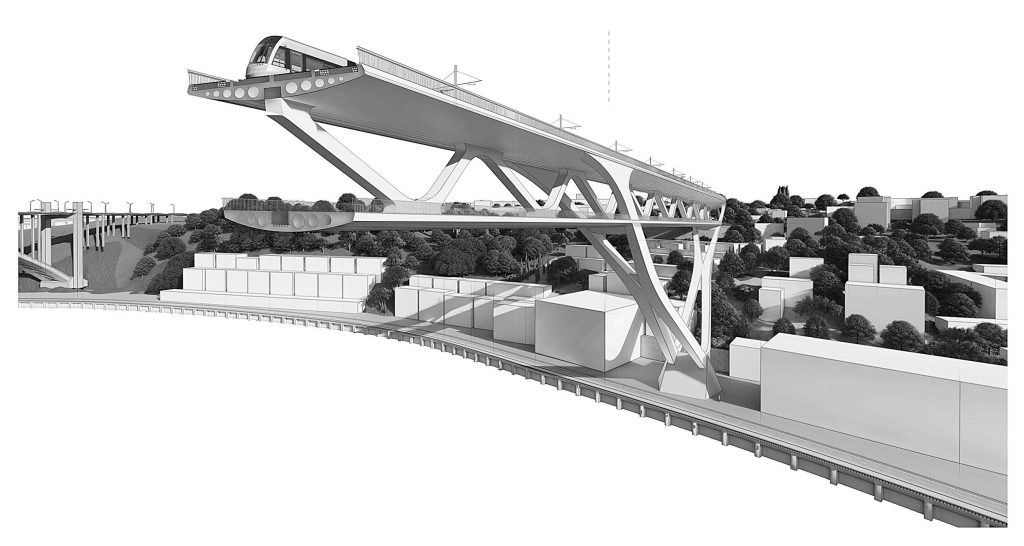
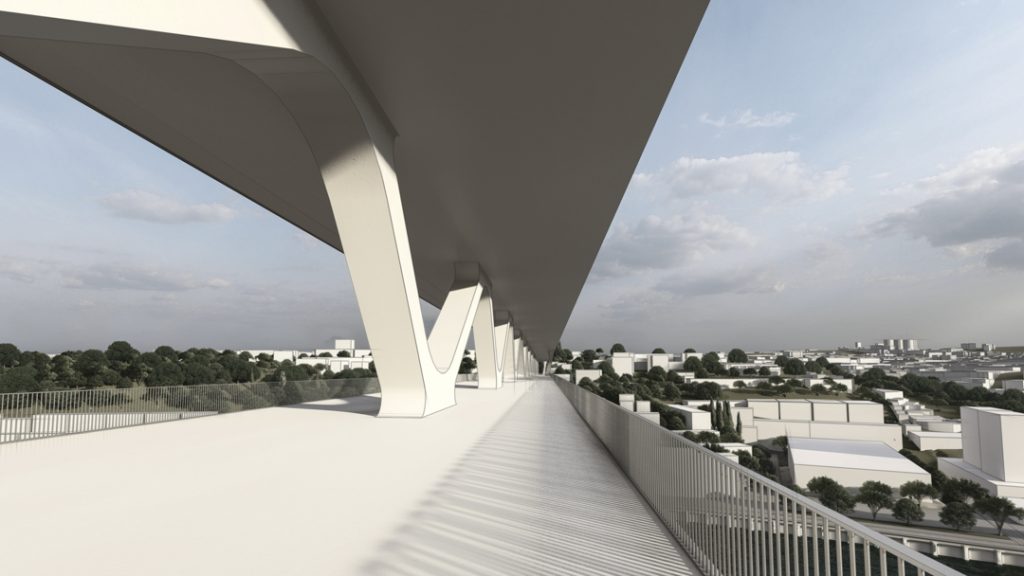
The proposal is a gantry bridge on asymmetrical triangular cells, with a lattice girder deck with an open section layout with a single diagonal plane of large metallic diagonals along the section axis and upper and lower prestressed concrete chords. The purpose of this unusual layout was to make the structure visually as light and transparent as possible by simply drawing the edges of the chords longitudinally and reducing the presence of the diagonals as much as possible.
From the point of view of resistance behavior, the main singularity of the proposal, in addition to the mixed action of general bending, lies in how the torsion effect is controlled. As in open sections, it is necessary to use the work in the plane of the upper chords where opposing force pairs are activated to compensate the eccentric loads. This arrangement is not common in large bridges but, as we have already seen in similar solutions we have studied on other occasions, it is a sufficient resistant mechanism to control both stresses and deformations. This is aided by the high in-plane stiffness of the concrete decks and the size of the diagonals also provides sufficient stiffness to control their out-of-plane bending.
We thus achieved the double objective that we always set ourselves in our designs: to be able to achieve a new formal configuration based on an effective resistant behavior.
From the formal point of view, the solution introduces a new geometry of great modernity and dynamism in its environment, with the greatest possible lightness and transparency, avoiding large opaque walls that hinder the vision and at the same time avoiding the confusion that is produced in the oblique views of the double plane lattices.
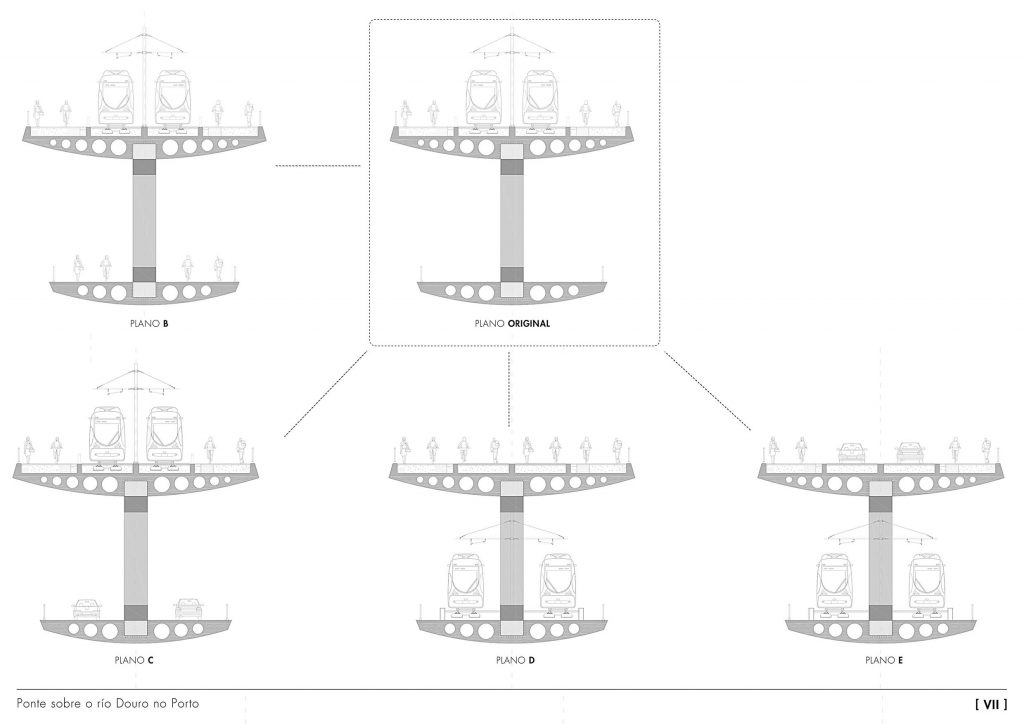
Functionally, the two-level layout also provided an interesting aspect, the possibility of using the two levels of the lattice as a passage platform and not only the upper one, an aspect that, in addition to allowing the creation of alternative and varied itineraries, opened up the possibility of other alternatives for the arrangement and levels of vehicular and Metro traffic, an aspect on which there was no clearly closed consensus in the city.
Although unfortunately our bet has not been awarded, having had the opportunity to participate in a competition like this is in itself a gratification, even more so having been able to work with such an enriching team formed by the excellent engineers of our partners, STRENG, and by the extraordinary architects Adriano Pimenta and Tiago Figueiredo, whose inputs and proposals were always enormously enriching to focus the proposal.