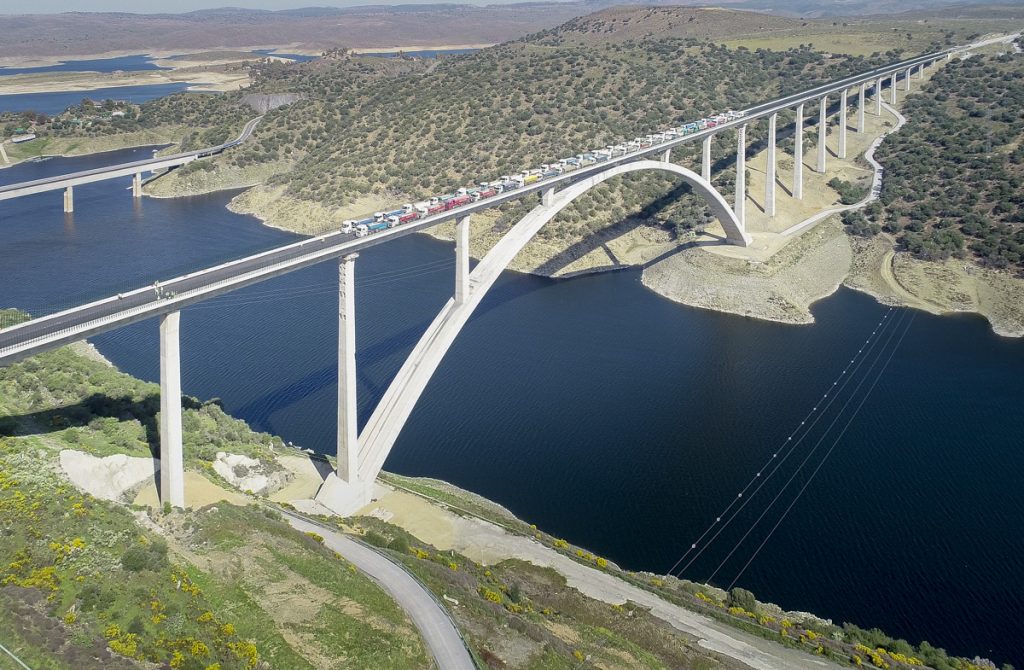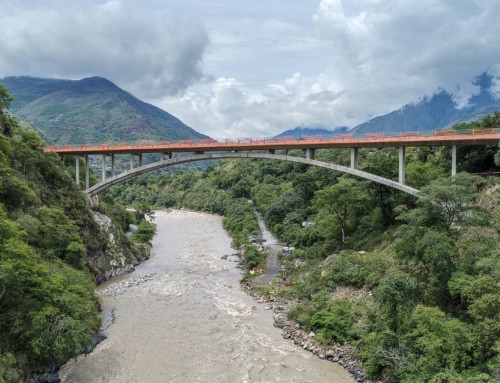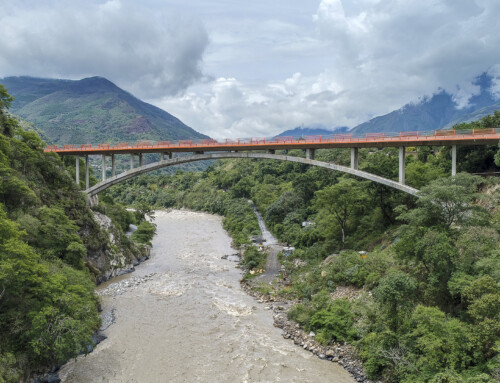


Last weekend the load test of the Viaduct over the Tagus River was carried out.
The load test of a structure is a process that, by reproducing a load state on it, aims to obtain sufficient data on its response to that state, so that its functional behavior can be deduced, comparing the structural response with the one foreseen in the Project with the structural model used for the sizing and checking of the different elements.
The load states are defined in the test design in such a way that, by conveniently loading different areas of the structure, the desired percentages of the maximum stresses produced by the Instruction load train in the critical sections are reached.
The load corresponding to each state will be applied in several phases or steps so that the progressive response of the structure in critical areas can be recorded.
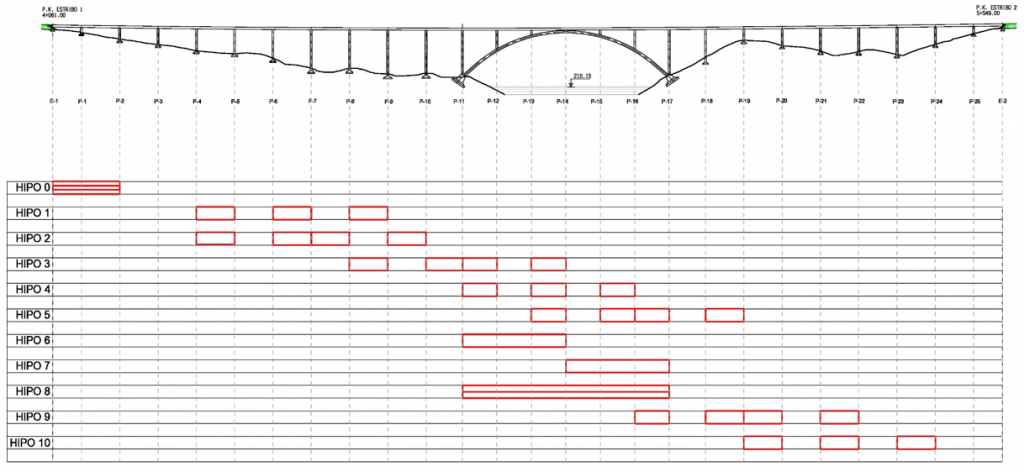
Definition of the loading conditions: 10 loading scenarios were carried out in which up to 48 trucks loaded with 38 tons each were used.
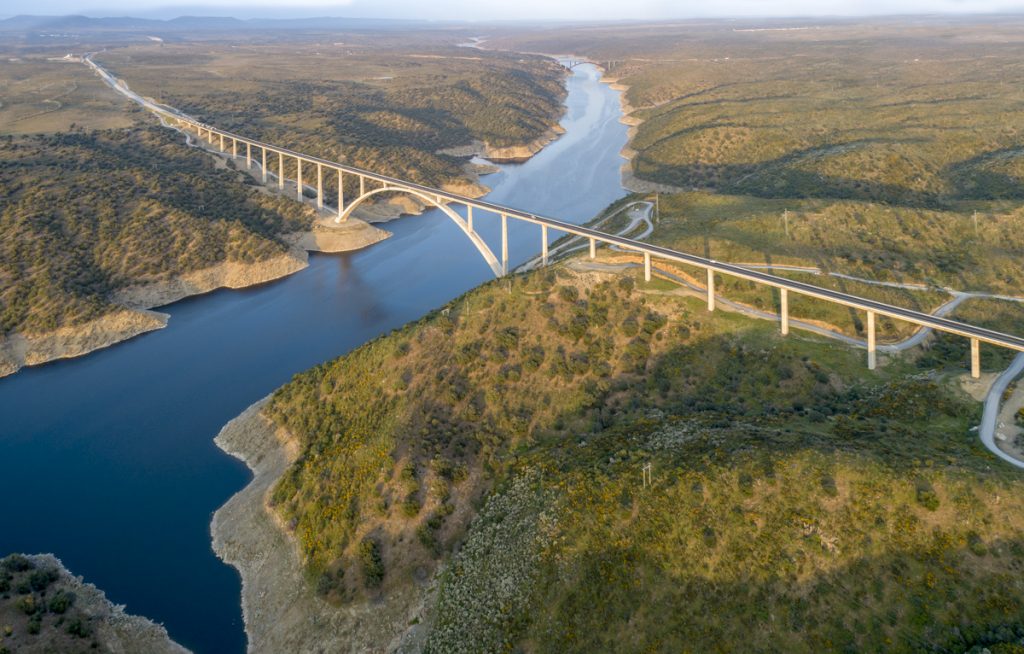
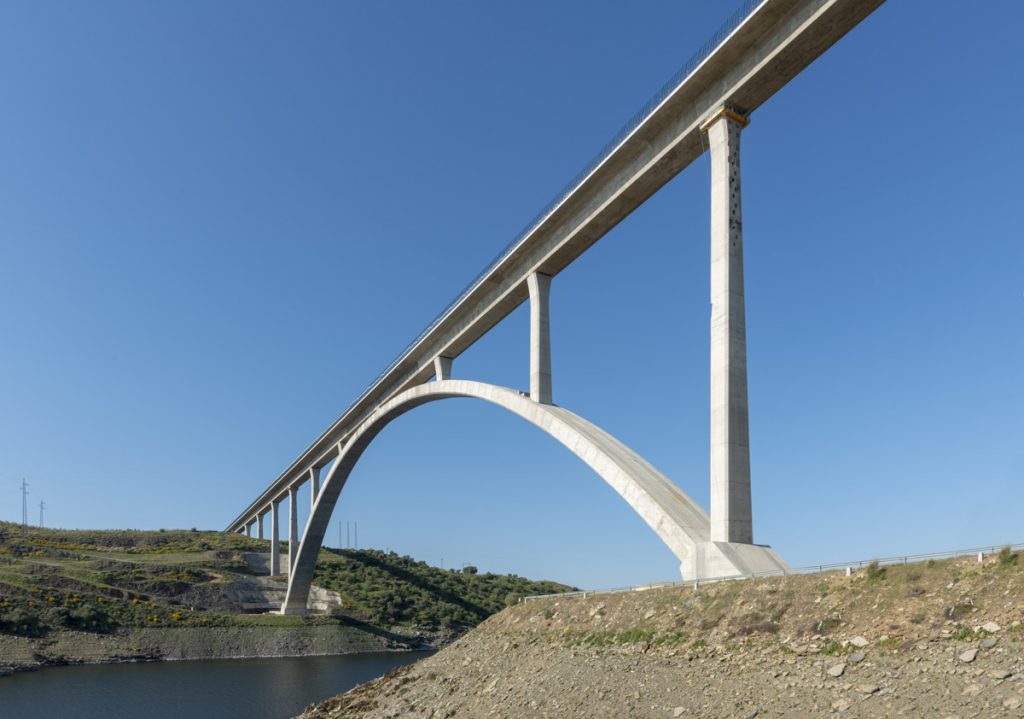
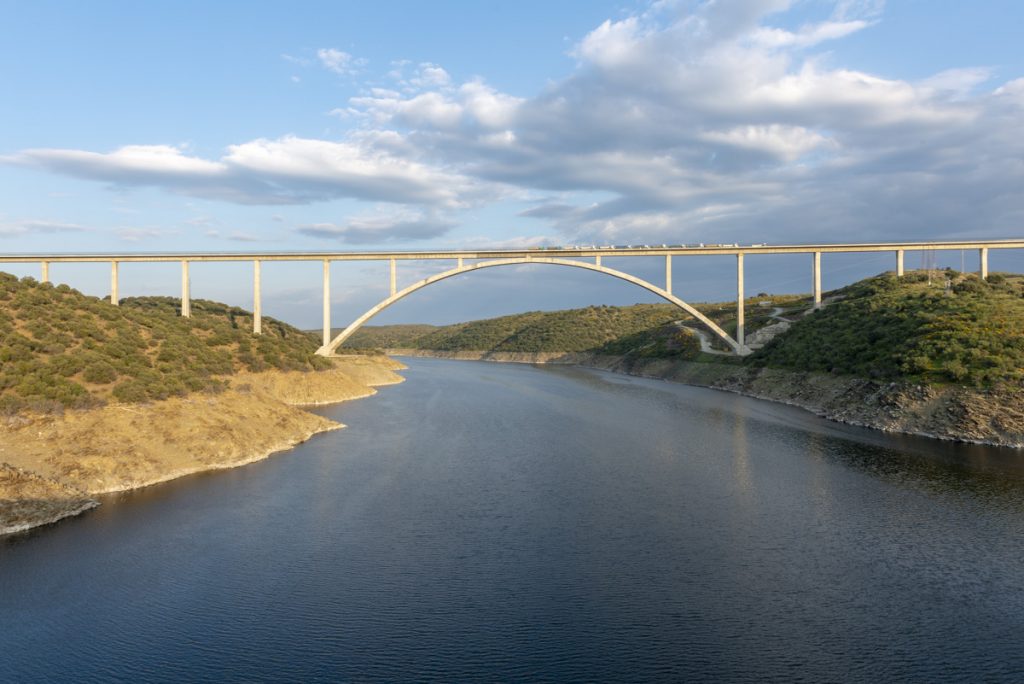
The bridge over the Tagus River at the Alcántara Reservoir has a total length of 1488 m. Its cross section is formed by a concrete box with a 5.00 m lower base, inclined webs and upper slab supplemented by two flights up to 14.00 m wide. The total depth of the section at the axis is 4.00 m. Its thickness is 0.35 m in the upper slab, decreasing to 0.20 m at the ends of the flights, 0.30 m in the lower slab and 0.50 m in the webs.
The viaduct was designed with a standard span of 60 m at the approach spans. This span is reduced to 54 m in the 6 spans over the arch, a unique element of the bridge. The arch has a span between supports of 324 m and is designed with a curvilinear guideline in the vertical plane. It is formed by a rectangular box section with a variable depth between the 4.00 m and the 3.50 m keystone. The width varies linearly from 12.0 m in the starting section to 6.0 m in the key section. The thickness of the webs and top slab vary to achieve a state of maximum compression as homogeneous as possible.
Photos and video by Carlos Manterola Jara.